Allergy Treatment Market Outlook 2026–2034: Emerging Therapies, Growth Drivers, Leading Companies, and Future Opportunities
The Allergy Treatment Market is expected to grow from $ 23.41 billion in 2026 to $ 48.55 billion by 2034, registering a CAGR of 9.55%.
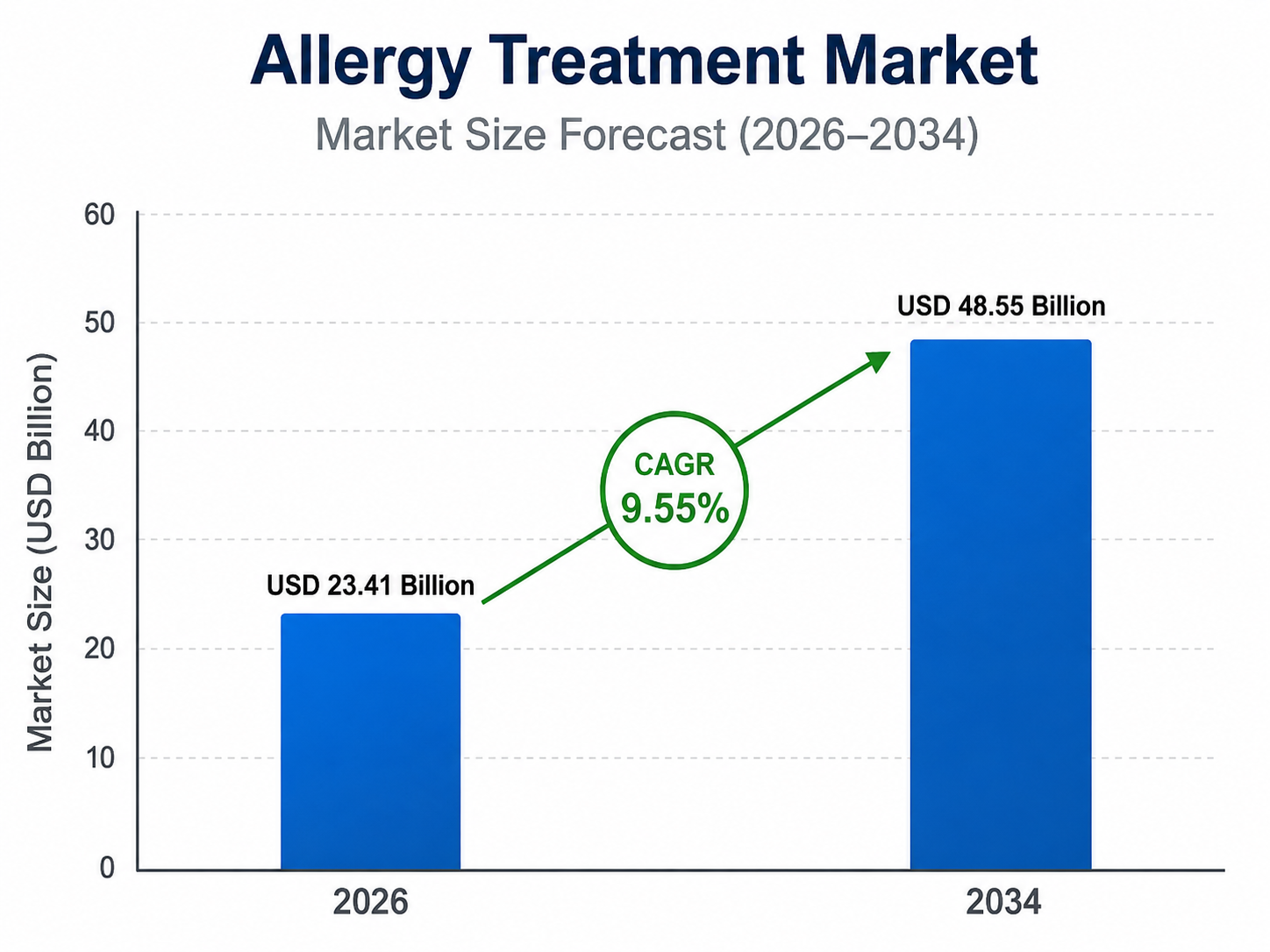
During the forecast period. The market comprises a broad range of therapies, including antihistamines, corticosteroids, decongestants, leukotriene modifiers, epinephrine, biologic drugs, and allergen immunotherapy, which are used to treat respiratory, skin, food, insect, and drug-related allergies. Market growth is being driven by the increasing prevalence of allergic rhinitis, asthma, atopic dermatitis, urticaria, and food allergies, along with rising awareness, improved diagnosis rates, and greater access to effective treatment options. Hospitals, allergy clinics, primary care practices, retail pharmacies, and homecare users continue to be the key end users, contributing to steady market demand. In addition, ongoing advancements in long-acting biologic therapies, sublingual and oral immunotherapy, personalized treatment approaches, and digital health tools for symptom monitoring, medication adherence, and allergen management are expected to further support market growth throughout the forecast period.
1. What is the latest trend in the Allergy Treatment Market?
The latest trend is the expansion of biologics and allergen-specific immunotherapies that address underlying immune pathways rather than only controlling symptoms.
Food-allergy treatment is gaining particular attention through biologics, oral immunotherapy, and improved emergency-management options.
Sublingual tablets and home-based treatment support are improving convenience for selected respiratory allergies.
Digital symptom tracking and pollen-monitoring applications are also becoming part of allergy-management programs.
2. What are the key challenges in the Allergy Treatment Market?
Key challenges include underdiagnosis, inconsistent treatment adherence, high biologic costs, limited specialist availability, and reimbursement restrictions.
Allergy immunotherapy may require several years of treatment and regular patient participation to achieve sustained benefits.
Some therapies carry risks of local or systemic allergic reactions and require appropriate medical supervision.
Differences in allergens, symptoms, and patient responses also make standardized treatment pathways difficult.
3. What is the major driving factor for the Allergy Treatment Market?
The major driving factor is the growing prevalence of respiratory, food, skin, and environmental allergies across children and adults.
Air pollution, changing environmental exposure, urban lifestyles, and greater awareness are increasing diagnosis and treatment demand.
Patients are seeking faster symptom relief as well as therapies capable of delivering longer-term disease control.
Expanding access to allergy specialists, pharmacies, and digital healthcare further supports market growth.
4. What is the major segment in the Allergy Treatment Market and why?
Antihistamines represent a major treatment segment because they are widely used for allergic rhinitis, urticaria, conjunctivitis, and other common allergic symptoms.
They are available in prescription and over-the-counter formulations, including tablets, liquids, sprays, and eye drops.
Broad accessibility, familiar safety profiles, and relatively affordable pricing support high consumption.
Biologics and allergen immunotherapy are growing faster within patients requiring targeted or long-term treatment.
5. Which application or end-user is driving more demand?
Allergic rhinitis generates substantial treatment demand because symptoms are common, recurrent, and often require seasonal or year-round medication.
Hospitals and specialist allergy clinics are important for immunotherapy, biologics, severe asthma, food allergy, and anaphylaxis management.
Retail pharmacies account for significant sales of antihistamines, nasal sprays, eye drops, and emergency treatments.
Homecare use is expanding through self-administered medicines, sublingual products, and digital treatment support.
6. Which region offers the highest growth potential and why?
Asia Pacific offers strong growth potential due to its large population, worsening urban air quality, improving diagnosis, and expanding healthcare access.
China, India, Japan, South Korea, and Southeast Asia are witnessing increasing demand for respiratory and skin-allergy treatments.
North America remains a leading established market because of high awareness, advanced biologic adoption, and strong specialist infrastructure.
Europe also benefits from mature immunotherapy markets and broad access to allergy-care services.
7. What strategies are major companies adopting in the market?
Major companies are investing in biologics, sublingual immunotherapy, long-acting formulations, food-allergy treatments, and pediatric products.
They are expanding indications for established therapies and conducting trials across multiple allergic diseases.
Partnerships with allergy clinics, research institutions, pharmacies, and regional distributors support commercialization and patient access.
Companies are also strengthening digital education, adherence programs, and direct-to-consumer awareness initiatives.
8. What are the leading companies in the Allergy Treatment Market?
Leading companies include GSK, Sanofi, Regeneron Pharmaceuticals, Roche, Novartis, AstraZeneca, ALK-Abelló, Stallergenes Greer, Allergy Therapeutics, Teva Pharmaceutical, Viatris, and Johnson & Johnson.
These companies compete across antihistamines, nasal therapies, epinephrine products, biologics, and allergen immunotherapy.
Large pharmaceutical companies benefit from broad respiratory and immunology portfolios and extensive commercial networks.
Specialist companies compete through allergen extracts, subcutaneous injections, sublingual tablets, and patient-specific immunotherapy expertise.
9. Why is allergy treatment strategically important for healthcare providers?
Effective allergy treatment can reduce symptoms, emergency visits, missed work or school, sleep disruption, and progression of associated respiratory conditions.
Long-term management is particularly important for patients with asthma, food allergies, severe urticaria, or recurrent anaphylaxis.
Integrated care allows providers to combine avoidance strategies, medicines, immunotherapy, and emergency planning.
For healthcare systems, earlier diagnosis and effective control can reduce the burden of poorly managed allergic disease.
10. What is the future outlook for the Allergy Treatment Market?
The market outlook remains positive as allergy prevalence, diagnosis rates, and demand for advanced therapies continue to increase.
Future growth will be supported by biologics, personalized immunotherapy, food-allergy treatments, biomarkers, and digital patient-management platforms.
Competition will increasingly focus on treatment durability, dosing convenience, safety, affordability, and evidence of long-term benefit.
Companies offering accessible, targeted, and clinically differentiated therapies are expected to gain market share.
Browse Related Reports:
https://www.oganalysis.com/industry-reports/track-and-trace-solutions-market
https://www.oganalysis.com/industry-reports/patient-engagement-solutions-market
https://www.oganalysis.com/industry-reports/clinical-alarm-management-market
https://www.oganalysis.com/industry-reports/radiation-dose-management-market
https://www.oganalysis.com/industry-reports/healthcare-simulation-market
