Liver Health Supplements Market Outlook 2026–2034: Key Trends, Growth Drivers, Leading Companies, and Future Opportunities
The Liver Health Supplements Market is expected to grow from $ 10.1 billion in 2026 to $ 14.4 billion by 2034, registering a CAGR of 4.61%.
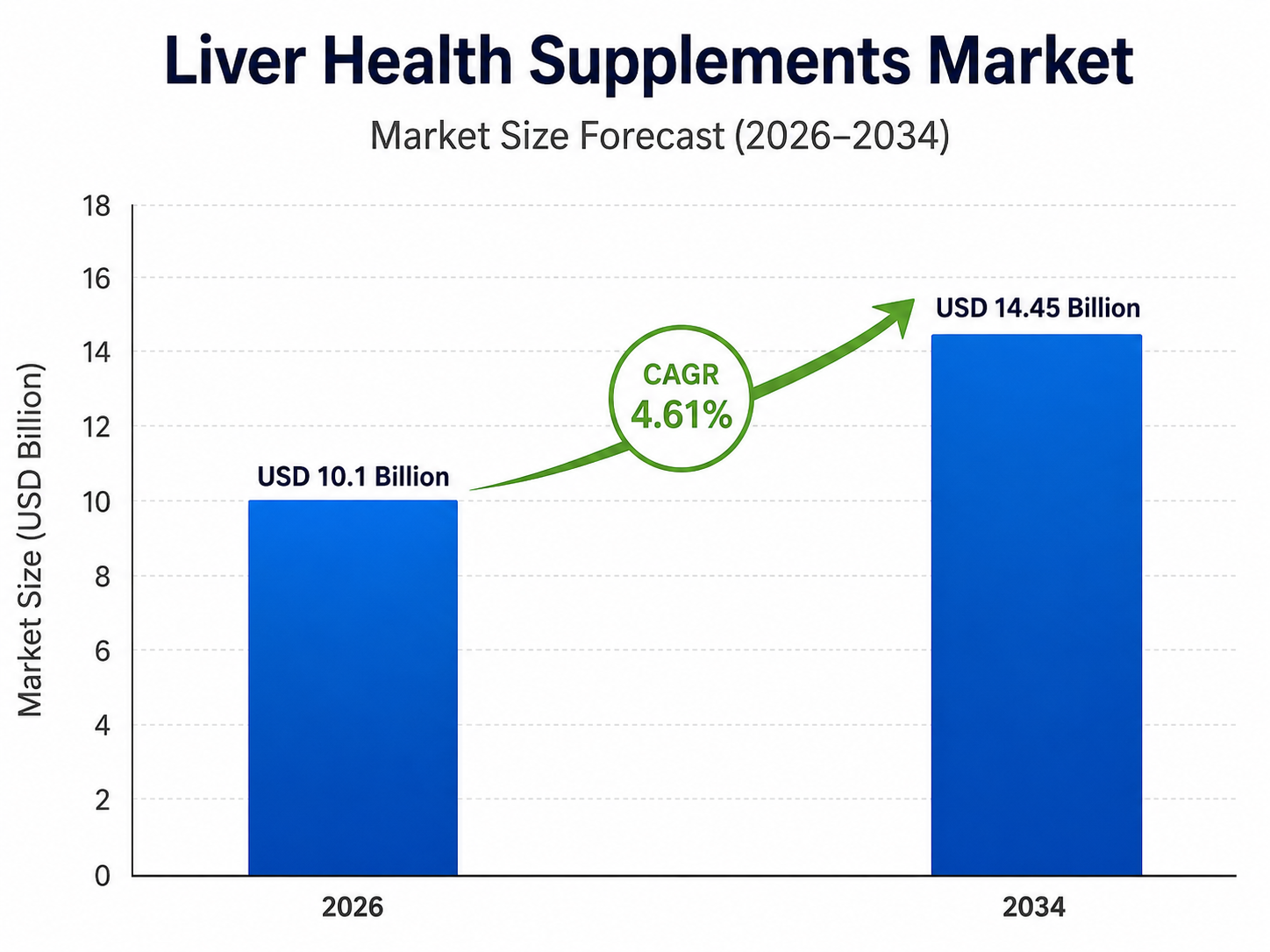
During the forecast period. Liver health supplements are widely used to support normal liver function, promote antioxidant protection, and maintain overall metabolic health. These products are formulated with ingredients such as milk thistle (silymarin), N-acetyl cysteine (NAC), artichoke extract, turmeric, dandelion, choline, vitamins, minerals, phospholipids, and other botanical or nutritional compounds. Market growth is being driven by increasing consumer awareness of preventive healthcare, rising concerns about lifestyle- and metabolism-related liver conditions, growing demand for dietary supplements, and the expanding reach of e-commerce platforms. Available in capsules, tablets, powders, liquids, and gummy formats, these supplements are distributed through pharmacies, supermarkets, specialty nutrition stores, healthcare practitioners, and online retail channels. In addition, manufacturers are focusing on clean-label formulations, standardized herbal extracts, transparent ingredient sourcing, third-party quality testing, and clinically supported products to strengthen consumer confidence and meet evolving market demand.
1. What is the latest trend in the Liver Health Supplements Market?
The latest trend is the shift toward clinically substantiated, clean-label, and multi-ingredient liver-support formulations.
Brands are combining milk thistle with NAC, choline, turmeric, artichoke, antioxidants, and metabolic-health ingredients.
Gummies, liquid shots, personalized packs, and subscription-based products are also expanding consumer choice.
Third-party testing, traceability, and transparent ingredient standardization are becoming stronger purchasing factors.
2. What are the key challenges in the Liver Health Supplements Market?
Key challenges include limited clinical evidence for some products, inconsistent ingredient quality, regulatory scrutiny, and exaggerated detoxification claims.
Botanical potency can vary according to plant source, extraction method, formulation, and storage conditions.
Certain supplements may interact with medicines or be unsuitable for consumers with existing health conditions.
Companies must balance attractive marketing with responsible claims, quality control, and consumer education.
3. What is the major driving factor for the Liver Health Supplements Market?
The major driving factor is growing consumer focus on preventive wellness and metabolic health.
Rising obesity, diabetes, alcohol consumption, medication use, and sedentary lifestyles are increasing public awareness of liver function.
Consumers are seeking convenient products that complement diet, exercise, and broader wellness routines.
Digital health content, practitioner recommendations, and expanding retail availability are further supporting demand.
4. What is the major segment in the Liver Health Supplements Market and why?
Herbal and botanical supplements represent a major segment, led by milk thistle and standardized silymarin formulations.
Milk thistle has strong consumer recognition and is widely incorporated into single-ingredient and combination liver-support products.
Botanical formulations also align with growing demand for plant-based, traditional, and natural wellness solutions.
Capsules and tablets remain major delivery formats because they provide convenience, dosage consistency, and shelf stability.
5. Which application or end-user is driving more demand?
Preventive-wellness consumers and adults concerned about metabolic, digestive, or lifestyle-related liver health are driving demand.
Products are commonly purchased by consumers seeking antioxidant support, general liver function, or nutritional supplementation.
Pharmacies, specialty nutrition retailers, and e-commerce platforms are important distribution channels.
Online channels are gaining importance through product comparison, subscription programs, reviews, and direct-to-consumer marketing.
6. Which region offers the highest growth potential and why?
Asia Pacific offers strong growth potential due to expanding supplement consumption, traditional herbal-medicine acceptance, and rising disposable income.
China, India, Japan, South Korea, and Australia have established markets for botanical and functional-health products.
North America remains a major established market because of high supplement usage and strong specialty-retail penetration.
Europe also offers opportunities for standardized, sustainably sourced, and regulatory-compliant botanical formulations.
7. What strategies are major companies adopting in the market?
Major companies are focusing on standardized extracts, clinically studied ingredients, third-party certification, and transparent labeling.
They are expanding combination products, vegan capsules, gummies, liquids, and products designed for broader metabolic wellness.
E-commerce investment, practitioner education, influencer marketing, and subscription models are supporting customer acquisition.
Companies are also strengthening ingredient sourcing, manufacturing quality, and regulatory-review capabilities.
8. What are the leading companies in the Liver Health Supplements Market?
Leading companies include Himalaya Wellness, Amway, NOW Foods, Nature’s Bounty, GNC, Blackmores, Jarrow Formulas, Nature’s Way, Swisse, Gaia Herbs, Life Extension, and Enzymedica.
These companies compete through brand reputation, ingredient quality, formulation breadth, certifications, pricing, and distribution reach.
Large brands benefit from established retail and online networks, while specialist players emphasize botanical expertise and premium positioning.
Companies with standardized ingredients and credible quality documentation are strengthening their competitive position.
9. Why are liver health supplements strategically important for wellness companies?
Liver health supplements allow wellness companies to participate in preventive health, metabolic wellness, healthy aging, and functional nutrition categories.
The segment supports product extensions across detox support, antioxidant formulations, digestive wellness, and daily supplementation.
Recurring consumption can create repeat purchases, subscription opportunities, and strong cross-selling potential.
However, responsible positioning is essential because supplements should not be presented as substitutes for medical diagnosis or treatment.
10. What is the future outlook for the Liver Health Supplements Market?
The market outlook remains positive as consumers place greater emphasis on preventive wellness and personalized supplementation.
Future growth will be supported by standardized botanicals, clinically studied combinations, digital personalization, and convenient delivery formats.
Regulatory compliance, scientific substantiation, traceability, and third-party testing will become increasingly important competitive factors.
Companies offering safe, transparent, responsibly marketed, and evidence-supported formulations are expected to gain market share.
Browse Related Reports:
https://www.oganalysis.com/industry-reports/botanical-supplement-market
https://www.oganalysis.com/industry-reports/meal-replacement-market
https://www.oganalysis.com/industry-reports/brain-health-supplements-market
https://www.oganalysis.com/industry-reports/high-purity-docosahexaenoic-acid-dha-market
https://www.oganalysis.com/industry-reports/malt-ingredients-market
