Omega-3 Prescription Drugs Market Outlook 2026–2034: Cardiovascular Risk Reduction, Growth Drivers, Leading Companies, and Future Opportunities
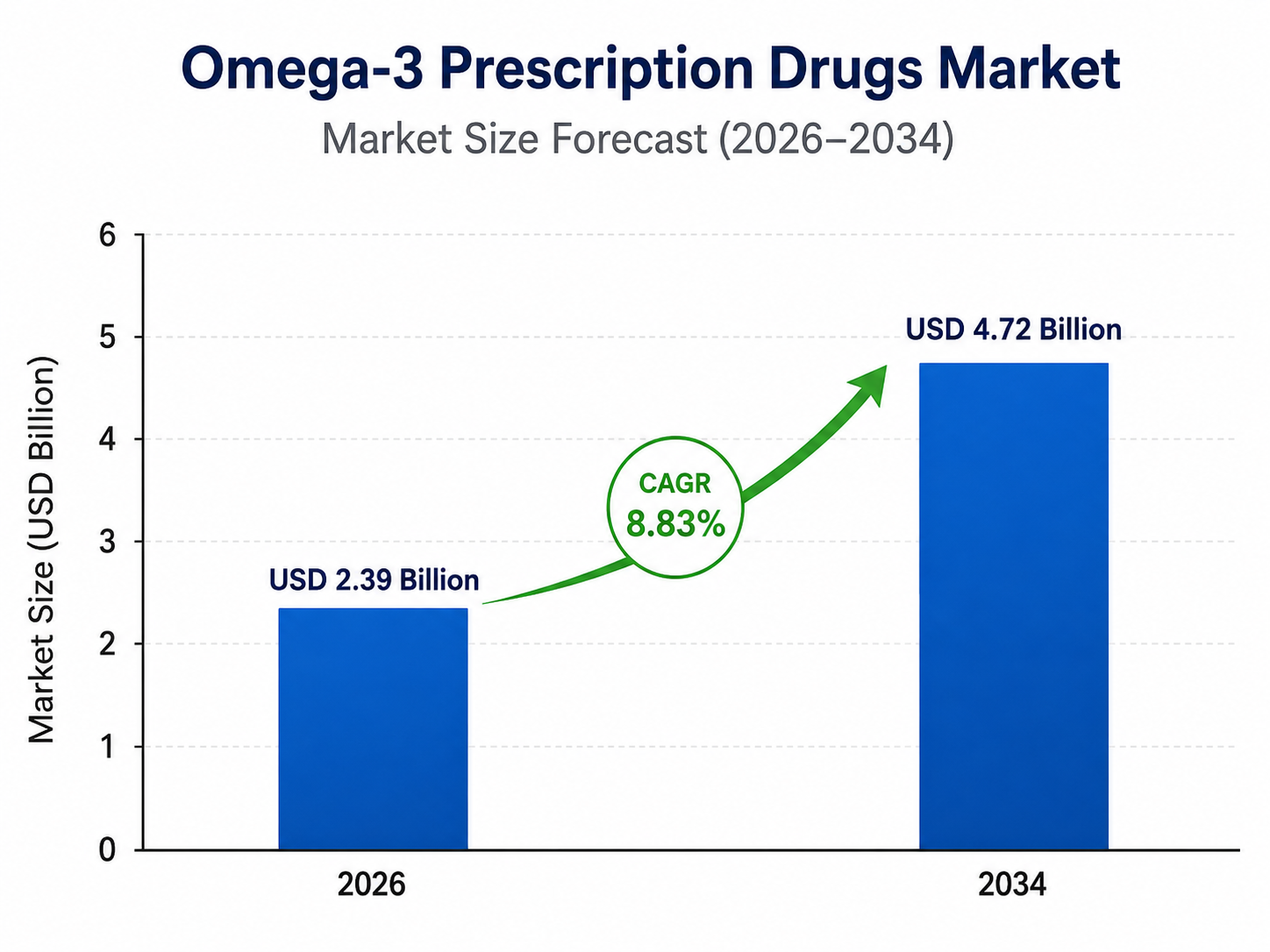
The Omega-3 Prescription Drugs Market is expected to grow from $ 2.39 billion in 2026 to $ 4.72 billion by 2034, registering a CAGR of 8.83%.
During the forecast period. The market is driven by the increasing use of prescription omega-3 therapies to manage severe hypertriglyceridemia and reduce cardiovascular risk among patients with metabolic and heart-related conditions. These pharmaceutical-grade medications contain highly purified forms of eicosapentaenoic acid (EPA), docosahexaenoic acid (DHA), or a combination of both, offering consistent quality and clinically validated efficacy. Widely prescribed products, including icosapent ethyl and omega-3-acid ethyl ester capsules, are available through both branded and generic channels. Rising cases of cardiovascular disease, diabetes, obesity, and lipid disorders, coupled with growing awareness of preventive cardiac care, are supporting market expansion. Cardiologists, primary care physicians, hospitals, specialty clinics, and retail pharmacies remain the key end users, while manufacturers are focusing on expanding market access through generic launches, stronger payer coverage, physician education initiatives, regional approvals, and clear differentiation of prescription therapies from over-the-counter fish oil supplements.
1. What is the latest trend in the Omega-3 Prescription Drugs Market?
The latest trend is the increasing preference for highly purified EPA-only formulations supported by cardiovascular-outcomes evidence.
Companies are expanding physician education, regional licensing, and statin-adjunct treatment positioning for high-risk patients.
Generic icosapent ethyl adoption is also increasing in price-sensitive markets and reimbursement channels.
Greater emphasis is being placed on distinguishing regulated prescription products from consumer fish-oil supplements.
2. What are the key challenges in the Omega-3 Prescription Drugs Market?
Key challenges include generic price pressure, reimbursement restrictions, variable physician awareness, and competition from established lipid-lowering drugs.
Patient confusion between prescription omega-3 medicines and over-the-counter supplements can weaken product differentiation.
Potential adverse effects, including bleeding or atrial fibrillation risk in selected patients, require appropriate clinical monitoring.
Patent disputes and differences in approved indications also influence commercialization strategies.
3. What is the major driving factor for the Omega-3 Prescription Drugs Market?
The major driving factor is the growing burden of hypertriglyceridemia and residual cardiovascular risk among statin-treated patients.
Rising rates of obesity, diabetes, metabolic syndrome, and sedentary lifestyles are expanding the eligible patient population.
Physicians increasingly require evidence-based adjunct therapies for patients whose lipid-related risks remain insufficiently controlled.
Greater cardiovascular screening and long-term disease management further support prescription demand.
4. What is the major segment in the Omega-3 Prescription Drugs Market and why?
Icosapent ethyl represents a major product segment because it contains highly purified EPA and has broad recognition in lipid management.
Its use extends beyond triglyceride reduction to cardiovascular-risk reduction in defined high-risk patient populations.
Strong clinical familiarity and established branded and generic availability support widespread prescription use.
EPA/DHA combination products remain important, particularly for severe hypertriglyceridemia treatment.
5. Which application or end-user is driving more demand?
Hypertriglyceridemia management and cardiovascular-risk reduction are the principal applications driving market demand.
Cardiology clinics, primary-care practices, lipid clinics, hospitals, and retail pharmacies account for substantial utilization.
Demand is strongest among adults with elevated triglycerides, established cardiovascular disease, diabetes, or multiple risk factors.
Long-term outpatient therapy generates recurring prescription and refill volumes.
6. Which region offers the highest growth potential and why?
Asia Pacific offers strong growth potential due to rising cardiovascular disease, diabetes, obesity, and healthcare access.
China, India, Japan, South Korea, and Southeast Asia are expanding preventive cardiology and chronic-disease treatment capacity.
North America remains the leading established market due to strong prescription volumes and broad generic availability.
Europe is also attractive as VAZKEPA commercialization expands through regional partnerships.
7. What strategies are major companies adopting in the market?
Major companies are focusing on geographic licensing, generic launches, physician education, payer access, and cardiovascular-outcomes positioning.
Branded manufacturers are expanding into underpenetrated international markets through commercial and supply partnerships.
Generic companies are competing through lower pricing, manufacturing scale, and broader pharmacy distribution.
Companies are also emphasizing purity, pharmaceutical quality, clinical evidence, and regulatory differentiation from supplements.
8. What are the leading companies in the Omega-3 Prescription Drugs Market?
Leading participants include Amarin, Recordati, Hikma Pharmaceuticals, Dr. Reddy’s Laboratories, Teva Pharmaceutical, Apotex, Zydus Lifesciences, Viatris, Sandoz, Sun Pharmaceutical, and Waylis Therapeutics.
Amarin markets VASCEPA and VAZKEPA, while multiple generic manufacturers supply icosapent ethyl in the United States.
Other companies participate through omega-3-acid ethyl ester products, generics, licensing, and regional distribution.
Competition is based on indication coverage, price, payer access, supply reliability, and commercial reach.
9. Why are omega-3 prescription drugs strategically important for healthcare providers?
Prescription omega-3 drugs provide standardized purity, dosing, manufacturing quality, and regulatory oversight not associated with typical supplements.
They offer physicians an additional treatment option for patients with severe triglyceride elevation or persistent cardiovascular risk.
Appropriate use may support broader lipid-management and cardiovascular-prevention strategies.
For healthcare systems, they can complement statins, dietary intervention, and management of metabolic risk factors.
10. What is the future outlook for the Omega-3 Prescription Drugs Market?
The market outlook remains positive, although growth will be moderated by generic competition and reimbursement pressure.
Expansion will be supported by rising cardiometabolic disease, broader diagnosis, international commercialization, and improved physician awareness.
EPA-only products are expected to retain strategic importance in cardiovascular-risk management for eligible patients.
Companies combining clinical evidence, affordable access, strong distribution, and geographic expansion are likely to gain share.
Browse Related Reports:
https://www.oganalysis.com/industry-reports/psychedelic-drugs-market
https://www.oganalysis.com/industry-reports/spatial-omics-market
https://www.oganalysis.com/industry-reports/actinic-keratosis-treatment-market
https://www.oganalysis.com/industry-reports/tuberculosis-diagnostics-market
https://www.oganalysis.com/industry-reports/acute-ischemic-stroke-drugs-market
