The Future of Innovation: Exploring the Solvent Recovery Bags Market
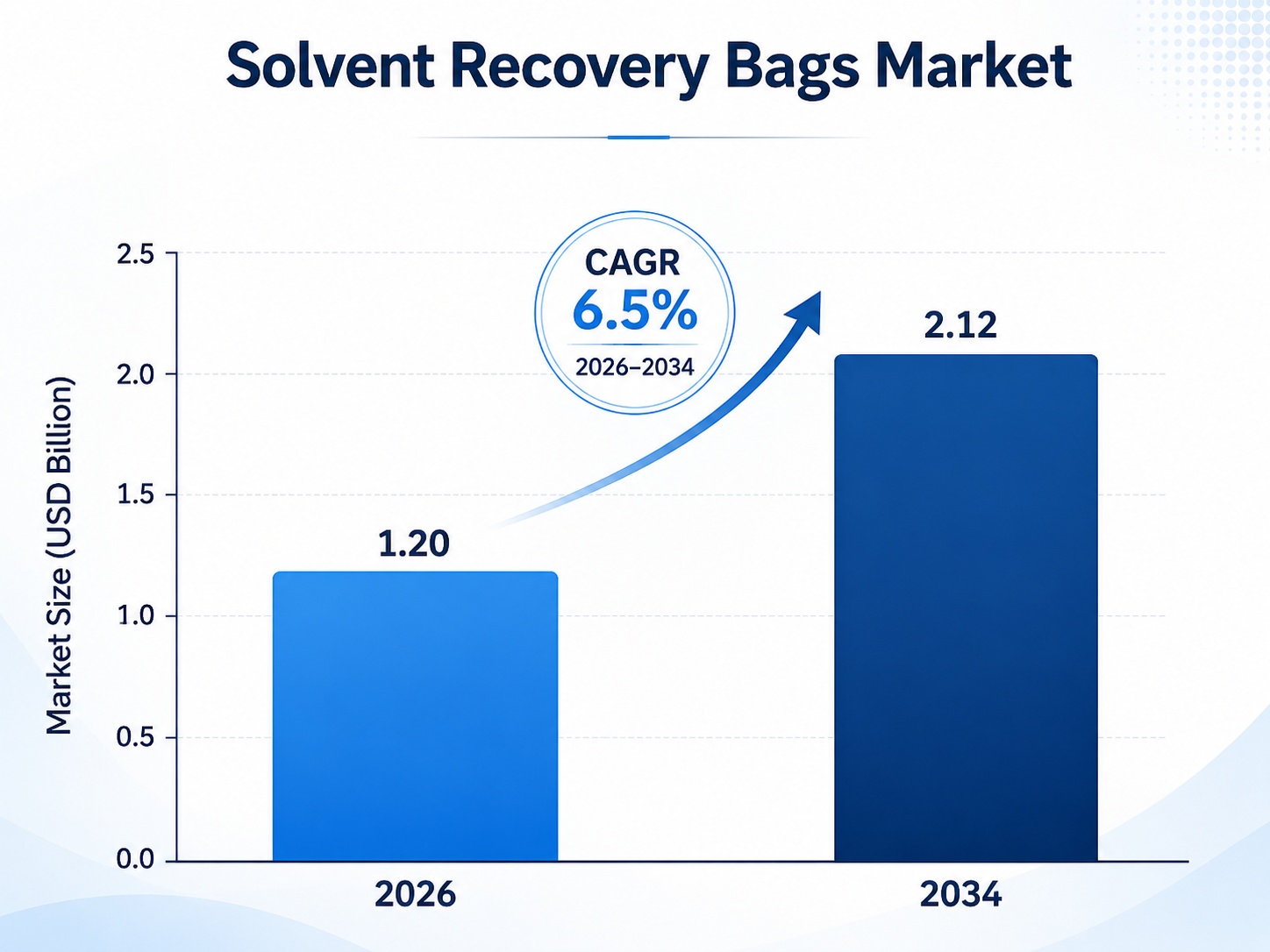
The Solvent Recovery Bags Market is estimated to be valued at USD 1.2 billion in 2026 and is projected to expand at a CAGR of 6.5 % from 2026 to 2034. Solvent recovery bags, also referred to as solvent recycler bags or distillation liner bags, are designed for use in solvent recovery machines to collect paint sludge, resins, pigments, adhesives, inks, polymers, and other residual waste following solvent evaporation. These bags help waste materials, reduce equipment cleaning requirements, improve operator safety, and support solvent recycling in industrial applications.Increasing demand as manufacturers prioritize reducing solvent purchase costs, lowering hazardous waste disposal volumes, and improving compliance with environmental and workplace safety standards. Adoption across automotive refinishing, coatings, printing, chemicals, composites, electronics cleaning, and industrial maintenance applications.
1. What is the major segment in the Solvent Recovery Bags Market and why?
Nylon and polyamide solvent recovery bags represent a major product segment because they offer heat resistance, solvent resistance, abrasion strength, and compatibility with common distillation equipment.
These bags are mostly used in small and medium solvent recyclers due to ease of handling, cost efficiency, and suitability for paint, ink, resin, and adhesive residues.
2. What is the latest trend in the Solvent Recovery Bags Market?
The latest trend is the increasing demand for equipment-compatible, high-temperature, and chemically resistant liner bags that reduce cleaning time and improve solvent recovery efficiency.
OEM-branded bags, custom sizes, improved film formulations, and bags designed for safer sludge disposal are growing in demand industrial users.
3. What is the major driving factor for the Solvent Recovery Bags Market?
The major driving factor is the growing need to reduce solvent waste, hazardous disposal costs, and fresh solvent purchases.
Manufacturers are adopting solvent recovery bags as part of closed-loop solvent recycling practices to improve operational efficiency, environmental compliance, and sustainability performance.
4. Which region offers the highest growth potential and why?
Asia Pacific offers strong growth potential due to expanding manufacturing, automotive refinishing, printing, coatings, chemicals, electronics, and industrial cleaning activities.
Europe and North America remain important markets because of stricter hazardous waste regulations, higher labor costs, and stronger adoption of solvent recycling equipment.
5. Which application or end-user is driving more demand?
Paints and coatings, automotive refinishing, printing, and industrial cleaning applications are driving strong demand for solvent recovery bags.
These industries generate frequent solvent-contaminated residues and require practical solutions to recover usable solvent while simplifying sludge removal and machine maintenance.
6. What are the key challenges in the Solvent Recovery Bags Market?
Key challenges include compatibility differences across solvent recyclers, variation in solvent chemistry, bag failure risks under high temperature, and limited awareness among small users.
Customers also require confidence that bags can withstand aggressive solvents, heavy sludge, sharp residue particles, and repeated high-heat recovery cycles.
7. What are the key companies in the Solvent Recovery Bags Market?
Key companies and suppliers include M&Q Packaging, Maratek Environmental, BECCA Inc., Mid-States Equipment, RECBAGS/OASE, SolventRecovery.com, Creative Resins, JTD Plastic Packaging, Uni-Ram, Formeco, OFRU Recycling, CBG Biotech, ISTpure, NexGen Enviro Systems, and PRI.
The market includes specialized liner manufacturers, solvent recycler OEMs, distributors, and industrial consumables suppliers.
8. What strategies are major companies adopting in the market?
Major companies are focusing on custom bag dimensions, higher heat resistance, chemical compatibility, OEM partnerships, private-label supply, and reliable bulk packaging formats.
Suppliers are also emphasizing fast delivery, equipment compatibility, recyclable or safer materials, and technical support for selecting the correct liner for each solvent recovery unit.
9. Why are solvent recovery bags strategically important for industrial users?
Solvent recovery bags help reduce downtime by keeping distillation tanks cleaner and making residue removal faster and safer.
They also support waste minimization, lower solvent procurement costs, reduce operator exposure to sludge, and improve the economics of solvent recycling programs.
10. What is the future outlook for the Solvent Recovery Bags Market?
The market outlook remains positive as industries continue shifting toward solvent reuse, waste reduction, and cleaner production practices.
Growth will be supported by stricter environmental norms, higher solvent costs, broader use of compact solvent recyclers, and increasing demand for consumables that improve recovery efficiency.
Browse Related Reports
https://www.oganalysis.com/industry-reports/oxygen-barrier-materials-market
