Agricultural Fumigants market Analysis and Outlook Report: Industry Size, Share, Growth Trends, and Forecast (2025-2034)

Published On: Feb, 2025
|
Pages: 155

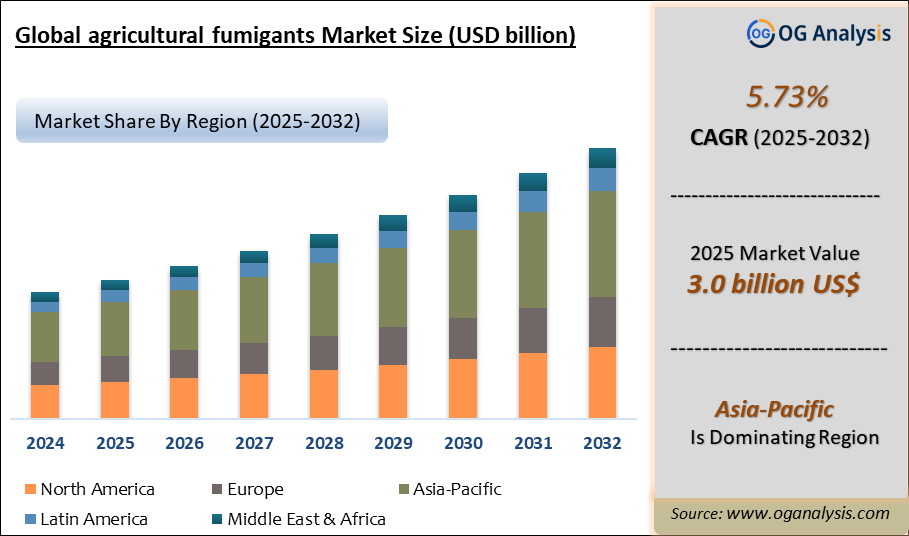
"The Global Agricultural Fumigants market valued at USD 2.9 billion in 2024, is expected to grow by 5.73% CAGR to reach market size worth USD 5.2 billion by 2034."

The agricultural fumigants market is a critical segment of the crop protection industry, providing essential tools for controlling soilborne pests, nematodes, and weeds. Fumigants are chemical compounds that are applied as gases to kill pests and pathogens within the soil, protecting crops from damage and ensuring higher yields. The market has been a vital component of modern agriculture, but recent years have seen increasing scrutiny and regulation due to concerns about the environmental impact and potential human health risks associated with some fumigants. In 2024, the agricultural fumigants market witnessed a shift towards more targeted and environmentally friendly approaches, with a focus on reducing the application rates of fumigants, minimizing off-target effects, and developing alternative pest control methods. Furthermore, the market saw a surge in the development of fumigants with shorter persistence in the soil, aiming to reduce potential environmental contamination.

Looking ahead to 2025, the agricultural fumigants market is expected to face a complex landscape, balancing the need for effective pest control with growing environmental and regulatory pressures. The market is likely to witness continued focus on sustainable practices, with an emphasis on reducing fumigant usage, exploring alternative pest control methods, and developing more environmentally friendly formulations. The market is expected to see heightened competition among established players and new entrants, with a focus on innovation, cost optimization, and compliance with evolving regulations. The future of the agricultural fumigants market will depend on a delicate balance of effectiveness, sustainability, and compliance, presenting both challenges and opportunities for industry players.
The Global Agricultural Fumigants Market Analysis Report will provide a comprehensive assessment of business dynamics, offering detailed insights into how companies can navigate the evolving landscape to maximize their market potential through 2034. This analysis will be crucial for stakeholders aiming to align with the latest industry trends and capitalize on emerging market opportunities.

Asia-Pacific is the leading region in the agricultural fumigants market, powered by the widespread cultivation of high-value crops, growing awareness of post-harvest losses, and government support for advanced pest control methods. Soil fumigation is the dominating segment, driven by its effectiveness in controlling soil-borne pathogens, nematodes, and weed seeds, and its crucial role in enhancing crop yield and quality.
Global agricultural fumigants Market Analysis 2025-2032: Industry Size, Share, Growth Trends, Competition and Forecast Report

Trade Intelligence for Agricultural Fumigants market

Global Rodenticides and other plant protection products in retail or prepared form Trade, Imports, USD million, 2020-24


2020

2021

2022

2023

2024

World

           2,502

           2,613

           2,548

           2,265

           2,293

India

              601

              639

              462

              217

              177

Hungary

                61

                54

                59

                86

              148

France

                91

              108

              134

              123

              142

United States of America

              114

              114

              138

              109

              125

Italy

                76

                93

                91

                97

                85

Source: OGAnalysis

- India, Hungary, France, United States of America and Italy are the top five countries importing 29.5% of global Rodenticides and other plant protection products in retail or prepared form in 2024
- Global Rodenticides and other plant protection products in retail or prepared form Imports decreased by 8.3% between 2020 and 2024
- India accounts for 7.7% of global Rodenticides and other plant protection products in retail or prepared form trade in 2024
- Hungary accounts for 6.5% of global Rodenticides and other plant protection products in retail or prepared form trade in 2024
- France accounts for 6.2% of global Rodenticides and other plant protection products in retail or prepared form trade in 2024

Global Rodenticides and other plant protection products in retail or prepared form Export Prices, USD/Ton, 2020-24

Source: OGAnalysis

Agricultural Fumigants Market Strategy, Price Trends, Drivers, Challenges and Opportunities to 2034

In terms of market strategy, price trends, drivers, challenges, and opportunities from2025 to 2034, Agricultural Fumigants market players are directing investments toward acquiring new technologies, securing raw materials through efficient procurement and inventory management, enhancing product portfolios, and leveraging capabilities to sustain growth amidst challenging conditions. Regional-specific strategies are being emphasized due to highly varying economic and social challenges across countries.

Factors such as global economic slowdown, the impact of geopolitical tensions, delayed growth in specific regions, and the risks of stagflation necessitate a vigilant and forward-looking approach among Agricultural Fumigants industry players. Adaptations in supply chain dynamics and the growing emphasis on cleaner and sustainable practices further drive strategic shifts within companies.

The market study delivers a comprehensive overview of current trends and developments in the Agricultural Fumigants industry, complemented by detailed descriptive and prescriptive analyses for insights into the market landscape until 2034.
 

North America Agricultural Fumigants Market Analysis

The North America Agricultural Fumigants market exhibited robust developments in 2024, driven by advancements in precision agriculture, sustainable farming practices, and the adoption of cutting-edge technologies such as AI and robotics in agriculture. Key trends include a shift toward biological solutions like agricultural microbial and biopolymers, along with growing demand for connected agriculture platforms. Anticipated growth from 2025 is underpinned by increased government incentives promoting eco-friendly practices, the rising focus on food security, and enhanced technological integration across farming operations. The competitive landscape is marked by significant investments in R&D by leading players and strategic collaborations to develop innovative solutions. Companies leveraging AI, bioplastics, and agrochemical CDMO services are poised to gain a competitive edge, addressing evolving consumer and regulatory demands for sustainable agricultural practices.
 

Europe Agricultural Fumigants Market Outlook

In 2024, the Europe Agricultural Fumigants market witnessed accelerated developments in sustainable agriculture, with a notable emphasis on bioplastics, probiotics in animal feed, and aquaponics. These advancements align with stringent EU regulations promoting eco-friendly solutions and reducing chemical inputs. From 2025, the market is expected to see significant growth fueled by policy-driven innovation, growing consumer preference for organic products, and increased adoption of artificial intelligence in agriculture. The competitive landscape is characterized by a strong presence of regional players and cross-border collaborations aimed at advancing biological solutions and connected agriculture technologies. Innovations in agricultural packaging and the deployment of self-loading feed mixers further reinforce the region’s push toward sustainability and efficiency.
 

Asia-Pacific Agricultural Fumigants Market Forecast

Asia-Pacific’s Agricultural Fumigants market expanded significantly in 2024, driven by increasing investments in agricultural robotics, aquaponics, and microbial-based solutions to meet the rising food demand and combat resource constraints. Growth prospects from 2025 are bolstered by advancements in connected agriculture technologies, expanding government initiatives to modernize farming, and heightened focus on climate-resilient farming practices. The competitive landscape reveals a dynamic interplay of multinational corporations and emerging startups, particularly in markets like artificial intelligence in agriculture and agrochemical CDMO services. Players prioritizing scalability, cost-efficiency, and sustainable practices are likely to capitalize on the region's growing appetite for agricultural innovation.

Middle East, Africa, Latin America (RoW) Agricultural Fumigants Market
The Middle East, Africa, Latin America Agricultural Fumigants market demonstrated promising progress in 2024, with rising adoption of sustainable farming practices in regions like the Middle East, Africa, and South America. Key developments include the growing penetration of agricultural biologicals, artificial reefs for ecosystem restoration, and sea buckthorn cultivation for nutraceutical applications. Anticipated growth from 2025 is supported by increasing international funding for agri-tech solutions, burgeoning interest in aquaponics, and expanding agricultural trade networks. The competitive landscape features a mix of local innovators and global players leveraging region-specific strategies to address resource constraints and enhance productivity. Investments in AI-driven agriculture, bioplastics, and advanced feed solutions are expected to drive market expansion in underserved regions.
 

Agricultural Fumigants Market Dynamics and Future Analytics

The research analyses the Agricultural Fumigants parent market, derived market, intermediaries’ market, raw material market, and substitute market are all evaluated to better prospect the Agricultural Fumigants market outlook. Geopolitical analysis, demographic analysis, and Porter’s five forces analysis are prudently assessed to estimate the best Agricultural Fumigants market projections.

Recent deals and developments are considered for their potential impact on Agricultural Fumigants's future business. Other metrics analyzed include the Threat of New Entrants, Threat of New Substitutes, Product Differentiation, Degree of Competition, Number of Suppliers, Distribution Channel, Capital Needed, Entry Barriers, Govt. Regulations, Beneficial Alternative, and Cost of Substitute in Agricultural Fumigants market.

Agricultural Fumigants trade and price analysis helps comprehend Agricultural Fumigants's international market scenario with top exporters/suppliers and top importers/customer information. The data and analysis assist our clients in planning procurement, identifying potential vendors/clients to associate with, understanding Agricultural Fumigants price trends and patterns, and exploring new Agricultural Fumigants sales channels. The research will be updated to the latest month to include the impact of the latest developments such as the Russia-Ukraine war on the Agricultural Fumigants market.

Agricultural Fumigants Market Structure, Competitive Intelligence and Key Winning Strategies

The report presents detailed profiles of top companies operating in the Agricultural Fumigants market and players serving the Agricultural Fumigants value chain along with their strategies for the near, medium, and long term period.

OGAnalysis’ proprietary company revenue and product analysis model unveils the Agricultural Fumigants market structure and competitive landscape. Company profiles of key players with a business description, product portfolio, SWOT analysis, Financial Analysis, and key strategies are covered in the report. It identifies top-performing Agricultural Fumigants products in global and regional markets. New Product Launches, Investment & Funding updates, Mergers & Acquisitions, Collaboration & Partnership, Awards and Agreements, Expansion, and other developments give our clients the Agricultural Fumigants market update to stay ahead of the competition.
Company offerings in different segments across Asia-Pacific, Europe, the Middle East, Africa, and South and Central America are presented to better understand the company strategy for the Agricultural Fumigants market. The competition analysis enables users to assess competitor strategies and helps align their capabilities and resources for future growth prospects to improve their market share.

Agricultural Fumigants Market Research Scope
• Global Agricultural Fumigants market size and growth projections (CAGR), 2024- 2034
• Policies of USA New President Trump, Russia-Ukraine War, Israel-Palestine, Middle East Tensions Impact on the Agricultural Fumigants Trade and Supply-chain
• Agricultural Fumigants market size, share, and outlook across 5 regions and 27 countries, 2023- 2034
• Agricultural Fumigants market size, CAGR, and Market Share of key products, applications, and end-user verticals, 2023- 2034
• Short and long-term Agricultural Fumigants market trends, drivers, restraints, and opportunities
• Porter’s Five Forces analysis, Technological developments in the Agricultural Fumigants market, Agricultural Fumigants supply chain analysis
• Agricultural Fumigants trade analysis, Agricultural Fumigants market price analysis, Agricultural Fumigants supply/demand
• Profiles of 5 leading companies in the industry- overview, key strategies, financials, and products
• Latest Agricultural Fumigants market news and developments
The Agricultural Fumigants Market international scenario is well established in the report with separate chapters on North America Agricultural Fumigants Market, Europe Agricultural Fumigants Market, Asia-Pacific Agricultural Fumigants Market, Middle East and Africa Agricultural Fumigants Market, and South and Central America Agricultural Fumigants Markets. These sections further fragment the regional Agricultural Fumigants market by type, application, end-user, and country.

Report Scope

Parameter

Agricultural Fumigants Market scope Detail

Base Year

2024

Estimated Year

2025

Forecast Period

2026-2032

Market Size-Units

USD billion

Market Splits Covered

By Product, By form, By Crop type, By Function, By Application

Countries Covered

North America (USA, Canada, Mexico)
Europe (Germany, UK, France, Spain, Italy, Rest of Europe)
Asia-Pacific (China, India, Japan, Australia, Rest of APAC)
The Middle East and Africa (Middle East, Africa)
South and Central America (Brazil, Argentina, Rest of SCA)

Analysis Covered

Latest Trends, Driving Factors, Challenges, Trade Analysis, Price Analysis, Supply-Chain Analysis, Competitive Landscape, Company Strategies

Customization

10% free customization (up to 10 analyst hours) to modify segments, geographies, and companies analyzed

Post-Sale Support

4 analyst hours, available up to 4 weeks

Delivery Format

The Latest Updated PDF and Excel Data file


Regional Insights
North America Agricultural Fumigants market data and outlook to 2034
United States
Canada
Mexico

Europe Agricultural Fumigants market data and outlook to 2034
Germany
United Kingdom
France
Italy
Spain
BeNeLux
Russia

Asia-Pacific Agricultural Fumigants market data and outlook to 2034
China
Japan
India
South Korea
Australia
Indonesia
Malaysia
Vietnam

Middle East and Africa Agricultural Fumigants market data and outlook to 2034
Saudi Arabia
South Africa
Iran
UAE
Egypt

South and Central America Agricultural Fumigants market data and outlook to 2034
Brazil
Argentina
Chile
Peru

* We can include data and analysis of additional coutries on demand

Who can benefit from this research
The research would help top management/strategy formulators/business/product development/sales managers and investors in this market in the following ways
1. The report provides 2024 Agricultural Fumigants market sales data at the global, regional, and key country levels with a detailed outlook to 2034 allowing companies to calculate their market share and analyze prospects, uncover new markets, and plan market entry strategy.

2. The research includes the Agricultural Fumigants market split into different types and applications. This segmentation helps managers plan their products and budgets based on the future growth rates of each segment

3. The Agricultural Fumigants market study helps stakeholders understand the breadth and stance of the market giving them information on key drivers, restraints, challenges, and growth opportunities of the market and mitigating risks

4. This report would help top management understand competition better with a detailed SWOT analysis and key strategies of their competitors, and plan their position in the business

5. The study assists investors in analyzing Agricultural Fumigants business prospects by region, key countries, and top companies' information to channel their investments.

Agricultural Fumigants Market Segmentation

by Product Type
- Methyl bromide
- Phosphine
- Chloropicrin
- Metam sodium
- 1,3-Dichloropropene
- Others

by Crop Type
- Cereals & grains
- Oilseeds & pulses
- Fruits & vegetables
- Others

by Application
- Field
- Nursery
- Greenhouse
- Transplant bed
- Silo
- Stack

by Form
- Solid
- Liquid
- Gaseous

by Function
- Insecticides
- Fungicides
- Nematicides
- Herbicides

By Geography
- North America (USA, Canada, Mexico)
- Europe (Germany, UK, France, Spain, Italy, Rest of Europe)
- Asia-Pacific (China, India, Japan, Australia, Vietnam, Rest of APAC)
- The Middle East and Africa (Middle East, Africa)
- South and Central America (Brazil, Argentina, Rest of SCA)

List Of Companies

  • Dow

  • Bayer

  • Arkema

  • AMVAC Chemical Corporation

  • Syngenta

  • LANXESS

  • BASF

  • Trinity Manufacturing, Inc.

  • Arysta LifeScience

  • Novozymes


Key Recent Developments

  • Degesch America introduced U-Phos, a new cylinderized phosphine fumigant in the U.S., expanding the approved tools for stored-grain pest control.
  • Sumitomo Chemical launched an environmentally friendlier soil fumigant formulation aimed at reducing residual environmental impact while maintaining pest suppression.
  • The grain fumigants segment is seeing strong demand in Asia-Pacific, driven by rising agricultural production, increased need for post-harvest protection, and better storage infrastructure.
  • Regulatory pressure in many regions is pushing the shift from more hazardous fumigants toward safer alternatives, tighter application controls, and stronger emphasis on food safety compliance.

1. Table of Contents
1.1 List of Tables
1.2 List of Figures

2. Global Agricultural Fumigants Market Review, 2024
2.1 Agricultural Fumigants Industry Overview
2.2 Research Methodology

3. Agricultural Fumigants Market Insights
3.1 Agricultural Fumigants Market Trends to 2034
3.2 Future Opportunities in Agricultural Fumigants Market
3.3 Dominant Applications of Agricultural Fumigants, 2024 Vs 2034
3.4 Key Types of Agricultural Fumigants, 2024 Vs 2034
3.5 Leading End Uses of Agricultural Fumigants Market, 2024 Vs 2034
3.6 High Prospect Countries for Agricultural Fumigants Market, 2024 Vs 2034

4. Agricultural Fumigants Market Trends, Drivers, and Restraints
4.1 Latest Trends and Recent Developments in Agricultural Fumigants Market
4.2 Key Factors Driving the Agricultural Fumigants Market Growth
4.2 Major Challenges to the Agricultural Fumigants industry, 2025- 2034
4.3 Impact of Wars and geo-political tensions on Agricultural Fumigants supply chain

5 Five Forces Analysis for Global Agricultural Fumigants Market
5.1 Agricultural Fumigants Industry Attractiveness Index, 2024
5.2 Agricultural Fumigants Market Threat of New Entrants
5.3 Agricultural Fumigants Market Bargaining Power of Suppliers
5.4 Agricultural Fumigants Market Bargaining Power of Buyers
5.5 Agricultural Fumigants Market Intensity of Competitive Rivalry
5.6 Agricultural Fumigants Market Threat of Substitutes

6. Global Agricultural Fumigants Market Data – Industry Size, Share, and Outlook
6.1 Agricultural Fumigants Market Annual Sales Outlook, 2025- 2034 ($ Million)
6.1 Global Agricultural Fumigants Market Annual Sales Outlook by Type, 2025- 2034 ($ Million)
6.2 Global Agricultural Fumigants Market Annual Sales Outlook by Application, 2025- 2034 ($ Million)
6.3 Global Agricultural Fumigants Market Annual Sales Outlook by End-User, 2025- 2034 ($ Million)
6.4 Global Agricultural Fumigants Market Annual Sales Outlook by Region, 2025- 2034 ($ Million)

7. Asia Pacific Agricultural Fumigants Industry Statistics – Market Size, Share, Competition and Outlook
7.1 Asia Pacific Market Insights, 2024
7.2 Asia Pacific Agricultural Fumigants Market Revenue Forecast by Type, 2025- 2034 (USD Million)
7.3 Asia Pacific Agricultural Fumigants Market Revenue Forecast by Application, 2025- 2034(USD Million)
7.4 Asia Pacific Agricultural Fumigants Market Revenue Forecast by End-User, 2025- 2034 (USD Million)
7.5 Asia Pacific Agricultural Fumigants Market Revenue Forecast by Country, 2025- 2034 (USD Million)
7.5.1 China Agricultural Fumigants Analysis and Forecast to 2034
7.5.2 Japan Agricultural Fumigants Analysis and Forecast to 2034
7.5.3 India Agricultural Fumigants Analysis and Forecast to 2034
7.5.4 South Korea Agricultural Fumigants Analysis and Forecast to 2034
7.5.5 Australia Agricultural Fumigants Analysis and Forecast to 2034
7.5.6 Indonesia Agricultural Fumigants Analysis and Forecast to 2034
7.5.7 Malaysia Agricultural Fumigants Analysis and Forecast to 2034
7.5.8 Vietnam Agricultural Fumigants Analysis and Forecast to 2034

7.6 Leading Companies in Asia Pacific Agricultural Fumigants Industry

8. Europe Agricultural Fumigants Market Historical Trends, Outlook, and Business Prospects
8.1 Europe Key Findings, 2024
8.2 Europe Agricultural Fumigants Market Size and Percentage Breakdown by Type, 2025- 2034 (USD Million)
8.3 Europe Agricultural Fumigants Market Size and Percentage Breakdown by Application, 2025- 2034 (USD Million)
8.4 Europe Agricultural Fumigants Market Size and Percentage Breakdown by End-User, 2025- 2034 (USD Million)
8.5 Europe Agricultural Fumigants Market Size and Percentage Breakdown by Country, 2025- 2034 (USD Million)
8.5.1 2024 Germany Agricultural Fumigants Market Size and Outlook to 2034
8.5.2 2024 United Kingdom Agricultural Fumigants Market Size and Outlook to 2034
8.5.3 2024 France Agricultural Fumigants Market Size and Outlook to 2034
8.5.4 2024 Italy Agricultural Fumigants Market Size and Outlook to 2034
8.5.5 2024 Spain Agricultural Fumigants Market Size and Outlook to 2034
8.5.6 2024 BeNeLux Agricultural Fumigants Market Size and Outlook to 2034
8.5.7 2024 Russia Agricultural Fumigants Market Size and Outlook to 2034

8.6 Leading Companies in Europe Agricultural Fumigants Industry

9. North America Agricultural Fumigants Market Trends, Outlook, and Growth Prospects
9.1 North America Snapshot, 2024
9.2 North America Agricultural Fumigants Market Analysis and Outlook by Type, 2025- 2034($ Million)
9.3 North America Agricultural Fumigants Market Analysis and Outlook by Application, 2025- 2034($ Million)
9.4 North America Agricultural Fumigants Market Analysis and Outlook by End-User, 2025- 2034($ Million)
9.5 North America Agricultural Fumigants Market Analysis and Outlook by Country, 2025- 2034($ Million)
9.5.1 United States Agricultural Fumigants Market Analysis and Outlook
9.5.2 Canada Agricultural Fumigants Market Analysis and Outlook
9.5.3 Mexico Agricultural Fumigants Market Analysis and Outlook
9.6 Leading Companies in North America Agricultural Fumigants Business

10. Latin America Agricultural Fumigants Market Drivers, Challenges, and Growth Prospects
10.1 Latin America Snapshot, 2024
10.2 Latin America Agricultural Fumigants Market Future by Type, 2025- 2034($ Million)
10.3 Latin America Agricultural Fumigants Market Future by Application, 2025- 2034($ Million)
10.4 Latin America Agricultural Fumigants Market Future by End-User, 2025- 2034($ Million)
10.5 Latin America Agricultural Fumigants Market Future by Country, 2025- 2034($ Million)
10.5.1 Brazil Agricultural Fumigants Market Analysis and Outlook to 2034
10.5.2 Argentina Agricultural Fumigants Market Analysis and Outlook to 2034
10.5.3 Chile Agricultural Fumigants Market Analysis and Outlook to 2034

10.6 Leading Companies in Latin America Agricultural Fumigants Industry

11. Middle East Africa Agricultural Fumigants Market Outlook and Growth Prospects
11.1 Middle East Africa Overview, 2024
11.2 Middle East Africa Agricultural Fumigants Market Statistics by Type, 2025- 2034 (USD Million)
11.3 Middle East Africa Agricultural Fumigants Market Statistics by Application, 2025- 2034 (USD Million)
11.4 Middle East Africa Agricultural Fumigants Market Statistics by End-User, 2025- 2034 (USD Million)
11.5 Middle East Africa Agricultural Fumigants Market Statistics by Country, 2025- 2034 (USD Million)
11.5.1 South Africa Agricultural Fumigants Market Outlook
11.5.2 Egypt Agricultural Fumigants Market Outlook
11.5.3 Saudi Arabia Agricultural Fumigants Market Outlook
11.5.4 Iran Agricultural Fumigants Market Outlook
11.5.5 UAE Agricultural Fumigants Market Outlook

11.6 Leading Companies in Middle East Africa Agricultural Fumigants Business

12. Agricultural Fumigants Market Structure and Competitive Landscape
12.1 Key Companies in Agricultural Fumigants Business
12.2 Agricultural Fumigants Key Player Benchmarking
12.3 Agricultural Fumigants Product Portfolio
12.4 Financial Analysis
12.5 SWOT and Financial Analysis Review

14. Latest News, Deals, and Developments in Agricultural Fumigants Market
14.1 Agricultural Fumigants trade export, import value and price analysis

15 Appendix
15.1 Publisher Expertise
15.2 Agricultural Fumigants Industry Report Sources and Methodology


Get Free Sample

At OG Analysis, we understand the importance of informed decision-making in today's dynamic business landscape. To help you experience the depth and quality of our market research reports, we offer complimentary samples tailored to your specific needs.

Start Now! Please fill the form below for your free sample.

Why Request a Free Sample?

Evaluate Our Expertise: Our reports are crafted by industry experts and seasoned analysts. Requesting a sample allows you to assess the depth of research and the caliber of insights we provide.

Tailored to Your Needs: Let us know your industry, market segment, or specific topic of interest. Our free samples are customized to ensure relevance to your business objectives.

Witness Actionable Insights: See firsthand how our reports go beyond data, offering actionable insights and strategic recommendations that can drive your business forward.

Embark on your journey towards strategic decision-making by requesting a free sample from OG Analysis. Experience the caliber of insights that can transform the way you approach your business challenges.

You can purchase individual sections of this report. Explore pricing options for specific sections.

FAQ's

The Agricultural Fumigants market is estimated to reach USD 5.2 billion by 2034.

The Global Agricultural Fumigants market is expected to grow at a Compound Annual Growth Rate (CAGR) of 5.73% during the forecast period from 2025 to 2034.

The Global Agricultural Fumigants market is estimated to generate USD 3.1 billion in revenue in 2025

License

$3950- 30%

$5850- 40%

$7850- 50%

$2850- 20%

Didn’t find what you’re looking for? TALK TO OUR ANALYST TEAM

Need something within your budget? NO WORRIES! WE GOT YOU COVERED!

Related Products

Ground Calcium Carbonate Market Outlook Report

Ground Calcium Carbonate Market Overview Ground calcium carbonate commonly referred to as GCC is finely ground limestone or marble, a calcium carbonate material having the chemical formula, CaCO3. GCC accounts for more than 80% of the Calcium carbonate market that is available in Ground Calcium Carbonate (GCC) and Precipitated Calcium Carbonate (PCC) forms. GCC is produced by mechanical grinding of the raw material, limestone, and then classified to the desired size without involving any chemical change in the process. In a magnified view, the distribution of particle sizes in a GCC is much broader than for a PCC of the same size, implying that there are many more large particles and many more small particles than in a PCC. The size of the largest of the particles (the ""top size"") is much greater for a GCC than for a PCC, thus making GCC a less refined version of Calcium carbonate. GCC is widely used as an industrial mineral is differentiated by three primary attributes - particle size, color and chemical purity. The mineral finds application in various industries based on its quality and suitability of use. Trade Intelligence forGround Calcium Carbonate Market Global Calcium carbonate Trade, Imports, USD million, 2020-24 2020 2021 2022 2023 2024 World 917 1,067 1,141 964 922 Germany 95.7 103 89.6 73.6 67.3 India 79.9 141 164 68.9 63.7 Saudi Arabia 33.8 37.9 35.8 29.5 39.2 Indonesia 31.5 37.9 44.1 40.5 38.4 United States of America 28.0 29.7 47.3 35.9 35.7 Source: OGAnalysis, International Trade Centre (ITC) - Germany, India, Saudi Arabia, Indonesia and United States of America are the top five countries importing 26.5% of global Calcium carbonate in 2024 - Global Calcium carbonate Imports increased by 0.5% between 2020 and 2024 - Germany accounts for 7.3% of global Calcium carbonate trade in 2024 - India accounts for 6.9% of global Calcium carbonate trade in 2024 - Saudi Arabia accounts for 4.3% of global Calcium carbonate trade in 2024 Global Calcium carbonate Export Prices, USD/Ton, 2020-24 Source: OGAnalysis Latest Trends in Ground Calcium Carbonate Market Growing Usage of Calcium Carbonate as Industrial Filler: Industrial filler has been the top and continuously growing application for calcium carbonate. Finely ground calcium carbonate is used as a filler in plastics, paints, and paper to improve aesthetics, and functionality and to save on filling costs. Calcium carbonate consumption as the filler has the potential to exceed calcium carbonate used as a dimension stone, in a few key markets. The most abundant sources of carbonate mineral fillers are the reserves of white marble. The most important attributes of carbonate fillers that decide their usefulness in industrial applications are particle size, brightness (whiteness), and chemical purity. Fillers were earlier used to substitute costlier materials in paint or polymers in rubbers or plastics. Currently, they are being used to add stiffness, color, opacity, or other required qualities to a product. Innovative technologies allowing the usage of GCC in new applications without altering the originality and functionality are aiding further penetration of GCC. Driving Factors Increase in Demand from the Construction and Infrastructure Sector: Robust development in construction and infrastructure activities across the world is generating demand for paints, coatings, adhesives, ceramics and various other polymers and concretes. These end-users are further deriving demand for ground calcium carbonate materials. Increasing Population, growing urbanization and fast-developing economies, especially in Asia and the Middle East, have led to growth in the need for infrastructure. Huge developments in infra projects and high-rise apartments necessitate lightweight and cost-effective options. Ground Calcium Carbonate is evolving robustly to match those requirements precisely. Market Challenges Environmental hazards of limestone mining: Limestone mining can disturb groundwater conditions. Limestone deposits frequently arise in association with karst, a landscape where limestone gradually dissolves underground. The deposits result in caves, sinkholes, and areas of rock ruptures that create underground drainage areas. Mining in karst can disturb natural aquifers and alter the flow of the underground water. Excavating operations often remove ground water to expose the mining site; this can decrease the level of the water table and alter water flows through rock formations. Streams and rivers can be changed when mines pump excess water from a limestone quarry into natural downstream channels. This increases the danger of flooding and any pollutants or alterations in water quality disturb the surface water. Report Scope Parameter Ground Calcium Carbonate market scope Detail Base Year 2024 Estimated Year 2025 Forecast Period 2026-2032 Market Size-Units USD million Market Splits Covered By form, By End-User Countries Covered North America (USA, Canada, Mexico) Europe (Germany, UK, France, Spain, Italy, Rest of Europe) Asia-Pacific (China, India, Japan, Australia, Rest of APAC) The Middle East and Africa (Middle East, Africa) South and Central America (Brazil, Argentina, Rest of SCA) Analysis Covered Latest Trends, Driving Factors, Challenges, Trade Analysis, Price Analysis, Supply-Chain Analysis, Competitive Landscape, Company Strategies Customization 10% free customization (up to 10 analyst hours) to modify segments, geographies, and companies analyzed Post-Sale Support 4 analyst hours, available up to 4 weeks Delivery Format The Latest Updated PDF and Excel Data file

Published:Feb-2025

TPU Filament Market Analysis and Outlook Report: Industry Size, Share, Growth Trends, and Forecast (2025-2034)

The TPU Filament Market is rapidly evolving as additive manufacturing gains widespread traction across sectors such as automotive, healthcare, sportswear, electronics, and industrial design. Thermoplastic polyurethane (TPU) filament is particularly prized for its flexibility, durability, and resistance to abrasion, making it an ideal choice for printing parts that require elasticity and mechanical performance. From wearable components and protective gear to seals, gaskets, and functional prototypes, TPU is becoming a go-to material in FDM (Fused Deposition Modeling) 3D printing. As the demand for customizable, on-demand, and lightweight components grows, industries are increasingly turning to TPU filament for producing complex geometries with enhanced tactile properties and chemical resistance, while also benefiting from shorter production lead times. Advancements in extrusion technology and material formulation are significantly enhancing the printability and consistency of TPU filaments. Key players are investing in R&D to develop high-flow variants, antimicrobial properties, and filaments with optimized surface finish and shore hardness. Asia-Pacific is emerging as a production and consumption hub due to its expanding electronics and automotive base, while North America and Europe remain strongholds of innovation and early adoption. Market competitiveness is intensifying with a mix of specialized filament producers and global polymer giants offering tailored grades of TPU to meet application-specific needs. Custom color matching, low-odor processing, and bio-based TPU innovations are also shaping strategic differentiation among manufacturers. Trade Intelligence-TPU Filament Market Global monofilaments, rods, sticks & profiles (>1 mm, excl. ethylene/vinyl chloride) , Imports, USD million, 2020-24 2020 2021 2022 2023 2024 World 2,126 2,646 2,802 2,627 2,639 United States of America 205 245 270 241 234 Germany 177 221 245 224 204 United Kingdom 93 84 127 113 125 France 114 148 168 147 123 Poland 91 116 124 108 118 Source: OGAnalysis, International Trade Centre (ITC) - United States of America , Germany , United Kingdom , France and Poland are the top five countries importing 30.5% of global monofilaments, rods, sticks & profiles (>1 mm, excl. ethylene/vinyl chloride) in 2024 - Global monofilaments, rods, sticks & profiles (>1 mm, excl. ethylene/vinyl chloride) Imports increased by 24.1% between 2020 and 2024 - United States of America accounts for 8.9% of global monofilaments, rods, sticks & profiles (>1 mm, excl. ethylene/vinyl chloride) trade in 2024 - Germany accounts for 7.7% of global monofilaments, rods, sticks & profiles (>1 mm, excl. ethylene/vinyl chloride) trade in 2024 - United Kingdom accounts for 4.7% of global monofilaments, rods, sticks & profiles (>1 mm, excl. ethylene/vinyl chloride) trade in 2024 Global monofilaments, rods, sticks & profiles (>1 mm, excl. ethylene/vinyl chloride) Export Prices, USD/Ton, 2020-24 Source: OGAnalysis, International Trade Centre (ITC) Key Takeaways – TPU Filament Market TPU filaments are increasingly used in consumer electronics, sportswear, and medical device prototyping due to their flexibility and strength. Rising adoption of desktop 3D printing in SMEs and educational institutions is contributing to the growing demand for easy-to-use TPU filament. Improved printability with dual extrusion compatibility and lower warping issues is broadening the user base for TPU filaments. Manufacturers are developing TPU filaments with enhanced chemical resistance for industrial applications like sealing, gasketing, and cable sheathing. Increased focus on sustainability is driving R&D in recyclable and bio-based TPU filament options for eco-conscious users. Asia-Pacific leads in manufacturing growth due to its cost-efficient production base and expanding end-use sectors. North America remains a top region for innovation, particularly in advanced medical devices, prosthetics, and sports gear using TPU filament. Limited compatibility of some TPU grades with entry-level 3D printers remains a challenge for widespread adoption in hobbyist markets. Price sensitivity and availability of low-cost alternatives can impact premium TPU filament adoption in cost-focused markets. Strategic alliances between filament manufacturers and 3D printer companies are helping standardize material-printer compatibility. Online distribution channels and DTC (direct-to-consumer) models are reshaping the filament supply landscape, offering more customization options. Demand for TPU filament with antibacterial and flame-retardant properties is rising in healthcare and industrial applications. Color variety, matte finish options, and flexible shore hardness grades are becoming key differentiators in a competitive landscape. Growth in e-commerce and DIY printing is supporting demand for packaged TPU filaments designed for user convenience and easy storage. Supply chain disruptions and fluctuations in TPU resin prices occasionally affect lead times and pricing consistency for filament manufacturers. Report Scope Parameter TPU Filament Market scope Detail Base Year 2024 Estimated Year 2025 Forecast Period 2026-2032 Market Size-Units USD billion Market Splits Covered By Product Type, By Application, By End User, By Technology, and By Distribution Channel Countries Covered North America (USA, Canada, Mexico) Europe (Germany, UK, France, Spain, Italy, Rest of Europe) Asia-Pacific (China, India, Japan, Australia, Rest of APAC) The Middle East and Africa (Middle East, Africa) South and Central America (Brazil, Argentina, Rest of SCA) Analysis Covered Latest Trends, Driving Factors, Challenges, Trade Analysis, Price Analysis, Supply-Chain Analysis, Competitive Landscape, Company Strategies Customization 10% free customization (up to 10 analyst hours) to modify segments, geographies, and companies analyzed Post-Sale Support 4 analyst hours, available up to 4 weeks Delivery Format The Latest Updated PDF and Excel Data file

Published:May-2025

HVAF Coating Materials Market Analysis and Outlook Report: Industry Size, Share, Growth Trends, and Forecast (2025-2034)

High Velocity Air Fuel (HVAF) coating materials are emerging as a preferred solution in industries requiring durable surface treatments for critical components. These materials are applied using HVAF thermal spray technology, which combines high particle velocity with lower flame temperatures, resulting in dense, hard coatings with minimal oxidation. Commonly used in aerospace, oil & gas, energy, and manufacturing, HVAF coatings extend component life, reduce downtime, and offer exceptional corrosion and wear resistance. Key materials include tungsten carbide, chromium carbide, and various metal alloys, each selected based on the application’s environmental demands. The growing focus on improving operational efficiency and reducing maintenance costs in high-value equipment is driving the adoption of HVAF coating systems. With regulatory pressure increasing on sustainability and lifecycle performance, HVAF coatings are positioned as an environmentally responsible alternative to hard chrome and other toxic legacy coatings. In 2024, the HVAF coating materials market saw increased traction across aerospace and power generation sectors. OEMs and MRO providers expanded the use of HVAF coatings for turbine blades, landing gear components, and pump housings due to their excellent adhesion, thermal resistance, and wear properties. Companies introduced new hybrid HVAF-HVOF systems to offer greater flexibility in coating operations. Additionally, material suppliers focused on developing finer carbide powders and custom alloy blends to meet application-specific demands. Environmental compliance also took center stage as more end-users moved away from hard chrome due to REACH regulations in Europe and similar policies in North America. Contract coating service providers upgraded their HVAF spray booths with automation and real-time quality monitoring to improve throughput and consistency. Several collaborative R&D projects between coating equipment manufacturers and academic institutions also resulted in prototype materials with improved microstructure and bond strength. Looking ahead to 2025 and beyond, the HVAF coating materials market is expected to evolve further with advancements in process control, material customization, and digital integration. AI and machine learning will play a greater role in optimizing spray parameters, predicting coating performance, and enabling closed-loop process adjustments. The expansion of hydrogen and renewable energy sectors will boost demand for high-durability coatings to protect components operating under extreme thermal and corrosive conditions. Additive manufacturing and component repair will open new frontiers for HVAF-compatible coatings that can be applied to complex geometries with minimal heat impact. Emerging economies in Asia and Latin America are likely to invest in HVAF coating capabilities as they scale up industrial production and seek to reduce imports of wear-prone components. Furthermore, sustainability goals will push manufacturers to develop coatings that are recyclable or have lower embedded carbon, reinforcing HVAF's role in next-generation surface engineering strategies. Trade Intelligence Ofhvaf coating materials market Global Other carbides (excl. Ca, Si, inorganic salts), Imports, USD million, 2020-24 2020 2021 2022 2023 2024 World 565 915 1036 841 831 United States of America 102 159 203 156 149 Germany 97 140 139 122 123 Japan 70 132 146 116 105 Sweden 56 106 116 86 93 Korea, Republic of 42 78 79 71 77 Source: OGAnalysis, (ITC) - United States of America, Germany, Japan, Sweden and Korea, Republic of are the top five countries importing 65.9% of global Other carbides (excl. Ca, Si, inorganic salts) in 2024 - Global Other carbides (excl. Ca, Si, inorganic salts) Imports increased by 46.9% between 2020 and 2024 - United States of America accounts for 18% of global Other carbides (excl. Ca, Si, inorganic salts) trade in 2024 - Germany accounts for 14.8% of global Other carbides (excl. Ca, Si, inorganic salts) trade in 2024 - Japan accounts for 12.6% of global Other carbides (excl. Ca, Si, inorganic salts) trade in 2024 Global Other carbides (excl. Ca, Si, inorganic salts) Export Prices, USD/Ton, 2020-24 Source: OGAnalysis Key Market Trends, Drivers and Challenges Hybrid thermal spray technologies combining HVAF and HVOF capabilities are becoming popular for enabling coating versatility, especially in aerospace and heavy machinery sectors where different surface properties are required across a single component. Increased adoption of eco-friendly HVAF coatings to replace hard chrome and cadmium plating due to environmental and worker safety regulations, particularly in Europe and North America, is driving material innovation and demand. Customization of feedstock materials is on the rise, with powder manufacturers offering fine-grained carbides and tailored alloy compositions optimized for specific performance targets such as high temperature oxidation resistance and extreme abrasion. Growing need for wear and corrosion-resistant coatings in high-performance sectors like oil & gas, marine, and energy, where downtime costs are significant and reliability is paramount, is pushing demand for advanced HVAF materials. Stringent global regulations (e.g., REACH, OSHA) banning or restricting toxic surface treatments are forcing manufacturers to adopt safer alternatives, making HVAF coatings a compliance-friendly replacement with comparable or superior performance. Technological advancements in spray systems and coating robots that support precise, repeatable HVAF application are reducing operational complexity and enabling wider adoption across industrial manufacturing and repair shops. High initial capital investment for HVAF systems and the need for skilled operators can limit adoption, especially among small-to-mid-sized enterprises in emerging markets or low-margin manufacturing sectors. Limited standardization in HVAF feedstock powders and process parameters across different suppliers can create inconsistency in coating quality and hinder scalability in global supply chains. Report Scope Parameter hvaf coating materials Market scope Detail Base Year 2024 Estimated Year 2025 Forecast Period 2026-2032 Market Size-Units USD billion Market Splits Covered By Product, By Application, By End User and By Technology Countries Covered North America (USA, Canada, Mexico) Europe (Germany, UK, France, Spain, Italy, Rest of Europe) Asia-Pacific (China, India, Japan, Australia, Rest of APAC) The Middle East and Africa (Middle East, Africa) South and Central America (Brazil, Argentina, Rest of SCA) Analysis Covered Latest Trends, Driving Factors, Challenges, Trade Analysis, Price Analysis, Supply-Chain Analysis, Competitive Landscape, Company Strategies Customization 10% free customization (up to 10 analyst hours) to modify segments, geographies, and companies analyzed Post-Sale Support 4 analyst hours, available up to 4 weeks Delivery Format The Latest Updated PDF and Excel Data file

Published:Jun-2025