Antibody Based Therapeutics Market Analysis and Outlook Report: Industry Size, Share, Growth Trends, and Forecast (2026-2034)

Published On: Jan, 2026
|
Pages: 147

"The Global Antibody Based Therapeutics Market valued at USD 267.8 billion in 2024, is expected to grow by 8.2% CAGR to reach market size worth USD 601.3 billion by 2034."

The Antibody-Based Therapeutics Market has emerged as a transformative force in modern medicine, offering highly targeted treatments for a range of chronic and life-threatening diseases including cancer, autoimmune disorders, infectious diseases, and more. The market's growth is driven by advancements in monoclonal antibody engineering, increasing approval rates of biologics, and strong demand for precision medicine. In recent years, pharmaceutical companies have increasingly shifted focus from traditional small molecules to antibody-based therapies due to their superior specificity and efficacy. Furthermore, the rise in chronic illnesses globally, aging populations, and strategic collaborations between biotechnology firms and academic institutions are accelerating innovation and commercial uptake. Regulatory agencies such as the FDA and EMA are also fast-tracking approvals of novel antibody therapeutics, reinforcing the market’s growth potential through 2034.

A surge in R&D investments, emergence of bispecific antibodies, and the adoption of AI for antibody design are reshaping the competitive landscape. From oncology to neurology and rare diseases, antibody-based therapeutics are gaining traction for their adaptability and efficacy. Biosimilar development is adding a cost-competitive edge, making these treatments more accessible across emerging economies. The market is highly consolidated with leading players investing in next-generation antibody formats, such as antibody-drug conjugates and immunocytokines, which are showing promising results in clinical trials. Additionally, the increasing adoption of subcutaneous formulations over intravenous administration is improving patient compliance and convenience. Supply chain resilience, manufacturing scalability, and the integration of real-world data are becoming critical for market participants to maintain a competitive edge in a rapidly evolving global therapeutic environment.

North America dominates the antibody-based therapeutics market with a commanding 44% share, fueled by advanced healthcare infrastructure and high R&D investments, while the oncology segment leads due to the rising prevalence of cancer and targeted treatment innovations.
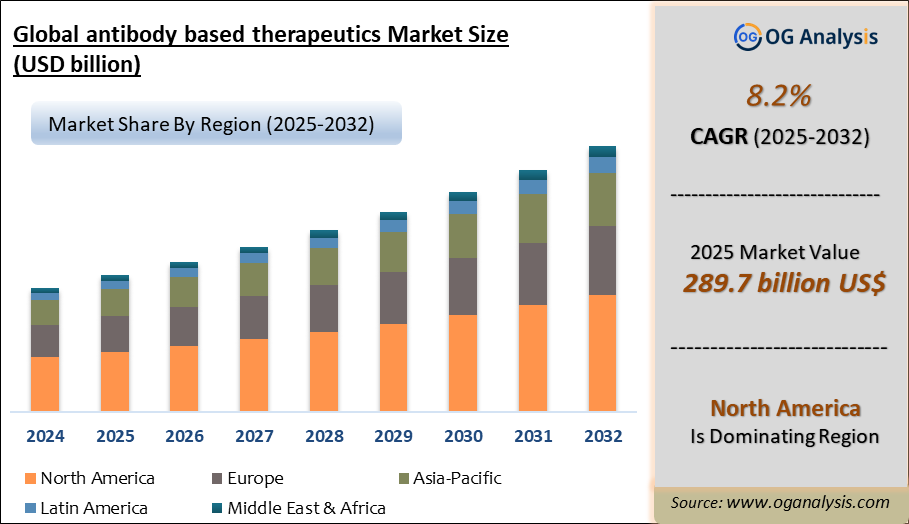
Global antibody based therapeutics Market Analysis 2025-2032: Industry Size, Share, Growth Trends, Competition and Forecast Report

Antibody Based Therapeutics Market Strategy, Price Trends, Drivers, Challenges and Opportunities to 2034

  • The rise in chronic illnesses such as cancer, rheumatoid arthritis, and Crohn’s disease is accelerating demand for antibody-based therapeutics due to their high specificity and fewer side effects compared to traditional drugs, making them integral to long-term disease management in both developed and developing regions.

  • Monoclonal antibodies dominate the therapeutic landscape, supported by continued innovations in antibody engineering and Fc modification techniques, which improve pharmacokinetics, enhance immune response, and reduce immunogenicity, enabling their use in an expanding range of disease indications.

  • Pharmaceutical companies are aggressively pursuing bispecific antibodies and antibody-drug conjugates, which combine targeting precision with cytotoxic payloads, offering superior efficacy in oncology treatments and showing strong performance in ongoing clinical trials for solid tumors and hematologic malignancies.

  • Strategic alliances between biotech startups and pharmaceutical giants are increasing to co-develop next-generation antibody therapies, optimize development timelines, and expand commercialization reach, helping smaller firms navigate regulatory complexities while accelerating innovation.

  • The biosimilars segment is gaining traction as patents expire for blockbuster monoclonal antibody drugs like Humira and Herceptin, enabling broader patient access, driving down treatment costs, and promoting healthy competition among manufacturers globally.

  • AI-driven platforms are transforming antibody discovery by predicting binding affinity, optimizing antibody structure, and reducing development time, significantly boosting R&D productivity and improving clinical candidate selection across multiple therapeutic areas.

  • Patient-friendly drug delivery formats such as subcutaneous and auto-injector-based formulations are gaining popularity over intravenous options due to ease of use, improved compliance, reduced healthcare facility visits, and enhanced patient quality of life.

  • The increasing prevalence of infectious diseases, including COVID-19 and RSV, is boosting the development of neutralizing antibody therapies, with governments and health agencies supporting rapid development and procurement for pandemic preparedness.

  • Manufacturing scalability is being addressed through single-use bioreactors, modular facilities, and strategic outsourcing, helping producers meet growing global demand while maintaining stringent quality and regulatory standards.

  • The therapeutic potential of antibody-based drugs is expanding beyond oncology into neurology, cardiology, and rare genetic disorders, supported by positive clinical trial outcomes and ongoing regulatory approvals that highlight their broad clinical utility.

North America Antibody Based Therapeutics Market Analysis

The North American Antibody Based Therapeutics market witnessed significant growth in 2024, driven by advances in biopharmaceutical innovation, digital health integration, and increasing demand for precision medicine. Key segments such as healthcare cloud computing, IoT medical devices, and advanced wound care are thriving due to strong adoption of next-generation technologies and supportive regulatory frameworks. From 2025 and beyond, the market is expected to expand at a steady CAGR, bolstered by investments in artificial intelligence for diagnostics, mHealth solutions, and real-world evidence platforms. Rising healthcare expenditure, growing prevalence of chronic diseases, and the push for home-based care are critical growth drivers. Furthermore, market dynamics are influenced by developments in the active pharmaceutical ingredients (API) market and regenerative medicine. The ongoing adoption of track-and-trace solutions and advancements in preimplantation genetic testing further exemplify North America's leadership in healthcare innovation.

Europe Antibody Based Therapeutics Market Outlook

The European healthcare and pharmaceuticals market observed steady growth in 2024, fueled by the region's emphasis on sustainability, advanced therapeutics, and digital transformation. The strong focus on biopharmaceuticals, including antibody-based therapeutics and regenerative medicine, complements growing investments in healthcare simulation and remote patient monitoring. The Antibody Based Therapeutics market is anticipated to accelerate in 2025, with substantial gains through 2034 driven by EU healthcare reforms, greater adoption of proteomics and single-cell analysis, and initiatives promoting healthcare cloud computing and sterilization equipment. The demand for advanced diagnostic and therapeutic solutions is supported by government-backed R&D programs and a rising aging population. Additionally, Europe's leadership in clinical trial innovations, coupled with increasing adoption of IoT medical devices and mental health screening, enhances its position as a key global player in the healthcare sector.

Asia-Pacific Healthcare & Pharmaceuticals Market
The Asia-Pacific healthcare and pharmaceuticals market is set for dynamic expansion, underpinned by rapid advancements in biotechnology, digital healthcare solutions, and rising healthcare infrastructure investment. Growing economies like China and India are at the forefront, driving demand for mHealth solutions, biopreservation technologies, and smart medical devices. The Antibody Based Therapeutics market is projected to grow at the fastest pace globally during the forecast period 2025 to 2034, spurred by increasing healthcare access, population growth, and rising prevalence of chronic diseases. The adoption of laboratory information systems (LIS), real-world evidence solutions, and sepsis diagnostics reflects a trend toward data-driven, precision-focused healthcare. Strategic partnerships in the biopharmaceutical processing equipment and consumables sector, alongside burgeoning interest in 3D cell culture and amniotic membrane applications, highlight the region’s evolving role as a healthcare innovation hub.

Middle East, Africa, Latin America Antibody Based Therapeutics Market Overview

The Rest of the World Antibody Based Therapeutics market registering moderate growth in 2024, is driven by increasing healthcare initiatives in emerging markets and growing interest in telemedicine and at-home testing solutions. Investments in anesthesia drugs, animal health, and anti-counterfeit pharmaceuticals packaging are gaining traction, particularly in Latin America, Africa, and the Middle East. From 2025 through 2034, the market is expected to witness accelerated growth, fueled by expanding healthcare infrastructure and rising awareness of advanced healthcare solutions. Markets for remote patient monitoring, rehabilitation equipment, and radiation dose management systems are emerging as key areas of focus. Growth in these regions is supported by a rising middle-class population, greater healthcare access, and enhanced pharmaceutical supply chain capabilities. The adoption of smart medical devices and clinical trial innovations also underscores the evolving healthcare landscape in the Middle East, Africa, Latin America regions.

Antibody Based Therapeutics Market Dynamics and Future Analytics

The research evaluates the Antibody-Based Therapeutics market by analyzing its parent, derived, and intermediary markets, along with raw material sourcing and substitute options to provide a comprehensive market outlook. It includes geopolitical and demographic assessments, along with Porter’s Five Forces analysis, to deliver accurate market projections and understand the competitive dynamics shaping the industry.

Recent mergers, acquisitions, and strategic developments are reviewed for their influence on the market's future direction. Key indicators such as barriers to entry, capital intensity, government regulations, product differentiation, supplier landscape, substitute cost, and distribution channels are thoroughly examined. This approach highlights market attractiveness and identifies growth opportunities and competitive pressures within the Antibody-Based Therapeutics segment.

Trade and pricing trends are also analyzed to understand global market dynamics. This includes identifying top exporting and importing countries, evaluating key supplier and customer bases, and assessing international pricing patterns. The findings support clients in strategic procurement planning, identifying reliable vendor partnerships, interpreting pricing fluctuations, and tapping into new distribution channels. The research is continuously updated to reflect the latest developments, including geopolitical impacts such as the Russia-Ukraine conflict, ensuring relevance and accuracy in decision-making.

Antibody Based Therapeutics Market Structure, Competitive Intelligence and Key Winning Strategies
The report presents detailed profiles of top companies operating in the Antibody Based Therapeutics market and players serving the Antibody Based Therapeutics value chain along with their strategies for the near, medium, and long term period.
OGAnalysis’ proprietary company revenue and product analysis model unveils the Antibody Based Therapeutics market structure and competitive landscape. Company profiles of key players with a business description, product portfolio, SWOT analysis, Financial Analysis, and key strategies are covered in the report. It identifies top-performing Antibody Based Therapeutics products in global and regional markets. New Product Launches, Investment & Funding updates, Mergers & Acquisitions, Collaboration & Partnership, Awards and Agreements, Expansion, and other developments give our clients the Antibody Based Therapeutics market update to stay ahead of the competition.
Company offerings in different segments across Asia-Pacific, Europe, the Middle East, Africa, and South and Central America are presented to better understand the company strategy for the Antibody Based Therapeutics market. The competition analysis enables users to assess competitor strategies and helps align their capabilities and resources for future growth prospects to improve their market share. 

Antibody Based Therapeutics Market Research Scope
• Global Antibody Based Therapeutics market size and growth projections (CAGR), 2024- 2034
• Policies of USA New President Trump, Russia-Ukraine War, Israel-Palestine, Middle East Tensions Impact on the Antibody Based Therapeutics Trade and Supply-chain
• Antibody Based Therapeutics market size, share, and outlook across 5 regions and 27 countries, 2023- 2034
• Antibody Based Therapeutics market size, CAGR, and Market Share of key products, applications, and end-user verticals, 2023- 2034
• Short and long-term Antibody Based Therapeutics market trends, drivers, restraints, and opportunities
• Porter’s Five Forces analysis, Technological developments in the Antibody Based Therapeutics market, Antibody Based Therapeutics supply chain analysis
• Antibody Based Therapeutics trade analysis, Antibody Based Therapeutics market price analysis, Antibody Based Therapeutics supply/demand
• Profiles of 5 leading companies in the industry- overview, key strategies, financials, and products
• Latest Antibody Based Therapeutics market news and developments
The Antibody Based Therapeutics Market international scenario is well established in the report with separate chapters on North America Antibody Based Therapeutics Market, Europe Antibody Based Therapeutics Market, Asia-Pacific Antibody Based Therapeutics Market, Middle East and Africa Antibody Based Therapeutics Market, and South and Central America Antibody Based Therapeutics Markets. These sections further fragment the regional Antibody Based Therapeutics market by type, application, end-user, and country.

Market Scope

Parameter

Detail

Base Year

2024

Estimated Year

2025

Forecast Period

2026-2032

Market Size-Units

USD billion

Market Splits Covered

By Product Type, By Source, By Indication, By End User

Countries Covered

North America (USA, Canada, Mexico)
Europe (Germany, UK, France, Spain, Italy, Rest of Europe)
Asia-Pacific (China, India, Japan, Australia, Rest of APAC)
The Middle East and Africa (Middle East, Africa)
South and Central America (Brazil, Argentina, Rest of SCA)

Analysis Covered

Latest Trends, Driving Factors, Challenges, Trade Analysis, Price Analysis, Supply-Chain Analysis, Competitive Landscape, Company Strategies

Customization

10% free customization (up to 10 analyst hours) to modify segments, geographies, and companies analyzed

Post-Sale Support

4 analyst hours, available up to 4 weeks

Delivery Format

The Latest Updated PDF and Excel Data file


Who can benefit from this research
The research would help top management/strategy formulators/business/product development/sales managers and investors in this market in the following ways
1. The report provides 2024 Antibody Based Therapeutics market sales data at the global, regional, and key country levels with a detailed outlook to 2034 allowing companies to calculate their market share and analyze prospects, uncover new markets, and plan market entry strategy.

2. The research includes the Antibody Based Therapeutics market split into different types and applications. This segmentation helps managers plan their products and budgets based on the future growth rates of each segment

3. The Antibody Based Therapeutics market study helps stakeholders understand the breadth and stance of the market giving them information on key drivers, restraints, challenges, and growth opportunities of the market and mitigating risks

4. This report would help top management understand competition better with a detailed SWOT analysis and key strategies of their competitors, and plan their position in the business

5. The study assists investors in analyzing Antibody Based Therapeutics business prospects by region, key countries, and top companies' information to channel their investments.

Available Customizations
The standard syndicate report is designed to serve the common interests of Antibody Based Therapeutics Market players across the value chain and include selective data and analysis from entire research findings as per the scope and price of the publication.
However, to precisely match the specific research requirements of individual clients, we offer several customization options to include the data and analysis of interest in the final deliverable.
Some of the customization requests are as mentioned below –
Segmentation of choice – Our clients can seek customization to modify/add a market division for types/applications/end-uses/processes of their choice.
Antibody Based Therapeutics Pricing and Margins Across the Supply Chain, Antibody Based Therapeutics Price Analysis / International Trade Data / Import-Export Analysis,
Supply Chain Analysis, Supply – Demand Gap Analysis, PESTLE Analysis, Macro-Economic Analysis, and other Antibody Based Therapeutics market analytics
Processing and manufacturing requirements, Patent Analysis, Technology Trends, and Product Innovations
Further, the client can seek customization to break down geographies as per their requirements for specific countries/country groups such as South East Asia, Central Asia, Emerging and Developing Asia, Western Europe, Eastern Europe, Benelux, Emerging and Developing Europe, Nordic countries, North Africa, Sub-Saharan Africa, Caribbean, The Middle East and North Africa (MENA), Gulf Cooperation Council (GCC) or any other.
Capital Requirements, Income Projections, Profit Forecasts, and other parameters to prepare a detailed project report to present to Banks/Investment Agencies.
Customization of up to 10% of the content can be done without any additional charges.

Note Latest developments will be updated in the report and delivered within 2 to 3 working days

Antibody Based Therapeutics Market Segmentation

By Product Type
- Monoclonal Antibodies (mAbs)
- Antibody-Drug Conjugates (ADCs)
- Bispecific Antibodies
- Others

By Source
- Human Monoclonal Antibodies
- Humanized Monoclonal Antibodies
- Chimeric Monoclonal Antibodies
- Murine Monoclonal Antibodies

By Indication
- Oncology
- Autoimmune Diseases
- Infectious Diseases
- Hematological Diseases

By End-User
- Hospitals
- Specialty Centers
- Research Institutes

By Geography
- North America (USA, Canada, Mexico)
- Europe (Germany, UK, France, Spain, Italy, Rest of Europe)
- Asia-Pacific (China, India, Japan, Australia, Vietnam, Rest of APAC)
- The Middle East and Africa (Middle East, Africa)
- South and Central America (Brazil, Argentina, Rest of SCA)

Key Market Players

  • Roche

  • AbbVie

  • Amgen

  • Bristol-Myers Squibb

  • Johnson & Johnson

  • Seagen

  • Merck

  • Regeneron

  • Novartis

  • AstraZeneca

  • Eli Lilly

  • GlaxoSmithKline (GSK)

  • Takeda

Recent Developments 

  • July 2025 I-Mab completed the acquisition of Bridge Health, securing upstream rights to the CLDN18.2 antibody and eliminating licensing costs for its bispecific therapy givastomig. The move enhances pipeline control and aligns with its broader oncology strategy.

  • July 2025 A neuroblastoma patient achieved over 18 years of remission following pediatric CAR-T therapy, highlighting the long-term potential of antibody-based cellular therapies in treating solid tumors.

  • June 2025 The FDA removed the REMS requirement for all approved CAR-T cell therapies, simplifying safety protocols and making it easier for smaller clinics to administer these treatments.

  • June 2025 The FDA granted accelerated approval to a TROP-2 targeting antibody-drug conjugate for use in EGFR-mutant non-small cell lung cancer, marking an expansion of targeted therapies in lung oncology.

  • May 2025 AbbVie secured FDA approval for telisotuzumab vedotin, an ADC aimed at c-Met positive non-squamous NSCLC, providing new treatment options for a subset of lung cancer patients.

  • May 2025 Regeneron and UCB received U.S. approval for linvoseltamab, a bispecific antibody targeting CD3 and BCMA, indicated for relapsed or refractory multiple myeloma, reinforcing advances in dual-targeted therapeutics.

  • April 2025 Tafasitamab's label was expanded by the FDA to include use in combination with lenalidomide and rituximab for relapsed or refractory follicular lymphoma, broadening its role in B-cell malignancies.

  • April 2025 A new antibody therapeutic against PD-L1 entered Phase 3 trials for head and neck cancers, signaling continued clinical expansion of checkpoint inhibitors into niche oncology segments.

  • March 2025 A mid-sized biotech initiated clinical trials for a first-in-class antibody targeting Siglec-15 in colorectal cancer, aiming to overcome resistance to existing immunotherapies.

You can purchase individual sections of this report. Explore pricing options for specific sections.

FAQ's

The Antibody Based Therapeutics Market is estimated to reach USD 601.3 billion by 2034.

The Global Antibody Based Therapeutics Market is expected to grow at a Compound Annual Growth Rate (CAGR) of 8.2% during the forecast period from 2025 to 2034.

The Global Antibody Based Therapeutics Market is estimated to generate USD 286.9 billion in revenue in 2025

License

Didn’t find what you’re looking for? TALK TO OUR ANALYST TEAM

Need something within your budget? NO WORRIES! WE GOT YOU COVERED!

Related Products

Biopharmaceutical Process Analytical Technology Market Analysis and Outlook Report: Industry Size, Share, Growth Trends, and Forecast (2026-2034)

The Biopharmaceutical Process Analytical Technology market has evolved from a supportive quality toolset into a strategic enabler of modern biomanufacturing, as developers and manufacturers seek deeper process understanding, faster decision-making, and stronger control over complex biological production systems. The market includes in-line, on-line, at-line, and real-time analytical platforms used across upstream cell culture, bioreactor monitoring, media and feed control, harvest management, downstream purification, filtration, and final process verification. Core end uses span monoclonal antibodies, recombinant proteins, vaccines, cell and gene therapy workflows, and other high-value biologic processes where tight control of critical process parameters and critical quality attributes is essential. One of the strongest trends shaping the market is the move from offline testing toward integrated, data-rich monitoring environments that support quality by design, automation, and faster scale-up. Raman spectroscopy, mass spectrometry, single-use sensors, advanced software, multivariate analytics, and online chromatography-linked monitoring are increasingly adopted to reduce process variability, improve yields, and accelerate development-to-manufacturing transfer. Regulatory support for science-based manufacturing and stronger process understanding continues to reinforce this direction, encouraging manufacturers to build quality directly into the process rather than relying primarily on end-product testing. From a competitive standpoint, the market is defined by a mix of analytical instrument providers, bioprocess equipment companies, software and automation specialists, and integrated solution partners that increasingly compete on workflow connectivity rather than standalone hardware alone. Demand is being driven by the need for real-time control in fed-batch and perfusion systems, stronger support for continuous and intensified bioprocessing, wider use of single-use manufacturing platforms, and growing interest in real-time release and digitally connected operating models. Another important shift is the expansion of process analytical technology beyond upstream monitoring into downstream purification and online quality-attribute tracking, which is widening the addressable opportunity and raising the strategic value of connected data environments. Looking ahead, the market outlook remains strong as biopharma companies, contract manufacturers, and technology providers invest in smarter, more automated manufacturing platforms that can improve consistency, shorten development timelines, and support more agile commercial production. Overall, the industry is moving toward deeper integration of analytics, software, control systems, and process engineering, making it a central part of next-generation biologics manufacturing. Key Market Insights Regulatory alignment remains one of the strongest foundations for market expansion. Process analytical technology adoption has gained momentum because manufacturers increasingly view real-time monitoring and control as part of a science-based and risk-based production model. Instead of treating analytics as an optional add-on, the industry now sees it as essential for improving process understanding, reducing variability, and strengthening product consistency in regulated environments. This is especially important in biologics, where small process deviations can influence quality outcomes. The growing acceptance of quality-by-design principles continues to support broader adoption across development, scale-up, and commercial manufacturing. Regulatory alignment will remain a major driver of long-term market development. Real-time monitoring is steadily replacing heavy dependence on offline testing. Biopharma manufacturers are increasingly shifting toward in-line, on-line, and at-line tools that allow process conditions to be tracked as production takes place rather than only after sampling and lab analysis. This change is helping reduce delays, improve visibility, and support faster intervention when process variability appears. The commercial importance of this shift lies in stronger throughput, better process robustness, and more efficient use of manufacturing capacity. Real-time analytics are therefore becoming central to how facilities approach control strategy and productivity improvement. This transition is expected to remain one of the most influential trends shaping the market. Upstream operations remain the most visible early adoption area. Process analytical technology has particularly strong relevance in cell culture and bioreactor environments where pH, dissolved oxygen, metabolites, nutrient levels, cell density, and product formation require tight control. Tools such as Raman-based monitoring and single-use sensor integration are helping operators manage fed-batch and perfusion systems with greater precision. This area remains commercially significant because variability in upstream processing can affect everything that follows downstream. As a result, upstream applications continue to anchor much of the market’s current adoption momentum. Their importance is likely to continue as biologics processes become more complex and performance-sensitive. Downstream processing is emerging as an increasingly important growth frontier. The market is no longer centered only on bioreactor monitoring, as online chromatography, filtration analytics, and downstream quality tracking gain stronger relevance. This is expanding the role of process analytical technology from process supervision into direct support for purification efficiency, impurity control, and tighter monitoring of critical quality attributes. The shift matters because downstream operations have historically had less real-time analytical coverage than upstream stages. As solution providers close that gap, downstream deployment is becoming one of the clearest sources of future expansion. This change is also increasing the importance of integrated upstream-to-downstream data visibility. Raman spectroscopy is becoming one of the most influential enabling technologies. It is gaining traction because it supports non-destructive, real-time monitoring of biologically relevant parameters across development and manufacturing settings. Its appeal is tied to faster process understanding, reduced sampling burden, and growing compatibility with scalable production systems. This makes it especially attractive in environments that want to move from process development into commercial operation with fewer analytical disruptions. Among available technologies, it is increasingly viewed as one of the most scalable and workflow-friendly options. Its role is expected to grow as companies pursue more connected and data-driven manufacturing systems. Single-use manufacturing is strengthening demand for compatible sensor ecosystems. As production increasingly relies on disposable bioreactors and flexible facility layouts, demand is rising for sensors and analytical tools that fit single-use workflows without adding contamination risk or setup complexity. This is pushing the market toward integrated ports, prequalified connections, and monitoring platforms that can move more easily from development to manufacturing. The trend is commercially meaningful because single-use adoption is broadening the installed base for process-ready analytical systems. Suppliers that align closely with this shift are improving their competitive positioning. Single-use compatibility will remain an important factor in solution design and customer selection. Continuous and intensified bioprocessing are raising the strategic value of these solutions. These manufacturing approaches require tighter control, faster response, and better visibility across connected unit operations, making advanced monitoring increasingly essential. In biologics production, this means process analytical technology is becoming more closely linked with process intensification, perfusion, advanced control strategies, and ambitions around real-time release. This raises its role beyond measurement alone and positions it as a core element of next-generation manufacturing design. As continuous concepts mature, the market should benefit from stronger demand for integrated monitoring and control platforms. This trend is expected to deepen as facilities seek greater productivity and flexibility. Data analytics and software integration are becoming major competitive differentiators. The market is increasingly moving beyond instruments toward connected environments that combine sensors, analyzers, model management, multivariate tools, and compliant software. This matters because manufacturers want actionable process intelligence rather than only larger volumes of raw data. Model lifecycle management, data integration, and advanced control logic are therefore becoming more important alongside the analytical tools themselves. Companies that can link hardware to automation and decision support are likely to capture more strategic value. Software-enabled intelligence will continue to shape how the competitive landscape evolves. Real-time release and digitally connected manufacturing models are broadening long-term upside. The industry is increasingly linking process analytical technology adoption with larger goals such as real-time release, closed processing, faster tech transfer, and more autonomous operations. This is significant because it reframes the market from a measurement category into a broader digital manufacturing enabler. The implication is that future demand will increasingly come from companies pursuing connected facilities and lifecycle control rather than only analytical upgrades. This makes the category a more strategic spending area across modern biologics operations. Its importance is likely to rise as manufacturing becomes more automated and data-centric. Future leadership will favor integrated solution providers rather than standalone tool vendors. Manufacturers increasingly want partners that can combine sensors, analyzers, software, automation, and bioprocess expertise into one connected offering. They also expect support across process development, commercial production, and technology transfer with compatible tools and data architecture. This favors suppliers that can bridge upstream and downstream workflows while helping customers move toward real-time control at scale. Over time, the strongest competitive advantage is likely to come from end-to-end integration rather than isolated analytical capability. The market is therefore moving toward a more platform-oriented and partnership-driven structure. Regional Insights North AmericaBiopharmaceutical Process Analytical Technology Market North America remains the most mature commercial environment for biopharmaceutical process analytical technology, with demand driven by advanced biologics manufacturing, strong contract development and manufacturing activity, and a regulatory climate that supports modern manufacturing tools. The biggest market dynamic is the shift from isolated sensors toward integrated analytical platforms that support real-time control, faster deviation response, and stronger process robustness in both upstream and downstream operations. The most attractive opportunities are in software-led platforms, Raman-enabled control strategies, real-time release workflows, and retrofit projects that modernize existing biologics facilities without major plant redesign. Recent developments in advanced manufacturing adoption are reinforcing the region’s momentum toward earlier use of connected control architectures. Over the forecast period, growth is likely to remain strong in premium, compliance-ready, and automation-linked solutions rather than in standalone instrumentation alone. Asia PacificBiopharmaceutical Process Analytical Technology Market Asia Pacific is expected to be the fastest-expanding regional market, supported by rapid biomanufacturing build-out, growing biologics and vaccine capacity, and stronger public-sector backing for advanced manufacturing infrastructure. The region’s core dynamic is the simultaneous rise of high-end digital biologics production hubs and large-scale cost-efficient manufacturing, which creates broad demand for scalable analytical tools that can support technology transfer, process consistency, and faster facility ramp-up. The most lucrative opportunities lie in single-use-compatible analytics, modular monitoring systems, multivariate data platforms, and real-time control solutions for new greenfield facilities. Recent developments across regional biomanufacturing programs are strengthening the long-term case for deeper penetration of advanced process monitoring. The forecast remains highly positive, especially in markets where state-backed manufacturing ambition and private investment are advancing together. EuropeBiopharmaceutical Process Analytical Technology Market Europe is a highly attractive but regulation-led market where adoption is being shaped by quality-by-design principles, continuous manufacturing readiness, and stronger openness to innovative production technologies. The main market dynamic is the move from conventional offline testing toward data-rich control strategies that can support real-time release, continuous processing, and more advanced personalized medicine workflows. The most promising opportunities are in soft-sensor platforms, downstream analytical integration, compliant software ecosystems, and solutions that fit continuous and hybrid manufacturing models. Recent developments show increasing emphasis on real-time release, reduced cycle times, and improved product quality through stronger analytical integration. The forecast is positive, with growth likely to favor suppliers that can combine analytical depth with regulatory fluency and end-to-end workflow integration. Middle East & AfricaBiopharmaceutical Process Analytical Technology Market Middle East & Africa is still an emerging market, but it is becoming more commercially relevant as governments and regional manufacturers build local biologics capacity and pursue greater pharmaceutical self-sufficiency. The strongest market dynamic is greenfield development, which gives suppliers an advantage when offering process-ready facility designs, digital quality systems, and modern monitoring architectures from the start rather than through retrofit. The best opportunities are in single-use bioprocess monitoring, automated quality-control platforms, training-led deployment models, and integrated systems for new biologics and vaccine sites. Recent developments in regional biotechnology strategies and new biologics facilities are improving the long-term outlook for advanced manufacturing controls. The forecast is moderately positive, with the highest upside in markets where localization policy and new biologics infrastructure are advancing together. South & Central AmericaBiopharmaceutical Process Analytical Technology Market South & Central America offers selective but increasingly meaningful potential, led mainly by countries that are pushing for stronger local production of vaccines, biologics, and related technologies. The key market dynamic is the modernization of manufacturing and quality systems to support local and regional supply resilience, which creates an opening for providers that can help with technology transfer, process standardization, and compliance with higher international production standards. The most attractive opportunities are in vaccine and biologics facilities, analytical platforms for local production scale-up, and integrated monitoring tools that improve batch consistency and reduce reliance on slower offline testing. Recent collaborations across regional public-private manufacturing ecosystems point to a broader modernization pathway for production controls. The forecast is positive but targeted, with strongest demand likely in local capacity-building programs and regional biologics manufacturing initiatives. Market Scope Parameter Biopharmaceutical Process Analytical Technology Market Detail Base Year 2025 Estimated Year 2026 Forecast Period 2026-2034 Market Size-Units USD billion Market Splits Covered By Type, By Product, By Mode, By pplication Countries Covered North America (USA, Canada, Mexico) Europe (Germany, UK, France, Spain, Italy, Rest of Europe) Asia-Pacific (China, India, Japan, Australia, Rest of APAC) The Middle East and Africa (Middle East, Africa) South and Central America (Brazil, Argentina, Rest of SCA) Analysis Covered Latest Trends, Driving Factors, Challenges, Trade Analysis, Price Analysis, Supply-Chain Analysis, Competitive Landscape, Company Strategies Customization 10% free customization (up to 10 analyst hours) to modify segments, geographies, and companies analyzed Post-Sale Support 4 analyst hours, available up to 4 weeks Delivery Format The Latest Updated PDF and Excel Data file

Published:Mar-2026

Head And Neck Cancer Diagnostics Market Analysis and Outlook Report: Industry Size, Share, Growth Trends and Forecast (2026-2034)

Market Overview The Head and Neck Cancer Diagnostics Market covers a comprehensive spectrum of solutions, including imaging modalities, endoscopic systems, biopsy and histopathology services, immunohistochemistry assays, viral testing, molecular diagnostics, and emerging liquid biopsy platforms. These offerings are primarily used by hospitals, specialized oncology and ENT centers, diagnostic imaging facilities, and reference laboratories engaged in the detection and staging of cancers of the oral cavity, pharynx, larynx, salivary glands, nasal passages, and related structures. Market expansion is supported by rising disease burden, persistent lifestyle and environmental risk factors, and the growing recognition of virus-associated malignancies, all of which drive the need for earlier, more accurate diagnosis. Health systems are increasingly embedding structured diagnostic pathways into oncology care, positioning head and neck cancer diagnostics as a critical enabler of timely intervention and improved patient outcomes. Latest trends highlight rapid adoption of hybrid and functional imaging, high-definition endoscopic visualization, and advanced pathology and molecular testing to refine staging, risk stratification, and treatment selection. Liquid biopsy, multi-omics panels, and artificial intelligence–driven analytics are moving from exploratory use toward routine clinical integration, supporting minimally invasive diagnosis and long-term disease monitoring. The competitive landscape spans global imaging majors, in vitro diagnostics companies, niche molecular firms, and digital health players that develop decision-support tools integrated with existing hardware and laboratory workflows. Partnerships between technology suppliers, academic centers, and cancer networks are accelerating clinical validation, regulatory approvals, and guideline inclusion for novel tests. Over the forecast period, continued investment in comprehensive cancer centers, screening initiatives, and decentralized diagnostic capabilities in high-growth regions is expected to sustain robust demand for both capital equipment and recurring consumables in head and neck cancer diagnostics. Regional Insights North America In North America, the Head and Neck Cancer Diagnostics Market is driven by well-established oncology infrastructure, strong reimbursement frameworks for advanced imaging and laboratory tests, and high awareness among clinicians regarding early detection. Academic medical centers and integrated cancer networks actively deploy multimodal diagnostic pathways that combine imaging, endoscopy, histopathology, and molecular testing. There are lucrative opportunities for companies offering AI-enhanced imaging solutions, liquid biopsy platforms, and comprehensive genomic panels that integrate seamlessly with electronic health records and tumor board workflows. Latest trends include greater adoption of hybrid imaging, standardized HPV and other viral testing, and expanding use of precision diagnostics to guide immunotherapy and targeted treatment choices. Forecast growth is supported by an aging population, persistent lifestyle risk factors, and expanding value-based care programs that prioritize accurate staging and risk stratification. Recent developments focus on clinical validation of new biomarkers, consolidation of reference laboratories, and strategic partnerships between medtech, diagnostics, and digital health players. Europe Europe leads in Head and Neck Cancer Diagnostics adoption through strong public healthcare systems, harmonized clinical guidelines, and structured cancer-care pathways. Strict quality and accreditation standards for imaging and pathology services drive demand for high-performance scanners, advanced endoscopic systems, and standardized histopathology and immunohistochemistry protocols. Lucrative opportunities exist for vendors that can supply integrated diagnostic platforms tailored to national cancer plans, especially those combining imaging, pathology, and molecular profiling with clear health-economic benefits. Latest trends include expanded screening and early detection programs for high-risk populations, broader use of viral and molecular markers, and growing deployment of digital pathology and teleconsultation networks. The market outlook is supported by sustained investment in comprehensive cancer centers, cross-border research collaborations, and funding mechanisms that encourage adoption of evidence-based innovations. Recent developments emphasize compliance with data and quality regulations, multicenter validation of AI tools, and broader integration of diagnostics into multidisciplinary decision-making. Asia-Pacific Asia-Pacific is on track to become one of the most dynamic regions for the Head and Neck Cancer Diagnostics Market, supported by a large patient pool, rising healthcare expenditure, and a strong base of ENT and oncology centers in major countries. Rapid urbanization and persistent exposure to tobacco, betel quid, and environmental pollutants contribute to high disease burden, underscoring the need for improved detection and staging. Companies find attractive opportunities in expanding access to imaging and endoscopy in secondary cities, establishing reference laboratories for advanced pathology and molecular tests, and deploying cost-effective point-of-care or near-patient diagnostics. Latest trends include government-led cancer control initiatives, growing participation in international clinical trials, and investment in digital platforms that connect regional hospitals with centralized expertise. The market is forecast to grow robustly as insurance coverage widens and private providers upgrade capabilities, while recent developments highlight roll-out of high-end imaging systems, adoption of digital pathology hubs, and early-stage deployment of liquid biopsy and genomics services. Middle East & Africa In the Middle East & Africa, the Head and Neck Cancer Diagnostics Market remains emerging but is gaining momentum as governments prioritize oncology as part of broader healthcare modernization. Tertiary hospitals and regional cancer centers are upgrading imaging suites, operating theaters, and pathology labs, creating demand for CT, MRI, PET-CT, endoscopic platforms, and standardized biopsy and histopathology services. Early market opportunities lie in supplying robust, easy-to-maintain imaging and endoscopy systems, alongside training and telemedicine support to address specialist shortages. Latest trends include public–private partnerships to build comprehensive cancer hospitals, targeted screening and awareness campaigns in urban centers, and stepwise introduction of immunohistochemistry and selected molecular tests. Over the forecast period, improvements in healthcare funding, infrastructure, and data systems are expected to support more systematic diagnostics, while recent developments focus on establishing regional reference labs, adopting international reporting standards, and piloting digital and AI-enabled solutions in leading facilities. South & Central America In South & Central America, the evolution of the Head and Neck Cancer Diagnostics Market is closely linked to efforts to strengthen public health systems and expand access to oncology care. Major urban hospitals and private cancer centers typically offer advanced imaging, endoscopy, and pathology services, while smaller facilities are still upgrading basic diagnostic capacity. There are lucrative opportunities for companies providing affordable imaging equipment, scalable pathology and immunohistochemistry solutions, and centralized molecular testing services that can serve multiple countries or regions. Latest trends include increasing use of tele-radiology and tele-pathology to bridge specialist gaps, growth of private insurance coverage, and gradual incorporation of viral testing and targeted molecular assays in guideline-based care. Looking ahead, market growth will be shaped by economic stability, regulatory support, and continued investment in cancer programs. Recent developments highlight pilot screening initiatives, partnerships between local providers and international manufacturers, and progressive adoption of digital tools that improve workflow efficiency and diagnostic turnaround times. Key Market Insights Rising incidence of head and neck malignancies, driven by lifestyle risk factors and virus-associated disease, underpins the structural demand for diagnostic solutions. As awareness programs and screening initiatives expand, more patients are being evaluated at potentially treatable stages, increasing utilization of imaging, endoscopy, and biopsy along standard care pathways. Imaging remains a cornerstone of diagnostic workup, with cross-sectional and functional modalities providing detailed assessments of tumor extent, nodal involvement, and distant spread. Continuous improvements in resolution, contrast agents, and hybrid platforms enhance sensitivity and specificity, supporting more accurate staging and better planning of surgery, radiotherapy, and systemic therapies. Endoscopic techniques and enhanced visualization technologies are gaining prominence for lesions in the upper aerodigestive tract that may be missed by routine examination. High-definition systems, specialized filters, and adjunct imaging methods improve detection of subtle mucosal changes, guide targeted biopsies, and support surveillance of high-risk populations with minimally invasive procedures. Liquid biopsy and circulating biomarker assays are emerging as important future growth drivers, offering less invasive options for detection, molecular profiling, and longitudinal monitoring. These platforms have potential to complement or, in selected scenarios, reduce reliance on repeat tissue biopsies by enabling assessment of minimal residual disease and early relapse. Molecular diagnostics and next-generation sequencing are increasingly embedded in head and neck cancer workups, reflecting the shift toward precision oncology. Multigene panels, gene expression signatures, and immune-related markers help characterize tumor biology, inform prognosis, and guide the selection of targeted therapies and immunotherapies in routine clinical practice. Artificial intelligence and advanced analytics applied to radiology and pathology are reshaping competitive dynamics. Algorithms that assist with lesion detection, automated segmentation, pattern recognition, and risk scoring can enhance consistency between readers, reduce turnaround times, and support integrated decision-support platforms for multidisciplinary tumor boards. Hospital-based oncology and ENT departments remain core end-users, but specialized cancer institutes and independent diagnostic laboratories are increasingly important for complex testing. Centralized molecular and advanced pathology services, combined with more decentralized imaging and basic histology, create a tiered service model and new partnership opportunities across the value chain. Regional differences in healthcare infrastructure and reimbursement significantly influence adoption patterns. Mature markets typically feature broad access to advanced modalities and reimbursement for high-complexity tests, while emerging markets prioritize expanding essential imaging and pathology capacity, gradually integrating more sophisticated diagnostics as funding and expertise grow. The competitive landscape includes diversified medtech and diagnostics leaders, alongside specialized companies focused on liquid biopsy, viral testing, molecular panels, or AI-enabled solutions. Strategic collaborations, licensing agreements, and mergers and acquisitions are common as players seek to offer integrated, multimodal diagnostic portfolios tailored to oncology needs. Policy initiatives around cancer control, screening, and outcome-based reimbursement will continue to shape market evolution. Vendors that generate robust clinical evidence, demonstrate clear health-economic value, and align solutions with updated clinical guidelines and quality standards are best positioned to capture long-term growth in head and neck cancer diagnostics. Report Scope Parameter Head and Neck Cancer Diagnostics Market Detail Base Year 2024 Estimated Year 2025 Forecast Period 2026-2032 Market Size-Units USD billion Market Splits Covered By Product Type, By Diagnostic Method, By End User Countries Covered North America (USA, Canada, Mexico) Europe (Germany, UK, France, Spain, Italy, Rest of Europe) Asia-Pacific (China, India, Japan, Australia, Rest of APAC) The Middle East and Africa (Middle East, Africa) South and Central America (Brazil, Argentina, Rest of SCA) Analysis Covered Latest Trends, Driving Factors, Challenges, Trade Analysis, Price Analysis, Supply-Chain Analysis, Competitive Landscape, Company Strategies Customization 10% free customization (up to 10 analyst hours) to modify segments, geographies, and companies analyzed Post-Sale Support 4 analyst hours, available up to 4 weeks Delivery Format The Latest Updated PDF and Excel Data file

Published:Jan-2026

Sports Health Supplements Market Analysis and Outlook Report: Industry Size, Share, Growth Trends, and Forecast (2026-2034)

Market Overview The sports health supplements market encompasses a broad range of products designed to enhance athletic performance, aid recovery, and promote overall health among sports enthusiasts and athletes. This market includes protein powders, amino acids, vitamins, minerals, and energy-boosting supplements. The value chain of this industry involves ingredient suppliers, manufacturers, distributors, and retailers, all playing crucial roles in delivering these products to consumers. Top applications include muscle gain, weight management, and endurance enhancement, with end-uses spanning professional athletes to casual fitness enthusiasts. A key trend is the growing focus on plant-based and clean-label products, driven by increasing health consciousness among consumers. The demand for sports health supplements is propelled by rising fitness awareness, an increase in active lifestyles, and the influence of social media promoting fitness culture. However, challenges such as regulatory scrutiny and the prevalence of counterfeit products pose hurdles to market growth. The competitive landscape is characterized by a mix of established players and new entrants, each vying for market share through innovation and strategic partnerships. Regionally, North America leads in market development due to advanced infrastructure and a large consumer base, while Asia-Pacific is emerging as a lucrative region owing to rising disposable incomes and growing health awareness. Key Insights The shift towards plant-based supplements is gaining momentum, driven by consumer preference for natural and sustainable products. This trend is reshaping product formulations and marketing strategies. Companies are investing in R&D to capitalize on this demand. Regulatory bodies are increasing their oversight, ensuring product safety and efficacy. Stricter regulations are pushing companies to enhance transparency and compliance in their product offerings. North America continues to dominate the market, benefiting from a robust fitness culture and high consumer awareness. However, saturation is prompting companies to explore untapped opportunities in emerging markets. Asia-Pacific is witnessing rapid growth, driven by rising health consciousness and increasing disposable income. Local players are expanding their portfolios to meet the diverse needs of consumers in this region. The competitive landscape is intensifying, with established brands facing competition from startups that offer innovative and niche products. This is fostering a dynamic market environment. Digital transformation is influencing sales channels, with e-commerce becoming a critical avenue for reaching consumers. Brands are leveraging online platforms to enhance their visibility and engage with a broader audience. Personalization in supplements is emerging as a trend, with consumers seeking products tailored to their unique needs. This is driving companies to offer customized solutions through advanced technologies and consumer insights. The impact of social media and influencers on consumer purchasing decisions is significant. Brands are collaborating with fitness influencers to promote their products and build brand loyalty. The rise of clean-label products reflects a shift towards transparency and ingredient purity. Consumers are demanding clear labeling, influencing product development and marketing approaches. Economic uncertainties pose a challenge, affecting consumer spending power and market growth. Companies are adopting flexible strategies to navigate these challenges and sustain demand. Report Scope Parameter Detail Base Year 2025 Estimated Year 2026 Forecast Period 2027-2034 Market Size-Units USD Billion/Million Market Segmentation By Product Type Protein Supplements Vitamins & Minerals Amino Acids Herbal Supplements By End User Professional Athletes Recreational Users Bodybuilders General Fitness Enthusiasts By Distribution Channel Online Retail Specialty Stores Supermarkets/Hypermarkets Pharmacies By Formulation Powder Capsule Tablet Liquid Countries Covered North America USA Canada Mexico Europe: Germany UK France Spain Italy Rest of Europe Asia-Pacific: China India Japan Australia South Korea Rest of APAC Middle East and Africa: Saudi Arabia UAE Iran South Africa Vietnam Rest of MEA South and Central America: Brazil Argentina Chile Rest of SCA Analysis Covered Latest Trends, Driving Factors, Challenges, Supply-Chain Analysis, Competitive Landscape, Company Strategies Customization 10% free customization(up to 10 analyst hours) to modify segments, geographies, and companies analyzed Post-Sale Support 4 analyst hours, available up to 4 weeks Delivery Format The Latest Updated PDF and Excel Datafile

Published:Jan-2026