Brain Computer Interface Market Outlook Report: Latest Trends and Growth Opportunities by Region

Published On: Feb, 2026
|
Pages: 147

"The Brain Computer Interface Market Size was valued at $ 2.4 billion in 2026. Worldwide sales of Brain Computer Interface are expected to grow at a significant CAGR of 14.9%, reaching $ 7.7 billion by the end of the forecast period in 2034."

The Brain Computer Interface Market is gaining strong attention as healthcare, neurotechnology, assistive devices, gaming, defense, rehabilitation, and human-machine interaction applications move toward more direct communication between the brain and external devices. Brain computer interfaces enable users to control computers, robotic limbs, wheelchairs, communication tools, prosthetics, and digital systems through neural signals. Demand is supported by rising interest in neurological rehabilitation, treatment support for paralysis and motor impairment, non-invasive wearable neurotechnology, and advanced assistive communication systems. These solutions are increasingly being explored for patients with spinal cord injuries, stroke-related disabilities, neurodegenerative conditions, and severe mobility limitations. Developers are focusing on improving signal accuracy, device comfort, processing speed, safety, and ease of use.

Market development is also being shaped by advances in artificial intelligence, machine learning, neural sensors, implantable electrodes, electroencephalography devices, wireless communication, miniaturized electronics, and real-time signal interpretation. Non-invasive systems are gaining wider commercial interest due to lower risk and easier adoption, while invasive systems remain important for high-precision medical and research applications. Companies and research institutions are working to improve neural decoding, reduce training time, enhance user experience, and expand practical applications beyond clinical environments. However, adoption faces challenges related to safety, regulatory approval, data privacy, ethical concerns, high development cost, clinical validation, and long-term reliability. Overall, brain computer interfaces are evolving from experimental neurotechnology toward practical tools for restoring function, enhancing interaction, and supporting next-generation human-machine communication.

Regional Analysis

North America Brain Computer Interface Market

North America remains the leading market for brain computer interfaces, supported by advanced neuroscience research, strong medical-device innovation, venture funding, rehabilitation technology adoption, and active clinical development. The United States leads demand through implantable BCI trials, non-invasive neurotechnology platforms, assistive communication systems, prosthetic control research, and AI-enabled neural decoding. Companies such as Synchron, Neuralink, Precision Neuroscience, Paradromics, Blackrock Neurotech, and academic medical centers are strengthening the region’s commercial and clinical ecosystem. Recent FDA clearance for Precision Neuroscience’s Layer 7-T cortical electrode interface and ongoing Synchron trials for paralysis-related communication highlight strong regional momentum.

Europe Brain Computer Interface Market

Europe is a significant market for brain computer interfaces, driven by neuroscience research, medical rehabilitation, assistive technology development, neuroprosthetics, digital health, and human-machine interaction studies. Germany, the UK, France, Switzerland, the Netherlands, Italy, and Nordic countries are key contributors due to strong university research networks, healthcare systems, and medical technology capabilities. European adoption is strongest in clinical research, stroke rehabilitation, neurofeedback, prosthetic control, cognitive monitoring, and non-invasive EEG-based systems. However, strict medical-device regulation, data protection rules, ethical review, and reimbursement complexity influence commercialization timelines. The region is also highly focused on neuroethics, mental privacy, patient safety, and responsible development of implantable BCI systems.

Asia-Pacific Brain Computer Interface Market

Asia-Pacific is emerging as a high-growth region for brain computer interfaces, supported by large patient populations, expanding digital health investment, electronics manufacturing, AI capability, and government interest in advanced neurotechnology. China, Japan, South Korea, India, Australia, and Singapore are important markets for BCI research, rehabilitation devices, wearable EEG platforms, neurogaming, education technology, and assistive communication systems. China has become especially active, with government-backed efforts to promote BCI innovation and achieve technical breakthroughs in the coming years. The region also benefits from strong hardware manufacturing, robotics, sensors, and consumer electronics ecosystems, which support lower-cost non-invasive BCI development.

Middle East & Africa Brain Computer Interface Market

The Middle East & Africa market is at an early stage, with demand concentrated in medical research, rehabilitation centers, universities, specialty hospitals, defense training, and assistive technology programs. Gulf countries such as the UAE, Saudi Arabia, and Qatar are potential adopters due to investment in advanced healthcare, AI, smart hospitals, and digital transformation. South Africa also offers selective opportunities through neuroscience research, rehabilitation care, and academic partnerships. Adoption remains limited by high device costs, shortage of specialized clinicians, limited reimbursement, lower clinical trial activity, and dependence on imported neurotechnology. Long-term opportunities are likely to improve as healthcare modernization and AI-enabled medical technology investment expand.

South & Central America Brain Computer Interface Market

South & Central America is an emerging market for brain computer interfaces, led by Brazil, Mexico, Chile, Argentina, and Colombia. Demand is mainly linked to university research, rehabilitation medicine, assistive communication, prosthetic control, neurofeedback, and wearable EEG-based applications. Brazil has the strongest potential due to its larger healthcare and academic research base, while Mexico and Chile are developing opportunities through medical technology and digital health adoption. Commercial growth is expected to remain gradual because of limited funding, regulatory complexity, affordability constraints, and weaker local manufacturing capacity. However, rising interest in neurorehabilitation and low-cost non-invasive BCI systems can support future adoption.
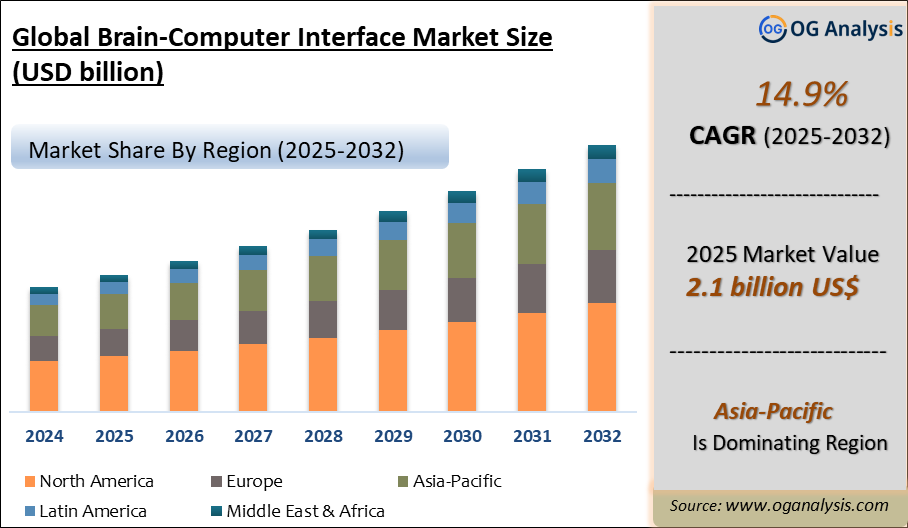
Global Brain-Computer Interface Market Analysis 2025-2032: Industry Size, Share, Growth Trends, Competition and Forecast Report

Key Insights

  • Brain computer interface demand is supported by rising interest in assistive technologies for people with severe motor limitations. These systems can help users communicate, control devices, and regain functional independence.
  • Healthcare and rehabilitation remain major application areas for brain computer interfaces. Technologies are being developed to support stroke recovery, spinal cord injury rehabilitation, prosthetic control, and neurological therapy.
  • Non-invasive brain computer interfaces are gaining wider attention due to easier use and lower safety risk. Wearable EEG-based systems are suitable for research, wellness, gaming, training, and early commercial applications.
  • Invasive brain computer interfaces offer higher signal precision for advanced medical use cases. These systems are mainly focused on severe paralysis, prosthetic control, and direct neural communication applications.
  • Artificial intelligence is improving the performance of brain computer interface platforms. AI helps decode neural signals, reduce errors, personalize responses, and improve real-time device control.
  • Prosthetics and robotic control are important growth areas for the market. Brain-controlled limbs and assistive robots can improve mobility, independence, and quality of life for users.
  • Gaming and consumer neurotechnology are creating emerging commercial opportunities. Brain-based interaction, focus tracking, immersive control, and adaptive experiences are attracting interest from entertainment and wellness sectors.
  • Data privacy and neuroethics are becoming critical market considerations. Brain signal data requires strong protection because it may reveal sensitive information about user intent, cognition, or health.
  • Regulatory approval and clinical validation remain key barriers to wider adoption. Developers must prove safety, reliability, long-term performance, and meaningful user benefit before broad commercialization.
  • Future growth will depend on comfort, accuracy, affordability, and practical usability. Solutions that combine reliable neural decoding with simple interfaces and strong safety standards are likely to gain stronger acceptance.

Report Scope

Parameter

Brain Computer Interface Market Detail

Base Year

2025

Estimated Year

2026

Forecast Period

2026-2034

Market Size-Units

USD billion

Market Splits Covered

By Type, By Application, By End-User

Countries Covered

North America (USA, Canada, Mexico)
Europe (Germany, UK, France, Spain, Italy, Rest of Europe)
Asia-Pacific (China, India, Japan, Australia, Rest of APAC)
The Middle East and Africa (Middle East, Africa)
South and Central America (Brazil, Argentina, Rest of SCA)

Analysis Covered

Latest Trends, Driving Factors, Challenges, Trade Analysis, Price Analysis, Supply-Chain Analysis, Competitive Landscape, Company Strategies

Customization

10% free customization (up to 10 analyst hours) to modify segments, geographies, and companies analyzed

Post-Sale Support

4 analyst hours, available up to 4 weeks

Delivery Format

The Latest Updated PDF and Excel Data file

Market Segmentation

By Type

  • Invasive BCI
  • Non-invasive BCI
  • Partially invasive BCI

By Application

  • Healthcare
  • Smart Home Control
  • Communication & Control
  • Entertainment & Gami

By End User

  • Residential
  • Commercial

By Geography

  • North America (USA, Canada, Mexico)
  • Europe (Germany, UK, France, Spain, Italy, Rest of Europe)
  • Asia-Pacific (China, India, Japan, Australia, South Korea, Rest of APAC)
  • The Middle East and Africa (Saudi Arabia, UAE, Iran, South Africa, Rest of MEA)
  • South and Central America (Brazil, Argentina, Rest of SCA)

Key Market Players

1. NeuroSky, Inc.
2. Emotiv Systems
3. Advanced Brain Monitoring, Inc.
4. Natus Medical Incorporated
5. OpenBCI
6. g.tec medical engineering GmbH
7. Brain Products GmbH
8. Neuroelectrics
9. Blackrock Microsystems LLC
10. Compumedics Limited
11. Medtronic PLC
12. Cadwell Industries, Inc.
13. InteraXon Inc.
14. MindMaze
15. Mind Solutions Inc.

Recent Developments

April 2026: China approved the NEO implantable brain-computer interface for market use, making it one of the first commercially approved BCI medical devices for restoring hand function in patients with paralysis. The device was developed by Neuracle Medical Technology with academic support from Tsinghua University and is designed for patients with spinal cord injury.

April 2026: Motif Neurotech received FDA approval for an Investigational Device Exemption to begin the RESONATE Early Feasibility Study for its therapeutic BCI targeting treatment-resistant depression. The device is designed as a small, wirelessly powered implant positioned in the skull above the dura.

January 2026: Neuralink reported that it had 21 participants enrolled globally in its brain implant trials, marking continued expansion of its human BCI testing program. The company’s trials focus on enabling people with severe paralysis to control digital and physical devices through thought.

January 2026: University College London Hospitals reported that seven patients were participating in the GB-PRIME study involving Neuralink’s BCI technology. The study aims to improve independence for people living with paralysis.

November 2025: Paradromics received FDA clearance to begin a U.S. clinical study of its Connexus BCI for speech restoration. The trial is designed to evaluate whether the implant can help people with paralysis communicate through text or synthesized speech.

June 2025: Neuralink raised Series E funding to expand patient access, support clinical trials, and develop new brain-interface devices. The funding strengthened investor confidence in implantable BCI commercialization and scaling.

May 2025: Neuralink received FDA Breakthrough Device Designation for its speech restoration technology. The designation is intended to accelerate development and review of medical devices that may provide significant benefit for patients with severe speech impairment.

May 2025: Synchron announced native BCI integration plans for iPhone, iPad, and Apple Vision Pro, enabling users with severe motor impairment to interact with Apple devices using brain signals. This development supports broader accessibility-focused BCI adoption.

April 2025: Precision Neuroscience announced FDA clearance for its Layer 7 Cortical Interface, a high-resolution cortical electrode array used for recording, monitoring, and stimulation of brain activity. The clearance strengthened the company’s position in minimally invasive neural interface development.

You can purchase individual sections of this report. Explore pricing options for specific sections.

FAQ's

The Global Brain Computer Interface Market is estimated to generate USD 2.4 billion in revenue in 2026.

The Global Brain Computer Interface Market is expected to grow at a Compound Annual Growth Rate (CAGR) of 14.9% during the forecast period from 2026 to 2034.

The Brain Computer Interface Market is estimated to reach USD 5.8 billion by 2032.

License

Didn’t find what you’re looking for? TALK TO OUR ANALYST TEAM

Need something within your budget? NO WORRIES! WE GOT YOU COVERED!

Related Products

Biopharmaceutical Process Analytical Technology Market Analysis and Outlook Report: Industry Size, Share, Growth Trends, and Forecast (2026-2034)

The Biopharmaceutical Process Analytical Technology market has evolved from a supportive quality toolset into a strategic enabler of modern biomanufacturing, as developers and manufacturers seek deeper process understanding, faster decision-making, and stronger control over complex biological production systems. The market includes in-line, on-line, at-line, and real-time analytical platforms used across upstream cell culture, bioreactor monitoring, media and feed control, harvest management, downstream purification, filtration, and final process verification. Core end uses span monoclonal antibodies, recombinant proteins, vaccines, cell and gene therapy workflows, and other high-value biologic processes where tight control of critical process parameters and critical quality attributes is essential. One of the strongest trends shaping the market is the move from offline testing toward integrated, data-rich monitoring environments that support quality by design, automation, and faster scale-up. Raman spectroscopy, mass spectrometry, single-use sensors, advanced software, multivariate analytics, and online chromatography-linked monitoring are increasingly adopted to reduce process variability, improve yields, and accelerate development-to-manufacturing transfer. Regulatory support for science-based manufacturing and stronger process understanding continues to reinforce this direction, encouraging manufacturers to build quality directly into the process rather than relying primarily on end-product testing. From a competitive standpoint, the market is defined by a mix of analytical instrument providers, bioprocess equipment companies, software and automation specialists, and integrated solution partners that increasingly compete on workflow connectivity rather than standalone hardware alone. Demand is being driven by the need for real-time control in fed-batch and perfusion systems, stronger support for continuous and intensified bioprocessing, wider use of single-use manufacturing platforms, and growing interest in real-time release and digitally connected operating models. Another important shift is the expansion of process analytical technology beyond upstream monitoring into downstream purification and online quality-attribute tracking, which is widening the addressable opportunity and raising the strategic value of connected data environments. Looking ahead, the market outlook remains strong as biopharma companies, contract manufacturers, and technology providers invest in smarter, more automated manufacturing platforms that can improve consistency, shorten development timelines, and support more agile commercial production. Overall, the industry is moving toward deeper integration of analytics, software, control systems, and process engineering, making it a central part of next-generation biologics manufacturing. Key Market Insights Regulatory alignment remains one of the strongest foundations for market expansion. Process analytical technology adoption has gained momentum because manufacturers increasingly view real-time monitoring and control as part of a science-based and risk-based production model. Instead of treating analytics as an optional add-on, the industry now sees it as essential for improving process understanding, reducing variability, and strengthening product consistency in regulated environments. This is especially important in biologics, where small process deviations can influence quality outcomes. The growing acceptance of quality-by-design principles continues to support broader adoption across development, scale-up, and commercial manufacturing. Regulatory alignment will remain a major driver of long-term market development. Real-time monitoring is steadily replacing heavy dependence on offline testing. Biopharma manufacturers are increasingly shifting toward in-line, on-line, and at-line tools that allow process conditions to be tracked as production takes place rather than only after sampling and lab analysis. This change is helping reduce delays, improve visibility, and support faster intervention when process variability appears. The commercial importance of this shift lies in stronger throughput, better process robustness, and more efficient use of manufacturing capacity. Real-time analytics are therefore becoming central to how facilities approach control strategy and productivity improvement. This transition is expected to remain one of the most influential trends shaping the market. Upstream operations remain the most visible early adoption area. Process analytical technology has particularly strong relevance in cell culture and bioreactor environments where pH, dissolved oxygen, metabolites, nutrient levels, cell density, and product formation require tight control. Tools such as Raman-based monitoring and single-use sensor integration are helping operators manage fed-batch and perfusion systems with greater precision. This area remains commercially significant because variability in upstream processing can affect everything that follows downstream. As a result, upstream applications continue to anchor much of the market’s current adoption momentum. Their importance is likely to continue as biologics processes become more complex and performance-sensitive. Downstream processing is emerging as an increasingly important growth frontier. The market is no longer centered only on bioreactor monitoring, as online chromatography, filtration analytics, and downstream quality tracking gain stronger relevance. This is expanding the role of process analytical technology from process supervision into direct support for purification efficiency, impurity control, and tighter monitoring of critical quality attributes. The shift matters because downstream operations have historically had less real-time analytical coverage than upstream stages. As solution providers close that gap, downstream deployment is becoming one of the clearest sources of future expansion. This change is also increasing the importance of integrated upstream-to-downstream data visibility. Raman spectroscopy is becoming one of the most influential enabling technologies. It is gaining traction because it supports non-destructive, real-time monitoring of biologically relevant parameters across development and manufacturing settings. Its appeal is tied to faster process understanding, reduced sampling burden, and growing compatibility with scalable production systems. This makes it especially attractive in environments that want to move from process development into commercial operation with fewer analytical disruptions. Among available technologies, it is increasingly viewed as one of the most scalable and workflow-friendly options. Its role is expected to grow as companies pursue more connected and data-driven manufacturing systems. Single-use manufacturing is strengthening demand for compatible sensor ecosystems. As production increasingly relies on disposable bioreactors and flexible facility layouts, demand is rising for sensors and analytical tools that fit single-use workflows without adding contamination risk or setup complexity. This is pushing the market toward integrated ports, prequalified connections, and monitoring platforms that can move more easily from development to manufacturing. The trend is commercially meaningful because single-use adoption is broadening the installed base for process-ready analytical systems. Suppliers that align closely with this shift are improving their competitive positioning. Single-use compatibility will remain an important factor in solution design and customer selection. Continuous and intensified bioprocessing are raising the strategic value of these solutions. These manufacturing approaches require tighter control, faster response, and better visibility across connected unit operations, making advanced monitoring increasingly essential. In biologics production, this means process analytical technology is becoming more closely linked with process intensification, perfusion, advanced control strategies, and ambitions around real-time release. This raises its role beyond measurement alone and positions it as a core element of next-generation manufacturing design. As continuous concepts mature, the market should benefit from stronger demand for integrated monitoring and control platforms. This trend is expected to deepen as facilities seek greater productivity and flexibility. Data analytics and software integration are becoming major competitive differentiators. The market is increasingly moving beyond instruments toward connected environments that combine sensors, analyzers, model management, multivariate tools, and compliant software. This matters because manufacturers want actionable process intelligence rather than only larger volumes of raw data. Model lifecycle management, data integration, and advanced control logic are therefore becoming more important alongside the analytical tools themselves. Companies that can link hardware to automation and decision support are likely to capture more strategic value. Software-enabled intelligence will continue to shape how the competitive landscape evolves. Real-time release and digitally connected manufacturing models are broadening long-term upside. The industry is increasingly linking process analytical technology adoption with larger goals such as real-time release, closed processing, faster tech transfer, and more autonomous operations. This is significant because it reframes the market from a measurement category into a broader digital manufacturing enabler. The implication is that future demand will increasingly come from companies pursuing connected facilities and lifecycle control rather than only analytical upgrades. This makes the category a more strategic spending area across modern biologics operations. Its importance is likely to rise as manufacturing becomes more automated and data-centric. Future leadership will favor integrated solution providers rather than standalone tool vendors. Manufacturers increasingly want partners that can combine sensors, analyzers, software, automation, and bioprocess expertise into one connected offering. They also expect support across process development, commercial production, and technology transfer with compatible tools and data architecture. This favors suppliers that can bridge upstream and downstream workflows while helping customers move toward real-time control at scale. Over time, the strongest competitive advantage is likely to come from end-to-end integration rather than isolated analytical capability. The market is therefore moving toward a more platform-oriented and partnership-driven structure. Regional Insights North AmericaBiopharmaceutical Process Analytical Technology Market North America remains the most mature commercial environment for biopharmaceutical process analytical technology, with demand driven by advanced biologics manufacturing, strong contract development and manufacturing activity, and a regulatory climate that supports modern manufacturing tools. The biggest market dynamic is the shift from isolated sensors toward integrated analytical platforms that support real-time control, faster deviation response, and stronger process robustness in both upstream and downstream operations. The most attractive opportunities are in software-led platforms, Raman-enabled control strategies, real-time release workflows, and retrofit projects that modernize existing biologics facilities without major plant redesign. Recent developments in advanced manufacturing adoption are reinforcing the region’s momentum toward earlier use of connected control architectures. Over the forecast period, growth is likely to remain strong in premium, compliance-ready, and automation-linked solutions rather than in standalone instrumentation alone. Asia PacificBiopharmaceutical Process Analytical Technology Market Asia Pacific is expected to be the fastest-expanding regional market, supported by rapid biomanufacturing build-out, growing biologics and vaccine capacity, and stronger public-sector backing for advanced manufacturing infrastructure. The region’s core dynamic is the simultaneous rise of high-end digital biologics production hubs and large-scale cost-efficient manufacturing, which creates broad demand for scalable analytical tools that can support technology transfer, process consistency, and faster facility ramp-up. The most lucrative opportunities lie in single-use-compatible analytics, modular monitoring systems, multivariate data platforms, and real-time control solutions for new greenfield facilities. Recent developments across regional biomanufacturing programs are strengthening the long-term case for deeper penetration of advanced process monitoring. The forecast remains highly positive, especially in markets where state-backed manufacturing ambition and private investment are advancing together. EuropeBiopharmaceutical Process Analytical Technology Market Europe is a highly attractive but regulation-led market where adoption is being shaped by quality-by-design principles, continuous manufacturing readiness, and stronger openness to innovative production technologies. The main market dynamic is the move from conventional offline testing toward data-rich control strategies that can support real-time release, continuous processing, and more advanced personalized medicine workflows. The most promising opportunities are in soft-sensor platforms, downstream analytical integration, compliant software ecosystems, and solutions that fit continuous and hybrid manufacturing models. Recent developments show increasing emphasis on real-time release, reduced cycle times, and improved product quality through stronger analytical integration. The forecast is positive, with growth likely to favor suppliers that can combine analytical depth with regulatory fluency and end-to-end workflow integration. Middle East & AfricaBiopharmaceutical Process Analytical Technology Market Middle East & Africa is still an emerging market, but it is becoming more commercially relevant as governments and regional manufacturers build local biologics capacity and pursue greater pharmaceutical self-sufficiency. The strongest market dynamic is greenfield development, which gives suppliers an advantage when offering process-ready facility designs, digital quality systems, and modern monitoring architectures from the start rather than through retrofit. The best opportunities are in single-use bioprocess monitoring, automated quality-control platforms, training-led deployment models, and integrated systems for new biologics and vaccine sites. Recent developments in regional biotechnology strategies and new biologics facilities are improving the long-term outlook for advanced manufacturing controls. The forecast is moderately positive, with the highest upside in markets where localization policy and new biologics infrastructure are advancing together. South & Central AmericaBiopharmaceutical Process Analytical Technology Market South & Central America offers selective but increasingly meaningful potential, led mainly by countries that are pushing for stronger local production of vaccines, biologics, and related technologies. The key market dynamic is the modernization of manufacturing and quality systems to support local and regional supply resilience, which creates an opening for providers that can help with technology transfer, process standardization, and compliance with higher international production standards. The most attractive opportunities are in vaccine and biologics facilities, analytical platforms for local production scale-up, and integrated monitoring tools that improve batch consistency and reduce reliance on slower offline testing. Recent collaborations across regional public-private manufacturing ecosystems point to a broader modernization pathway for production controls. The forecast is positive but targeted, with strongest demand likely in local capacity-building programs and regional biologics manufacturing initiatives. Market Scope Parameter Biopharmaceutical Process Analytical Technology Market Detail Base Year 2025 Estimated Year 2026 Forecast Period 2026-2034 Market Size-Units USD billion Market Splits Covered By Type, By Product, By Mode, By pplication Countries Covered North America (USA, Canada, Mexico) Europe (Germany, UK, France, Spain, Italy, Rest of Europe) Asia-Pacific (China, India, Japan, Australia, Rest of APAC) The Middle East and Africa (Middle East, Africa) South and Central America (Brazil, Argentina, Rest of SCA) Analysis Covered Latest Trends, Driving Factors, Challenges, Trade Analysis, Price Analysis, Supply-Chain Analysis, Competitive Landscape, Company Strategies Customization 10% free customization (up to 10 analyst hours) to modify segments, geographies, and companies analyzed Post-Sale Support 4 analyst hours, available up to 4 weeks Delivery Format The Latest Updated PDF and Excel Data file

Published:Mar-2026

Head And Neck Cancer Diagnostics Market Analysis and Outlook Report: Industry Size, Share, Growth Trends and Forecast (2026-2034)

Market Overview The Head and Neck Cancer Diagnostics Market covers a comprehensive spectrum of solutions, including imaging modalities, endoscopic systems, biopsy and histopathology services, immunohistochemistry assays, viral testing, molecular diagnostics, and emerging liquid biopsy platforms. These offerings are primarily used by hospitals, specialized oncology and ENT centers, diagnostic imaging facilities, and reference laboratories engaged in the detection and staging of cancers of the oral cavity, pharynx, larynx, salivary glands, nasal passages, and related structures. Market expansion is supported by rising disease burden, persistent lifestyle and environmental risk factors, and the growing recognition of virus-associated malignancies, all of which drive the need for earlier, more accurate diagnosis. Health systems are increasingly embedding structured diagnostic pathways into oncology care, positioning head and neck cancer diagnostics as a critical enabler of timely intervention and improved patient outcomes. Latest trends highlight rapid adoption of hybrid and functional imaging, high-definition endoscopic visualization, and advanced pathology and molecular testing to refine staging, risk stratification, and treatment selection. Liquid biopsy, multi-omics panels, and artificial intelligence–driven analytics are moving from exploratory use toward routine clinical integration, supporting minimally invasive diagnosis and long-term disease monitoring. The competitive landscape spans global imaging majors, in vitro diagnostics companies, niche molecular firms, and digital health players that develop decision-support tools integrated with existing hardware and laboratory workflows. Partnerships between technology suppliers, academic centers, and cancer networks are accelerating clinical validation, regulatory approvals, and guideline inclusion for novel tests. Over the forecast period, continued investment in comprehensive cancer centers, screening initiatives, and decentralized diagnostic capabilities in high-growth regions is expected to sustain robust demand for both capital equipment and recurring consumables in head and neck cancer diagnostics. Regional Insights North America In North America, the Head and Neck Cancer Diagnostics Market is driven by well-established oncology infrastructure, strong reimbursement frameworks for advanced imaging and laboratory tests, and high awareness among clinicians regarding early detection. Academic medical centers and integrated cancer networks actively deploy multimodal diagnostic pathways that combine imaging, endoscopy, histopathology, and molecular testing. There are lucrative opportunities for companies offering AI-enhanced imaging solutions, liquid biopsy platforms, and comprehensive genomic panels that integrate seamlessly with electronic health records and tumor board workflows. Latest trends include greater adoption of hybrid imaging, standardized HPV and other viral testing, and expanding use of precision diagnostics to guide immunotherapy and targeted treatment choices. Forecast growth is supported by an aging population, persistent lifestyle risk factors, and expanding value-based care programs that prioritize accurate staging and risk stratification. Recent developments focus on clinical validation of new biomarkers, consolidation of reference laboratories, and strategic partnerships between medtech, diagnostics, and digital health players. Europe Europe leads in Head and Neck Cancer Diagnostics adoption through strong public healthcare systems, harmonized clinical guidelines, and structured cancer-care pathways. Strict quality and accreditation standards for imaging and pathology services drive demand for high-performance scanners, advanced endoscopic systems, and standardized histopathology and immunohistochemistry protocols. Lucrative opportunities exist for vendors that can supply integrated diagnostic platforms tailored to national cancer plans, especially those combining imaging, pathology, and molecular profiling with clear health-economic benefits. Latest trends include expanded screening and early detection programs for high-risk populations, broader use of viral and molecular markers, and growing deployment of digital pathology and teleconsultation networks. The market outlook is supported by sustained investment in comprehensive cancer centers, cross-border research collaborations, and funding mechanisms that encourage adoption of evidence-based innovations. Recent developments emphasize compliance with data and quality regulations, multicenter validation of AI tools, and broader integration of diagnostics into multidisciplinary decision-making. Asia-Pacific Asia-Pacific is on track to become one of the most dynamic regions for the Head and Neck Cancer Diagnostics Market, supported by a large patient pool, rising healthcare expenditure, and a strong base of ENT and oncology centers in major countries. Rapid urbanization and persistent exposure to tobacco, betel quid, and environmental pollutants contribute to high disease burden, underscoring the need for improved detection and staging. Companies find attractive opportunities in expanding access to imaging and endoscopy in secondary cities, establishing reference laboratories for advanced pathology and molecular tests, and deploying cost-effective point-of-care or near-patient diagnostics. Latest trends include government-led cancer control initiatives, growing participation in international clinical trials, and investment in digital platforms that connect regional hospitals with centralized expertise. The market is forecast to grow robustly as insurance coverage widens and private providers upgrade capabilities, while recent developments highlight roll-out of high-end imaging systems, adoption of digital pathology hubs, and early-stage deployment of liquid biopsy and genomics services. Middle East & Africa In the Middle East & Africa, the Head and Neck Cancer Diagnostics Market remains emerging but is gaining momentum as governments prioritize oncology as part of broader healthcare modernization. Tertiary hospitals and regional cancer centers are upgrading imaging suites, operating theaters, and pathology labs, creating demand for CT, MRI, PET-CT, endoscopic platforms, and standardized biopsy and histopathology services. Early market opportunities lie in supplying robust, easy-to-maintain imaging and endoscopy systems, alongside training and telemedicine support to address specialist shortages. Latest trends include public–private partnerships to build comprehensive cancer hospitals, targeted screening and awareness campaigns in urban centers, and stepwise introduction of immunohistochemistry and selected molecular tests. Over the forecast period, improvements in healthcare funding, infrastructure, and data systems are expected to support more systematic diagnostics, while recent developments focus on establishing regional reference labs, adopting international reporting standards, and piloting digital and AI-enabled solutions in leading facilities. South & Central America In South & Central America, the evolution of the Head and Neck Cancer Diagnostics Market is closely linked to efforts to strengthen public health systems and expand access to oncology care. Major urban hospitals and private cancer centers typically offer advanced imaging, endoscopy, and pathology services, while smaller facilities are still upgrading basic diagnostic capacity. There are lucrative opportunities for companies providing affordable imaging equipment, scalable pathology and immunohistochemistry solutions, and centralized molecular testing services that can serve multiple countries or regions. Latest trends include increasing use of tele-radiology and tele-pathology to bridge specialist gaps, growth of private insurance coverage, and gradual incorporation of viral testing and targeted molecular assays in guideline-based care. Looking ahead, market growth will be shaped by economic stability, regulatory support, and continued investment in cancer programs. Recent developments highlight pilot screening initiatives, partnerships between local providers and international manufacturers, and progressive adoption of digital tools that improve workflow efficiency and diagnostic turnaround times. Key Market Insights Rising incidence of head and neck malignancies, driven by lifestyle risk factors and virus-associated disease, underpins the structural demand for diagnostic solutions. As awareness programs and screening initiatives expand, more patients are being evaluated at potentially treatable stages, increasing utilization of imaging, endoscopy, and biopsy along standard care pathways. Imaging remains a cornerstone of diagnostic workup, with cross-sectional and functional modalities providing detailed assessments of tumor extent, nodal involvement, and distant spread. Continuous improvements in resolution, contrast agents, and hybrid platforms enhance sensitivity and specificity, supporting more accurate staging and better planning of surgery, radiotherapy, and systemic therapies. Endoscopic techniques and enhanced visualization technologies are gaining prominence for lesions in the upper aerodigestive tract that may be missed by routine examination. High-definition systems, specialized filters, and adjunct imaging methods improve detection of subtle mucosal changes, guide targeted biopsies, and support surveillance of high-risk populations with minimally invasive procedures. Liquid biopsy and circulating biomarker assays are emerging as important future growth drivers, offering less invasive options for detection, molecular profiling, and longitudinal monitoring. These platforms have potential to complement or, in selected scenarios, reduce reliance on repeat tissue biopsies by enabling assessment of minimal residual disease and early relapse. Molecular diagnostics and next-generation sequencing are increasingly embedded in head and neck cancer workups, reflecting the shift toward precision oncology. Multigene panels, gene expression signatures, and immune-related markers help characterize tumor biology, inform prognosis, and guide the selection of targeted therapies and immunotherapies in routine clinical practice. Artificial intelligence and advanced analytics applied to radiology and pathology are reshaping competitive dynamics. Algorithms that assist with lesion detection, automated segmentation, pattern recognition, and risk scoring can enhance consistency between readers, reduce turnaround times, and support integrated decision-support platforms for multidisciplinary tumor boards. Hospital-based oncology and ENT departments remain core end-users, but specialized cancer institutes and independent diagnostic laboratories are increasingly important for complex testing. Centralized molecular and advanced pathology services, combined with more decentralized imaging and basic histology, create a tiered service model and new partnership opportunities across the value chain. Regional differences in healthcare infrastructure and reimbursement significantly influence adoption patterns. Mature markets typically feature broad access to advanced modalities and reimbursement for high-complexity tests, while emerging markets prioritize expanding essential imaging and pathology capacity, gradually integrating more sophisticated diagnostics as funding and expertise grow. The competitive landscape includes diversified medtech and diagnostics leaders, alongside specialized companies focused on liquid biopsy, viral testing, molecular panels, or AI-enabled solutions. Strategic collaborations, licensing agreements, and mergers and acquisitions are common as players seek to offer integrated, multimodal diagnostic portfolios tailored to oncology needs. Policy initiatives around cancer control, screening, and outcome-based reimbursement will continue to shape market evolution. Vendors that generate robust clinical evidence, demonstrate clear health-economic value, and align solutions with updated clinical guidelines and quality standards are best positioned to capture long-term growth in head and neck cancer diagnostics. Report Scope Parameter Head and Neck Cancer Diagnostics Market Detail Base Year 2024 Estimated Year 2025 Forecast Period 2026-2032 Market Size-Units USD billion Market Splits Covered By Product Type, By Diagnostic Method, By End User Countries Covered North America (USA, Canada, Mexico) Europe (Germany, UK, France, Spain, Italy, Rest of Europe) Asia-Pacific (China, India, Japan, Australia, Rest of APAC) The Middle East and Africa (Middle East, Africa) South and Central America (Brazil, Argentina, Rest of SCA) Analysis Covered Latest Trends, Driving Factors, Challenges, Trade Analysis, Price Analysis, Supply-Chain Analysis, Competitive Landscape, Company Strategies Customization 10% free customization (up to 10 analyst hours) to modify segments, geographies, and companies analyzed Post-Sale Support 4 analyst hours, available up to 4 weeks Delivery Format The Latest Updated PDF and Excel Data file

Published:Jan-2026

Sports Health Supplements Market Analysis and Outlook Report: Industry Size, Share, Growth Trends, and Forecast (2026-2034)

Market Overview The sports health supplements market encompasses a broad range of products designed to enhance athletic performance, aid recovery, and promote overall health among sports enthusiasts and athletes. This market includes protein powders, amino acids, vitamins, minerals, and energy-boosting supplements. The value chain of this industry involves ingredient suppliers, manufacturers, distributors, and retailers, all playing crucial roles in delivering these products to consumers. Top applications include muscle gain, weight management, and endurance enhancement, with end-uses spanning professional athletes to casual fitness enthusiasts. A key trend is the growing focus on plant-based and clean-label products, driven by increasing health consciousness among consumers. The demand for sports health supplements is propelled by rising fitness awareness, an increase in active lifestyles, and the influence of social media promoting fitness culture. However, challenges such as regulatory scrutiny and the prevalence of counterfeit products pose hurdles to market growth. The competitive landscape is characterized by a mix of established players and new entrants, each vying for market share through innovation and strategic partnerships. Regionally, North America leads in market development due to advanced infrastructure and a large consumer base, while Asia-Pacific is emerging as a lucrative region owing to rising disposable incomes and growing health awareness. Key Insights The shift towards plant-based supplements is gaining momentum, driven by consumer preference for natural and sustainable products. This trend is reshaping product formulations and marketing strategies. Companies are investing in R&D to capitalize on this demand. Regulatory bodies are increasing their oversight, ensuring product safety and efficacy. Stricter regulations are pushing companies to enhance transparency and compliance in their product offerings. North America continues to dominate the market, benefiting from a robust fitness culture and high consumer awareness. However, saturation is prompting companies to explore untapped opportunities in emerging markets. Asia-Pacific is witnessing rapid growth, driven by rising health consciousness and increasing disposable income. Local players are expanding their portfolios to meet the diverse needs of consumers in this region. The competitive landscape is intensifying, with established brands facing competition from startups that offer innovative and niche products. This is fostering a dynamic market environment. Digital transformation is influencing sales channels, with e-commerce becoming a critical avenue for reaching consumers. Brands are leveraging online platforms to enhance their visibility and engage with a broader audience. Personalization in supplements is emerging as a trend, with consumers seeking products tailored to their unique needs. This is driving companies to offer customized solutions through advanced technologies and consumer insights. The impact of social media and influencers on consumer purchasing decisions is significant. Brands are collaborating with fitness influencers to promote their products and build brand loyalty. The rise of clean-label products reflects a shift towards transparency and ingredient purity. Consumers are demanding clear labeling, influencing product development and marketing approaches. Economic uncertainties pose a challenge, affecting consumer spending power and market growth. Companies are adopting flexible strategies to navigate these challenges and sustain demand. Report Scope Parameter Detail Base Year 2025 Estimated Year 2026 Forecast Period 2027-2034 Market Size-Units USD Billion/Million Market Segmentation By Product Type Protein Supplements Vitamins & Minerals Amino Acids Herbal Supplements By End User Professional Athletes Recreational Users Bodybuilders General Fitness Enthusiasts By Distribution Channel Online Retail Specialty Stores Supermarkets/Hypermarkets Pharmacies By Formulation Powder Capsule Tablet Liquid Countries Covered North America USA Canada Mexico Europe: Germany UK France Spain Italy Rest of Europe Asia-Pacific: China India Japan Australia South Korea Rest of APAC Middle East and Africa: Saudi Arabia UAE Iran South Africa Vietnam Rest of MEA South and Central America: Brazil Argentina Chile Rest of SCA Analysis Covered Latest Trends, Driving Factors, Challenges, Supply-Chain Analysis, Competitive Landscape, Company Strategies Customization 10% free customization(up to 10 analyst hours) to modify segments, geographies, and companies analyzed Post-Sale Support 4 analyst hours, available up to 4 weeks Delivery Format The Latest Updated PDF and Excel Datafile

Published:Jan-2026