Dehydrated Potato Market Analysis and Outlook Report: Industry Size, Share, Growth Trends, and Forecast (2025-2034)

Published On: Apr, 2025
|
Pages: 156

"Global Dehydrated Potato Market is valued at USD 8 billion in 2025. Further, the market is expected to grow at a CAGR of 8.9% to reach USD 17.3 billion by 2034."

The dehydrated potato market is evolving from a purely cost- and shelf-life driven ingredient business into a strategic enabler of convenience, waste reduction, and product innovation across the food industry. Manufacturers of snacks, ready meals, bakery products, soups, and sauces increasingly rely on dehydrated flakes, granules, powders, and dices to ensure consistent quality, year-round availability, and efficient logistics. Growth is supported by rising consumption of processed and packaged foods, busy lifestyles, and the expansion of quick-service restaurants and institutional catering. At the same time, producers are focusing on yield optimization, better storage and processing technologies, and tighter control over raw potato quality to manage price volatility and secure reliable supply.

On the demand side, food companies are reformulating recipes to meet clean-label, low-waste, and sustainability expectations, which benefits dehydrated potatoes due to their long shelf life, reduced transport weight, and portioning flexibility. There is growing use of dehydrated potato ingredients in premium and differentiated products such as specialty snacks, fortified convenience foods, and gluten-free or plant-forward formulations. Innovation in texture, flavor, and functionality—such as improved rehydration, better mouthfeel, and tailored particle sizes—helps dehydrated potato suppliers move beyond commodity positioning and deepen collaboration with food manufacturers. Overall, the market is shifting toward higher-value, customized solutions with an emphasis on quality, consistency, and supply-chain resilience.

Key Insights Of the Market 

  • Shift toward convenient and shelf-stable ingredients – Dehydrated potato products are increasingly preferred by food manufacturers for their long shelf life, uniform quality, and easy storage. They fit well into processed and convenience foods, from instant mixes to ready meals. This shift supports continuous production planning and reduces dependence on seasonal fresh potato availability. As consumers rely more on quick-to-prepare foods, demand for dehydrated potato inputs expands across multiple categories.
  • Rising use in snacks, bakery, and ready meals – Flakes, granules, and powders are becoming core ingredients in snacks, bakery items, extruded snacks, and ready-to-eat or ready-to-cook dishes. Their ability to provide consistent texture, volume, and binding helps manufacturers maintain product standards across batches. Premium snack brands and global quick-service chains are broadening recipe portfolios with dehydrated potato formats. This pulls the market toward higher-quality, application-specific grades.
  • Product innovation across flakes, granules, powders, and dices – Suppliers are moving beyond generic flakes to offer differentiated formats tailored to specific applications. Finer powders support batters, coatings, and instant soups, while granules and dices target side dishes, fillings, and meal kits. Innovations around rehydration speed, mouthfeel, and color stability are key differentiators. As customers seek unique textures and culinary experiences, specialized dehydrated potato formats gain traction.
  • Advancements in drying and processing technologies – Improvements in drum drying, spray drying, and other technologies are enhancing product quality and process efficiency. Modern plants focus on gentle drying to preserve flavor, color, and nutritional characteristics. Better sorting, peeling, and blanching systems reduce defects and waste before dehydration. These advances help producers control costs, improve yields, and maintain consistent quality for demanding industrial customers.
  • Clean label and reduced additive formulations – Food manufacturers are under pressure to reduce artificial additives, preservatives, and complex ingredient lists. Dehydrated potato, when processed with minimal additives, fits well into clean-label and simple-ingredient recipes. Brands highlight real vegetable content, familiar ingredients, and transparent processing to appeal to health-conscious consumers. This trend favors suppliers who can certify quality, traceability, and limited use of processing aids.
  • Sustainability, waste reduction, and resource efficiency – Dehydrated potatoes support lower food waste by extending shelf life and enabling precise portioning in industrial kitchens and packaged foods. Producers increasingly optimize water, energy, and by-product utilization during processing to align with sustainability goals. Retailers and foodservice operators value ingredients that reduce spoilage in storage and distribution. As environmental performance becomes a buying criterion, more efficient dehydrated potato plants gain a competitive edge.
  • Growing demand from foodservice and institutional sectors – Hotels, restaurants, quick-service chains, and catering firms rely on dehydrated potatoes for standardized, easy-to-prepare sides and ingredients. The products reduce preparation time, labor requirements, and variability in taste and texture across outlets. Institutional buyers, including schools and workplaces, also favor dehydrated formats for large-scale meal planning. Expansion of organized foodservice networks thus directly supports the underlying ingredient demand.
  • Regional expansion and rising consumption in emerging markets – Urbanization, changing diets, and growth of modern retail in emerging economies are boosting processed food consumption. As local manufacturers expand snacks, instant foods, and ready-meal portfolios, they increasingly source dehydrated potatoes to ensure reliability and uniformity. International suppliers often partner with local distributors or set up regional processing capacities to reduce logistics costs. This widens the customer base beyond traditional mature markets.
  • Customization, co-creation, and technical support for customers – Large food companies seek customized blends, particle sizes, and functionality that work seamlessly in their formulations. Dehydrated potato producers differentiate through application labs, joint product development, and technical troubleshooting. Tailored solutions for rehydration behavior, viscosity, and bake or fry performance deepen supplier–customer relationships. Such collaboration shifts the market from commodity sales to value-added, service-driven partnerships.
  • Supply chain resilience and raw potato availability – Weather variability, crop disease, and competing uses for potatoes can influence raw material availability and quality. Dehydrated potato manufacturers increasingly diversify sourcing regions, invest in storage infrastructure, and collaborate with growers on contract farming. Strategic inventory management and flexible sourcing help mitigate disruptions and price swings. Players that secure stable, high-quality potato supplies are better positioned to serve long-term contracts with global food brands.

Global potato production, 2018–2023

Figure: Global potato production increased from around 368 million tonnes in 2018 to nearly 383 million tonnes in 2023, confirming a large, resilient raw-material base for dehydrated potato processors. As processing-grade potatoes are channelled into flakes, granules, powders and instant mixes for retail, foodservice and industrial applications, this stable production trend underpins long-term supply security and capacity utilization. OG Analysis estimates, derived from FAO potato statistics and international potato industry data, illustrate how sustained output growth supports demand for dehydrated potato ingredients across global convenience and packaged food markets.
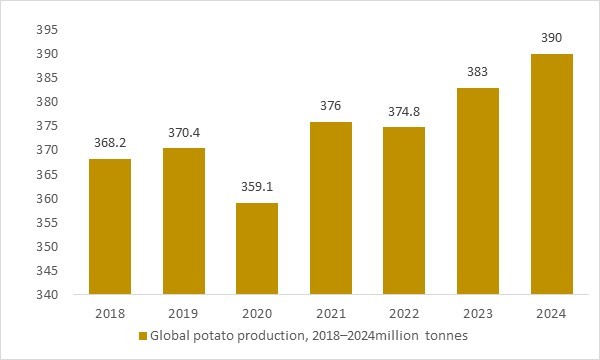
Global potato production 2018–2023 as a key raw-material base for flakes, granules, powders &other dehydrated potato products

The dehydrated potato market is supported by a large and resilient raw-material base, with global potato production rising from about 368 million tonnes in 2018 to nearly 383 million tonnes in 2023. Steady output growth across major producers ensures consistent availability of processing-grade potatoes used for flakes, granules, powders and value-added convenience foods. Productivity improvements in seed quality, irrigation and storage have strengthened supply stability even amid climatic and market disruptions. As foodservice, packaged foods and instant meal categories expand, this robust production trend reinforces long-term demand for dehydrated potato ingredients worldwide

Report Scope

Parameter

dehydrated potato Market scope Detail

Base Year

2024

Estimated Year

2025

Forecast Period

2026-2032

Market Size-Units

USD billion

Market Splits Covered

By Product, By Application, By End User and By Technology

Countries Covered

North America (USA, Canada, Mexico)
Europe (Germany, UK, France, Spain, Italy, Rest of Europe)
Asia-Pacific (China, India, Japan, Australia, Rest of APAC)
The Middle East and Africa (Middle East, Africa)
South and Central America (Brazil, Argentina, Rest of SCA)

Analysis Covered

Latest Trends, Driving Factors, Challenges, Trade Analysis, Price Analysis, Supply-Chain Analysis, Competitive Landscape, Company Strategies

Customization

10% free customization (up to 10 analyst hours) to modify segments, geographies, and companies analyzed

Post-Sale Support

4 analyst hours, available up to 4 weeks

Delivery Format

The Latest Updated PDF and Excel Data file

Market Segmentation

By Form
- Flakes
- Powder
- Dices
- Shreds
- Other Forms

By Nature
- Organic
- Conventional

By Flavor
- Sweet Potato
- Regular

By Distribution Channel
- Supermarkets And Hypermarkets
- Convenience Stores
- Specialty Stores
- Online
- Other Distribution Channels

By Geography
- North America (USA, Canada, Mexico)
- Europe (Germany, UK, France, Spain, Italy, Rest of Europe)
- Asia-Pacific (China, India, Japan, Australia, Vietnam, Rest of APAC)
- The Middle East and Africa (Middle East, Africa)
- South and Central America (Brazil, Argentina, Rest of SCA)

Key Market Players

  • Cargill Incorporated
  • Nestle SA
  • Pepsico Inc.
  • Kraft Heinz Company
  • Intersnack Group GmbH & Co. KG
  • Lamb Weston Holdings Inc.
  • Lamb-Weston/ Meijer V.O.F
  • Agrana Group
  • Emsland Group
  • McCain Foods Limited
  • Basic American Foods Inc.
  • Aviko BV
  • Idahoan Foods LLC
  • Basic American Foods
  • Lutosa SA
  • Mydibel SA
  • Idaho Pacific Corporation
  • Idaho Supreme Potatoes Inc.
  • Oregon Potato Company
  • Rixona BV
  • Augason Farms
  • JR Short Milling Co
  • Agrarfrost GmbH & Co. KG
  • Avebe U.A.
  • Keystone Potato Products LLC
  • JSC Belaya Dacha Trading
  • Pacific Valley Foods
  • Engel Food Solutions
  • Linquan Hengda Food Co Ltd.
  • Agistin Biotech Pvt. Ltd. 
  • Procordia Food AB

1. Table of Contents
1.1 List of Tables
1.2 List of Figures

2. Dehydrated Potato Market Latest Trends, Drivers and Challenges, 2024- 2034
2.1 Dehydrated Potato Market Overview
2.2 Dehydrated Potato Market Developments
2.2.1 Dehydrated Potato Market -Supply Chain Disruptions
2.2.2 Dehydrated Potato Market -Direct/Indirect Impact of Tariff Changes and Trade Restrictions
2.2.3 Dehydrated Potato Market -Price Development
2.2.4 Dehydrated Potato Market -Regulatory and Compliance Management
2.2.5 Dehydrated Potato Market -Consumer Expectations and Trends
2.2.6 Dehydrated Potato Market -Market Structure and Competition
2.2.7 Dehydrated Potato Market -Technological Adaptation
2.2.8 Dehydrated Potato Market -Changing Retail Dynamics

2.3 Dehydrated Potato Market Insights, 2025- 2034
2.3.1 Prominent Dehydrated Potato Market product types, 2025- 2034
2.3.2 Leading Dehydrated Potato Market End-User markets, 2025- 2034
2.3.3 Fast-Growing countries for Dehydrated Potato Market sales, 2025- 2034
2.4 Dehydrated Potato Market Drivers and Restraints
2.4.1 Dehydrated Potato Market Demand Drivers to 2034
2.4.2 Dehydrated Potato Market Challenges to 2034
2.5 Dehydrated Potato Market- Five Forces Analysis
2.5.1 Dehydrated Potato Market Industry Attractiveness Index, 2025
2.5.2 Threat of New Entrants
2.5.3 Bargaining Power of Suppliers
2.5.4 Bargaining Power of Buyers
2.5.5 Intensity of Competitive Rivalry
2.5.6 Threat of Substitutes

3. Global Dehydrated Potato Market Value, Market Share, and outlook to 2034
3.1 Global Dehydrated Potato Market Overview, 2025
3.2 Global Dehydrated Potato Market Revenue and Forecast, 2025- 2034 (US$ Million)
3.3 Global Dehydrated Potato Market Size and Share Outlook by Type, 2025- 2034
3.4 Global Dehydrated Potato Market Size and Share Outlook by End-User, 2025- 2034
3.5 Global Dehydrated Potato Market Size and Share Outlook by Region, 2025- 2034

4. Asia Pacific Dehydrated Potato Market Value, Market Share and Forecast to 2034
4.1 Asia Pacific Dehydrated Potato Market Overview, 2025
4.2 Asia Pacific Dehydrated Potato Market Revenue and Forecast, 2025- 2034 (US$ Million)
4.3 Asia Pacific Dehydrated Potato Market Size and Share Outlook by Type, 2025- 2034
4.4 Asia Pacific Dehydrated Potato Market Size and Share Outlook by End-User, 2025- 2034
4.5 Asia Pacific Dehydrated Potato Market Size and Share Outlook by Country, 2025- 2034
4.6 Key Companies in Asia Pacific Dehydrated Potato Market

5. Europe Dehydrated Potato Market Value, Market Share, and Forecast to 2034
5.1 Europe Dehydrated Potato Market Overview, 2025
5.2 Europe Dehydrated Potato Market Revenue and Forecast, 2025- 2034 (US$ Million)
5.3 Europe Dehydrated Potato Market Size and Share Outlook by Type, 2025- 2034
5.4 Europe Dehydrated Potato Market Size and Share Outlook by End-User, 2025- 2034
5.5 Europe Dehydrated Potato Market Size and Share Outlook by Country, 2025- 2034
5.6 Key Companies in Europe Dehydrated Potato Market

6. North America Dehydrated Potato Market Value, Market Share, and Forecast to 2034
6.1 North America Dehydrated Potato Market Overview, 2025
6.2 North America Dehydrated Potato Market Revenue and Forecast, 2025- 2034 (US$ Million)
6.3 North America Dehydrated Potato Market Size and Share Outlook by Type, 2025- 2034
6.4 North America Dehydrated Potato Market Size and Share Outlook by End-User, 2025- 2034
6.5 North America Dehydrated Potato Market Size and Share Outlook by Country, 2025- 2034
6.6 Key Companies in North America Dehydrated Potato Market

7. South and Central America Dehydrated Potato Market Value, Market Share, and Forecast to 2034
7.1 South and Central America Dehydrated Potato Market Overview, 2025
7.2 South and Central America Dehydrated Potato Market Revenue and Forecast, 2025- 2034 (US$ Million)
7.3 South and Central America Dehydrated Potato Market Size and Share Outlook by Type, 2025- 2034
7.4 South and Central America Dehydrated Potato Market Size and Share Outlook by End-User, 2025- 2034
7.5 South and Central America Dehydrated Potato Market Size and Share Outlook by Country, 2025- 2034
7.6 Key Companies in South and Central America Dehydrated Potato Market

8. Middle East Africa Dehydrated Potato Market Value, Market Share and Forecast to 2034
8.1 Middle East Africa Dehydrated Potato Market Overview, 2025
8.2 Middle East and Africa Dehydrated Potato Market Revenue and Forecast, 2025- 2034 (US$ Million)
8.3 Middle East Africa Dehydrated Potato Market Size and Share Outlook by Type, 2025- 2034
8.4 Middle East Africa Dehydrated Potato Market Size and Share Outlook by End-User, 2025- 2034
8.5 Middle East Africa Dehydrated Potato Market Size and Share Outlook by Country, 2025- 2034
8.6 Key Companies in Middle East Africa Dehydrated Potato Market

9. Dehydrated Potato Market Players Analysis
9.1 Dehydrated Potato Market Companies - Key Strategies and Financial Analysis
9.1.1 Snapshot
9.1.2 Business Description
9.1.3 Products and Services
9.1.4 Financial Analysis

10. Dehydrated Potato Market Industry Recent Developments

11 Appendix
11.1 Publisher Expertise
11.2 Research Methodology
11.3 Annual Subscription Plans
11.4 Contact Information


Get Free Sample

At OG Analysis, we understand the importance of informed decision-making in today's dynamic business landscape. To help you experience the depth and quality of our market research reports, we offer complimentary samples tailored to your specific needs.

Start Now! Please fill the form below for your free sample.

Why Request a Free Sample?

Evaluate Our Expertise: Our reports are crafted by industry experts and seasoned analysts. Requesting a sample allows you to assess the depth of research and the caliber of insights we provide.

Tailored to Your Needs: Let us know your industry, market segment, or specific topic of interest. Our free samples are customized to ensure relevance to your business objectives.

Witness Actionable Insights: See firsthand how our reports go beyond data, offering actionable insights and strategic recommendations that can drive your business forward.

Embark on your journey towards strategic decision-making by requesting a free sample from OG Analysis. Experience the caliber of insights that can transform the way you approach your business challenges.

You can purchase individual sections of this report. Explore pricing options for specific sections.

FAQ's

The Global Dehydrated Potato Market is estimated to generate USD 8 billion in revenue in 2025.

The Global Dehydrated Potato Market is expected to grow at a Compound Annual Growth Rate (CAGR) of 8.9% during the forecast period from 2025 to 2034.

The Dehydrated Potato Market is estimated to reach USD 17.3 billion by 2034.

License

$2900- 30%

$4350- 40%

$5800- 50%

$2150- 20%

Didn’t find what you’re looking for? TALK TO OUR ANALYST TEAM

Need something within your budget? NO WORRIES! WE GOT YOU COVERED!

Related Products

Pineapples Market Analysis and Outlook Report: Industry Size, Share, Growth Trends, and Forecast (2025-2034)

Pineapples Market Overview The global pineapples market is witnessing steady growth, driven by increasing consumer demand for fresh and processed tropical fruits, rising awareness of health benefits, and expanding international trade. Pineapples are widely consumed as fresh fruit, juice, dried snacks, and canned products, making them a crucial commodity in the global fruit industry. The growing popularity of healthy eating, plant-based diets, and natural fruit-based beverages is fueling demand across retail and food service sectors. Additionally, advancements in cold chain logistics and packaging technologies are improving pineapple storage and transportation, expanding market accessibility in regions with limited local production. Countries like Costa Rica, the Philippines, Thailand, and Indonesia dominate global pineapple exports, supplying major markets in North America, Europe, and Asia-Pacific. Sustainability and organic farming practices are becoming key focus areas, as consumers seek pesticide-free and ethically sourced pineapples. Despite fluctuating production due to climate change and supply chain disruptions, the market is expected to continue its growth trajectory as demand for fresh and processed pineapple products rises globally. In 2024, the pineapple market is experiencing significant developments in sustainable farming, organic certification, and export expansion. The increasing shift toward organic and fair-trade-certified pineapples is reshaping supply chains, with more farmers adopting eco-friendly agricultural practices to meet global sustainability standards. The processed pineapple sector is also expanding, with rising consumer demand for premium juices, frozen pineapple chunks, and fruit-based snacks driving innovations in packaging and preservation techniques. Digital marketplaces and e-commerce platforms are playing a vital role in pineapple distribution, allowing farmers and exporters to connect directly with consumers and retailers, reducing dependency on traditional supply chains. Additionally, agritech innovations such as precision irrigation, smart pest control, and genetic improvement of pineapple varieties are enhancing productivity and resilience against climate change impacts. Major pineapple-exporting countries are strengthening their global reach by negotiating new trade agreements and improving logistics networks to reduce post-harvest losses. However, challenges such as fluctuating transportation costs, tariff regulations, and unpredictable weather conditions continue to impact the market, requiring producers to adopt flexible and adaptive strategies. Looking ahead to 2025 and beyond, the pineapple market is expected to witness further technological advancements in farming techniques, digital supply chain integration, and consumer-driven product innovations. AI-powered predictive analytics and smart farming solutions will enable farmers to optimize yield, reduce waste, and manage resources efficiently. The growing demand for plant-based and functional foods will lead to the development of new pineapple-based products, including probiotic-rich fruit beverages, protein-infused pineapple snacks, and sugar-free dried pineapple variants. The expansion of vertical farming and controlled environment agriculture (CEA) will support year-round pineapple production in non-tropical regions, reducing import dependency and enhancing local supply chains. Sustainability efforts will also accelerate, with biodegradable packaging solutions, carbon-neutral farming initiatives, and blockchain-enabled transparency in pineapple sourcing gaining traction. Additionally, the shift toward personalized nutrition and health-conscious diets will drive innovations in pineapple-infused wellness products, positioning the fruit as a staple ingredient in functional food and beverage markets. As consumer preferences evolve, the pineapple market will continue expanding, driven by health trends, sustainability efforts, and digital transformation in the agricultural sector. Key Trends in the Pineapples Market Rising Demand for Organic and Fair-Trade Pineapples: Consumers are increasingly opting for organic and ethically sourced pineapples, driving growth in certified sustainable farming and transparent supply chains. Expansion of Processed Pineapple Products: The demand for premium juices, frozen pineapples, and dried fruit snacks is increasing, leading to innovations in processing, preservation, and packaging solutions. Growth of Digital Marketplaces and Direct-to-Consumer Sales: Online platforms and e-commerce are transforming pineapple distribution, allowing producers to sell directly to consumers and retailers while reducing intermediaries. Adoption of Smart Farming Technologies: Precision irrigation, AI-based pest management, and improved pineapple breeding techniques are enhancing productivity and resilience against climate-related challenges. Increased Focus on Sustainable Packaging and Carbon-Neutral Farming: Companies are investing in biodegradable packaging, carbon offset programs, and eco-friendly farming practices to align with global sustainability goals. Market Drivers Growing Consumer Demand for Healthy and Natural Foods: The increasing preference for fresh fruits, plant-based diets, and natural sweeteners is fueling demand for pineapples in retail and food service sectors. Advancements in Cold Chain Logistics and Export Infrastructure: Improved transportation, refrigeration, and packaging technologies are extending pineapple shelf life and enabling efficient global distribution. Rising Popularity of Functional and Nutritional Fruit-Based Products: The demand for antioxidant-rich, vitamin-packed fruit products is driving innovation in pineapple-based beverages, superfoods, and wellness-focused snacks. Government Support for Agricultural Modernization: Investments in agritech, subsidies for sustainable farming, and trade agreements are fostering the expansion of pineapple production and exports in key producing regions. Market Challenge Climate Change and Weather-Related Uncertainty: Unpredictable weather patterns, extreme temperatures, and natural disasters pose risks to pineapple cultivation, leading to production fluctuations and supply chain disruptions. Market Scope Parameter Detail Base Year 2024 Estimated Year 2025 Forecast Period 2026-2034 Market Size-Units USD billion Market Splits Covered By Type , By Source , By Variety , By Application , By Distribution Channel Countries Covered North America (USA, Canada, Mexico) Europe (Germany, UK, France, Spain, Italy, Rest of Europe) Asia-Pacific (China, India, Japan, Australia, Rest of APAC) The Middle East and Africa (Middle East, Africa) South and Central America (Brazil, Argentina, Rest of SCA) Analysis Covered Latest Trends, Driving Factors, Challenges, Trade Analysis, Price Analysis, Supply-Chain Analysis, Competitive Landscape, Company Strategies Customization 10% free customization (up to 10 analyst hours) to modify segments, geographies, and companies analyzed Post-Sale Support 4 analyst hours, available up to 4 weeks Delivery Format The Latest Updated PDF and Excel Datafile

Published:Apr-2025

Mozzarella Cheese Market Analysis and Outlook Report: Industry Size, Share, Growth Trends, and Forecast (2025-2032)

The mozzarella cheese market is a prominent segment within the global dairy industry, widely recognized for its integral role in numerous food applications, especially in Italian cuisine. Mozzarella’s mild flavour, soft texture, and excellent melting properties make it a favourite ingredient in pizzas, pastas, sandwiches, and salads. This has led to substantial demand from both household consumers and commercial food service providers. The market is also segmented across retail, HoReCa (Hotels, Restaurants, and Cafés), and industrial food processing channels, all of which contribute to the robust growth of mozzarella as a staple cheese variety globally. Key Market Insights,Trends and Drivers from the Report: By region, the study offers market insights across North America, Europe, Asia-Pacific, and the Rest of the World. North America is expected to dominate the mozzarella cheese market, driven by its well-established food industry, diverse culinary culture, and strong supply chain infrastructure. These factors contribute to the widespread availability and consumption of mozzarella across the region. Additionally, the report provides detailed analysis of key countries including the United States, Canada, Germany, France, the United Kingdom, Italy, Spain, China, Japan, India, Australia, South Korea, and Brazil. The mozzarella cheese market is segmented by product form into Blocks, Cubes, Slices, and Spreads & Spray. Among these, sliced mozzarella cheese holds the dominant position. Its widespread popularity is attributed to its convenience and versatility, making it an ideal choice for various culinary uses such as pizzas, sandwiches, and salads. The strong demand for pre-sliced mozzarella reflects the preferences of time-pressed consumers who value ready-to-use, portioned cheese options. The mozzarella cheese market is segmented by type into Mozzarella, Reduced-fat Mozzarella, and Reduced-sodium Mozzarella. Traditional mozzarella leads the market due to its extensive use across a variety of dishes, including pizzas, sandwiches, and salads, securing its strong foothold in both household and foodservice applications. Its familiar taste and texture continue to make it the preferred choice among consumers. Health-Conscious Consumption Driving Demand for Low-Fat and Reduced-Sodium Variants:with increasing awareness of health and wellness, consumers are gravitating towards mozzarella cheese options that align with their dietary preferences. This shift has led to a surge in demand for reduced-fat and reduced-sodium mozzarella products, which offer the nutritional benefits of traditional mozzarella while catering to health-conscious individuals. The cheese's high protein and calcium content further enhances its appeal among consumers seeking healthier dairy alternatives. Expansion of Plant-Based and Specialty Mozzarella Products:the growing interest in plant-based diets and lactose-free options has spurred innovation in the mozzarella cheese segment. Manufacturers are introducing vegan and specialty mozzarella products to cater to diverse consumer needs, including those with dietary restrictions or preferences for sustainable food sources. This diversification is expanding the market reach and offering consumers a wider array of mozzarella cheese options. Expansion of the Global Pizza Industry and Foodservice Sector:Mozzarella cheese remains a fundamental ingredient in pizzas, a staple in both quick-service restaurants (QSRs) and frozen food products. The increasing global appetite for pizza, especially in emerging markets, has significantly boosted mozzarella consumption. Its superior melting properties and mild flavor make it indispensable in various culinary applications, reinforcing its demand across the foodservice industry. Rising Health Consciousness among Consumers:With growing awareness of health and wellness, consumers are seeking healthier dietary options. This shift has led to increased demand for reduced-fat and reduced-sodium mozzarella variants, which offer the nutritional benefits of traditional mozzarella while catering to health-conscious individuals. The cheese's high protein and calcium content further enhances its appeal among consumers aiming for balanced diets. Report Scope Details Base Year 2024 Compound Annual Growth Rate (CAGR) (%) 2025 to 2034 Market Forecast Period 2025 to 2034 Market Forecast Units USD Billion Segments Covered Type, Source, Product Form, Distribution Channel and Region Region Covered North America, Europe, Asia Pacific, South and Central America, and the Middle East and Africa Countries Covered USA, Canada, Mexico Germany, UK, France, Spain, Italy, Rest of Europe China, India, Japan, Australia, South Korea, Rest of Asia Pacific Saudi Arabia, UAE, Iran, South Africa, Rest of Middle East Brazil, Argentina, Rest of South and Central America Key Companies Profiled Leprino Foods, Saputo Inc., BelGioioso Cheese Inc., Lactalis Group, Grande Cheese Company, Tillamook Creamery, Granarolo S.p.A., Ambrosi S.p.A., Caseificio Pugliese F.lli Radicci S.p.A., Mozzarella Company, Sargento Foods, Kraft Heinz Company, Kraft Heinz Company, Calabro Cheese Corporation, DiStefano Cheese Customization Scope 10% Free Customization Post-Sale Analyst Support 4 Weeks Delivery Format PDF and Excel through Email (We can also provide the editable version of the report in PPT/Word format on special request)

Published:Apr-2025

Agricultural Biotechnology Market Analysis and Outlook Report: Industry Size, Share, Growth Trends, and Forecast (2025-2034)

The Agricultural Biotechnology Market is rapidly evolving as technological advancements and global food security concerns reshape modern agriculture. Agricultural biotechnology leverages genetic engineering, molecular markers, and advanced breeding techniques to develop high-yield, pest-resistant, and climate-resilient crops. This sector is increasingly vital for addressing challenges such as population growth, shrinking arable land, and climate change impacts. The market is expanding with the adoption of genetically modified (GM) seeds, bio-pesticides, bio-fertilizers, and precision breeding technologies. Major agricultural economies are investing heavily in R&D, regulatory frameworks are becoming more accommodating, and consumer acceptance is rising for products that offer sustainability, enhanced nutrition, and environmental benefits. Growth in this market is driven by the need to increase productivity, reduce chemical inputs, and promote sustainable farming practices. Biotech innovations are enabling more efficient use of resources, minimizing crop losses, and supporting traceability in the food supply chain. Collaboration among seed companies, research institutions, and agri-tech startups is fostering rapid innovation. However, challenges such as regulatory complexity, ethical concerns, and market access for smallholders persist. Ongoing advances in gene editing, digital agriculture, and climate-smart biotech solutions are expected to unlock new opportunities, positioning agricultural biotechnology as a key enabler of future food systems. Key Market- Takeaways Genetically modified crops with traits such as herbicide tolerance, insect resistance, and drought resilience are driving productivity gains and reducing reliance on chemical pesticides and fertilizers. Precision breeding techniques, including CRISPR gene editing and marker-assisted selection, are accelerating the development of improved crop varieties with higher yields, enhanced nutrition, and better stress tolerance. Bio-pesticides and bio-fertilizers derived from natural sources are gaining traction, supporting sustainable agriculture by minimizing environmental impact and promoting soil health. Advances in molecular diagnostics and plant tissue culture are enabling faster disease detection, pathogen resistance, and large-scale propagation of elite plant varieties. Regulatory support and government initiatives in countries such as the United States, Brazil, India, and China are facilitating the commercialization and adoption of biotech crops and inputs. Consumer demand for non-GMO and organic products is influencing the market, pushing companies to develop biotech solutions that align with clean label and sustainable agriculture trends. Agri-biotech startups are partnering with global seed companies and research organizations to accelerate innovation in gene editing, bioinformatics, and digital crop monitoring tools. Climate change is intensifying the need for climate-smart crops that can withstand heat, drought, flooding, and emerging pests, making biotech solutions crucial for global food security. Digital agriculture and big data analytics are being integrated with biotechnology to optimize crop management, improve traceability, and enable more precise application of inputs. Ongoing debates around intellectual property, ethical considerations, and equitable market access for smallholder farmers highlight the need for transparent regulation and inclusive innovation in agricultural biotechnology.

Published:Apr-2025