PFA (Polyfluoroalkoxy) Welding Film Market Analysis and Outlook Report: Industry Size, Share, Growth Trends, and Forecast (2026-2034)

Published On: Feb, 2026
|
Pages: 151

"The PFA (Polyfluoroalkoxy) Welding Film Market Size is valued at $389.8 Million in 2025. Worldwide sales of PFA (Polyfluoroalkoxy) Welding Film Market are expected to grow at a significant CAGR of 4.6%, reaching $534 Million by the end of the forecast period in 2032."

The PFA (polyfluoroalkoxy) welding film market is experiencing steady growth driven by rising demand for high-performance thermoplastic films in chemical processing, semiconductor manufacturing, pharmaceutical, and industrial applications requiring excellent thermal stability, chemical resistance, and weldability. PFA welding films are fluoropolymer films made from copolymers of perfluoroalkyl vinyl ether and tetrafluoroethylene, offering a unique combination of mechanical strength, optical clarity, flexibility, and non-stick properties while maintaining performance at continuous temperatures up to 260°C. These films are widely used as welding liners, release films, and protective barriers for tanks, pipelines, lining systems, and cleanroom equipment where chemical inertness and contamination-free processing are critical. Growth in the semiconductor industry, increasing adoption in chemical tank linings, and expanding use in high-purity fluid handling systems are supporting market expansion globally.

Regionally, North America and Europe dominate the PFA welding film market due to established semiconductor and chemical manufacturing sectors, stringent quality standards, and early adoption of advanced fluoropolymer solutions for critical applications. Asia Pacific is the fastest-growing region, driven by rapid growth in semiconductor fabrication, electronics manufacturing, and chemical processing investments in countries such as China, South Korea, Taiwan, and Japan. However, challenges remain including high production costs, limited raw material availability, and specialized processing requirements that restrict market entry for smaller manufacturers. Leading companies are focusing on developing ultra-thin, precision-grade welding films, expanding production capacities, and integrating sustainable fluoropolymer manufacturing practices to enhance market competitiveness. As demand for high-purity, thermally stable, and chemically inert films increases across advanced manufacturing sectors, the PFA welding film market is poised for sustained growth in the coming years.

Standard PFA welding film is the largest product segment in the PFA polyfluoroalkoxy welding film market due to its widespread use in semiconductor manufacturing, chemical processing, and fluid handling systems that require high purity, chemical resistance, and thermal stability without the need for additional reinforcement. Reinforced PFA welding film is the fastest-growing segment as its enhanced mechanical strength and dimensional stability make it ideal for heavy-duty industrial applications, including aggressive chemical environments and high-pressure lining systems.

Chemical processing is the largest application segment in the market, driven by extensive use of PFA welding films as liners, tank linings, and protective barriers for pipes and equipment handling corrosive chemicals, ensuring safety, compliance, and extended equipment life. Electrical insulation is the fastest-growing application segment, supported by rising demand in semiconductor fabrication, electronics manufacturing, and high-voltage systems where PFA films provide superior dielectric properties, thermal resistance, and chemical inertness for reliable performance in critical environments.

Trade Intelligence  PFA (polyfluoroalkoxy) welding film market

Global Unworked non-cellular plastic sheets/films n.e.s (non-reinforced, non-backed) Trade, Imports, USD million, 2020-24


2020

2021

2022

2023

2024

World

           6,762

           8,156

           8,088

           7,220

           7,001

 China 

           1,724

           2,107

           1,852

           1,773

           1,823

India

              357

              645

              757

              591

              411

Vietnam

              555

              523

              574

              403

              370

Germany

              284

              371

              387

              408

              366

South Korea

              492

              573

              450

              366

              352

Source: OGAnalysis, International Trade Centre (ITC)


- China , India , Vietnam , Germany  and South Korea  are the top five countries importing 47.4% of global Unworked non-cellular plastic sheets/films n.e.s (non-reinforced, non-backed) in 2024
- Global Unworked non-cellular plastic sheets/films n.e.s (non-reinforced, non-backed) Imports increased by 3.5% between 2020 and 2024
- China  accounts for 26% of global Unworked non-cellular plastic sheets/films n.e.s (non-reinforced, non-backed) trade in 2024
- India  accounts for 5.9% of global Unworked non-cellular plastic sheets/films n.e.s (non-reinforced, non-backed) trade in 2024
- Vietnam  accounts for 5.3% of global Unworked non-cellular plastic sheets/films n.e.s (non-reinforced, non-backed) trade in 2024

Global Unworked non-cellular plastic sheets/films n.e.s (non-reinforced, non-backed) Export Prices, USD/Ton, 2020-24

 Trade Intelligence  PFA (polyfluoroalkoxy) welding film market

Source: OGAnalysis, International Trade Centre (ITC)


Key Insights PFA (polyfluoroalkoxy) welding film market

  • The PFA polyfluoroalkoxy welding film market is driven by increasing demand for high-performance fluoropolymer films in semiconductor manufacturing, chemical processing, and pharmaceutical industries requiring exceptional chemical resistance and thermal stability for critical containment and lining applications.
  • PFA welding films offer superior thermal stability up to 260°C, excellent mechanical strength, and high flexibility, making them ideal for welding liners, release films, and protective barriers in high-purity fluid handling systems and corrosion-resistant equipment.
  • North America and Europe dominate the market due to mature semiconductor fabrication sectors, strong chemical manufacturing bases, and early adoption of advanced fluoropolymer solutions complying with stringent purity and safety standards in industrial operations.
  • Asia Pacific is the fastest-growing region, driven by rapid growth in semiconductor and electronics manufacturing in China, Taiwan, South Korea, and Japan, where PFA films are used in wafer processing, chemical delivery lines, and cleanroom equipment protection.
  • Increasing investments in the global semiconductor industry, supported by chip production capacity expansion and government subsidies, are fueling demand for PFA welding films used as liners and protective films in ultra-clean and corrosive environments.
  • High production costs and specialized processing requirements remain market challenges, as PFA welding films require advanced extrusion, precision casting, and sintering techniques, limiting production capabilities to a few global fluoropolymer manufacturers.
  • Technological advancements are focusing on developing ultra-thin, high-clarity, and precision-grade welding films to cater to microelectronics, advanced chemical containment systems, and pharmaceutical cleanroom barrier applications requiring optical clarity and contamination-free performance.
  • Leading manufacturers are expanding their production capacities and investing in sustainable fluoropolymer manufacturing practices, including fluorine recovery systems and low-carbon production technologies, to strengthen market competitiveness and meet regulatory compliance.
  • The market is witnessing rising demand for PFA welding films in high-purity chemical tank linings and dual laminate systems, where their chemical inertness and weldability extend equipment life and reduce maintenance downtime in aggressive processing environments.
  • Strategic partnerships between film manufacturers, semiconductor chemical suppliers, and equipment fabricators are increasing, facilitating integrated solutions, process validation support, and tailored welding film grades for specialized high-purity industrial applications globally.

Global fluorspar mine production (thousand tonnes), 2018–2024

Figure: Global fluorspar mine production (thousand tonnes), 2018–2024e, highlighting the expanding raw-material base for high-performance fluoropolymers used in PFA (polyfluoroalkoxy) welding films and advanced chemical processing applications.
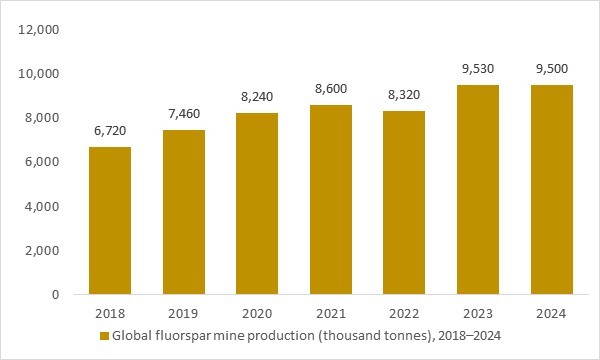
Global fluorspar mine production, 2018–2024e, key raw-material trend supporting PFA welding film market analysis.

  • Global fluorspar mine production has shown a steady upward trend from 2018 to 2024e, reinforcing the strength of the raw-material base required for high-performance fluoropolymers such as PFA. As fluorspar is the essential feedstock for hydrofluoric acid and fluoromonomers, its availability directly influences PFA welding film pricing, processing stability, and long-term supply security. This trend highlights a supportive environment for capacity expansion and technology adoption across advanced manufacturing, semiconductor, and chemical-processing applications.

Regional Insights 

North America PFA (polyfluoroalkoxy) welding film market

In North America, the PFA (polyfluoroalkoxy) welding film market is supported by a strong installed base of high-performance process industries, including chemical processing, semiconductor, aerospace, and advanced composites. PFA welding films are used as hot-melt adhesive layers and bondable interlayers for PTFE-coated glass fabrics, corrosion-resistant linings, high-temperature insulation, and release films in composite lay-up. Equipment builders and fabricators value PFA welding films for their combination of high continuous-use temperature, chemical inertness, weldability, and transparency, enabling reliable bonding without liquid adhesives. Growth is further supported by ongoing investment in semiconductor capacity, battery and fuel-cell plants, and aerospace composite facilities, all of which use fluoropolymer films in critical components and tooling. At the same time, tightening state-level and federal scrutiny of PFAS (“forever chemicals”) is pushing users and suppliers to improve emissions control, documentation, and end-of-life strategies, rather than immediately abandoning fluoropolymer films that are considered mission-critical.

Europe PFA (polyfluoroalkoxy) welding film market

In Europe, demand for PFA welding films is closely linked to advanced manufacturing in chemicals, pharmaceuticals, automotive, aerospace, and renewable energy equipment. PFA films are used as weldable liners, release films, and bonding media in composite structures and corrosion-resistant components operating in harsh thermal and chemical environments. European producers and converters are among the leading global suppliers of fluoropolymer films, offering extruded and welding-grade PFA films tailored for bonding PTFE fabrics, process belts, and engineered parts. However, the region is also at the forefront of PFAS regulatory initiatives, including REACH-based universal PFAS restriction proposals and specific caps on PFAS emissions, which drive investment in cleaner manufacturing technologies, traceability, and potential long-term substitution strategies. For the foreseeable future, exemptions for critical uses in semiconductors, aerospace, and other strategic sectors are expected to sustain PFA welding film demand, but under much stricter environmental performance requirements.

Asia-Pacific PFA (polyfluoroalkoxy) welding film market

Asia-Pacific is the manufacturing growth engine for PFA welding films, underpinned by rapid expansion in electronics, semiconductors, chemical processing, solar energy, and high-end industrial equipment. Major fluoropolymer producers and converters in Japan, China, and other regional hubs offer PFA films for welding, thermoforming, and bonding, supplying local and export markets with a wide range of thicknesses and widths. PFA welding films are widely used in corrosion-resistant linings, composite release films for aerospace and wind blades, and high-purity fluid handling in chip fabs and battery plants, where their thermal stability and chemical resistance are essential. Regional governments’ focus on localizing advanced materials supply chains also supports investment in fluoropolymer film capacity. At the same time, emerging PFAS regulations in countries such as Japan, along with export-market requirements, are pushing Asian producers to enhance emissions control, product stewardship, and documentation, but overall demand for PFA welding films remains on an upward trajectory.

Reort Scope

Parameter

PFA (Polyfluoroalkoxy) Welding Film Market Scope Detail

Base Year

2024

Estimated Year

2025

Forecast Period

2026-2034

Market Size-Units

USD billion

Market Splits Covered

By Product Type, By Diagnostic Method, By End User

Countries Covered

North America (USA, Canada, Mexico)
Europe (Germany, UK, France, Spain, Italy, Rest of Europe)
Asia-Pacific (China, India, Japan, Australia, Rest of APAC)
The Middle East and Africa (Middle East, Africa)
South and Central America (Brazil, Argentina, Rest of SCA)

Analysis Covered

Latest Trends, Driving Factors, Challenges, Trade Analysis, Price Analysis, Supply-Chain Analysis, Competitive Landscape, Company Strategies

Customization

10% free customization (up to 10 analyst hours) to modify segments, geographies, and companies analyzed

Post-Sale Support

4 analyst hours, available up to 4 weeks

Delivery Format

The Latest Updated PDF and Excel Data file

PFA (Polyfluoroalkoxy) Welding Film Market Segmentation

By Product

  • Standard PFA Welding Film
  • Reinforced PFA Welding Film

By Application

  • Electrical Insulation
  • Chemical Processing
  • Food Processing

By End User

  • Aerospace
  • Automotive
  • Pharmaceuticals
  • Electronics

By Technology

  • Flame Welding
  • Laser Welding

By Distribution Channel

  • Direct Sales
  • Distributors
  • Online Sales

By Geography

  • North America (USA, Canada, Mexico)
  • Europe (Germany, UK, France, Spain, Italy, Rest of Europe)
  • Asia-Pacific (China, India, Japan, Australia, Vietnam, Rest of APAC)
  • The Middle East and Africa (Middle East, Africa)
  • South and Central America (Brazil, Argentina, Rest of SCA)

Top 15 Companies Operating in the PFA (Polyfluoroalkoxy) Welding Film Market

  • Daikin Industries Ltd.
  • 3M Company
  • The Chemours Company
  • Arkema Group
  • Saint-Gobain Performance Plastics
  • Fluoroseals SpA
  • Entegris Inc.
  • Technetics Group
  • Chukoh Chemical Industries, Ltd.
  • Zeus Industrial Products, Inc.
  • Dongyue Group Ltd.
  • Shanghai 3F New Materials Company Limited
  • Hubei Everflon Polymer Co., Ltd.
  • RTP Company
  • Hengli Corporation

Recent Industry Developments

  • Nov 2025 — Daikin: Showcased semiconductor-focused fluoropolymer materials where PFA films used for welding/lining support high-purity chemical handling and contamination control.

  • Aug 2025 — Chemours: Announced a major environmental-claims settlement update that is closely watched by fluoropolymer supply chains supporting PFA film and welding applications.

  • Feb 2025 — Chemours: Reported improved availability tied to expanded Teflon™ PFA capability, supporting downstream conversion into PFA films and welding film formats for high-purity systems.

  • Nov 2024 — GMM Pfaudler / Edlon: Highlighted PureFusion™ fluoropolymer welding technology for ultra-high-purity vessels, reinforcing demand for PFA welding films/sheets used in seam construction.

  • Aug 2024 — Chemours: Communicated progress toward expanding PFA production, supporting semiconductor-driven growth that lifts consumption of PFA films and welding materials in wet-process infrastructure.

  • Jun 2024 — AGC: Reiterated capacity expansion plans for high-performance fluorine resins aligned with semiconductor demand, supportive of upstream supply for PFA-class film applications.

  • Jan 2024 — GMM Pfaudler / Edlon: Announced a dedicated semiconductor equipment manufacturing site expansion, where welded fluoropolymer liners/films are integral for harsh chemical service.

  • Mar 2023 — AGC: Announced a major fluorochemical capacity investment to support rising semiconductor and high-purity applications that underpin downstream PFA film and welding film use.

What You Receive

• Global Pfa Polyfluoroalkoxy Welding Film market size and growth projections (CAGR), 2024- 2034
• Impact of recent changes in geopolitical, economic, and trade policies on the demand and supply chain of Pfa Polyfluoroalkoxy Welding Film.
• Pfa Polyfluoroalkoxy Welding Film market size, share, and outlook across 5 regions and 27 countries, 2025- 2034.
• Pfa Polyfluoroalkoxy Welding Film market size, CAGR, and Market Share of key products, applications, and end-user verticals, 2025- 2034.
• Short and long-term Pfa Polyfluoroalkoxy Welding Film market trends, drivers, restraints, and opportunities.
• Porter’s Five Forces analysis, Technological developments in the Pfa Polyfluoroalkoxy Welding Film market, Pfa Polyfluoroalkoxy Welding Film supply chain analysis.
• Pfa Polyfluoroalkoxy Welding Film trade analysis, Pfa Polyfluoroalkoxy Welding Film market price analysis, Pfa Polyfluoroalkoxy Welding Film Value Chain Analysis.
• Profiles of 5 leading companies in the industry- overview, key strategies, financials, and products.
• Latest Pfa Polyfluoroalkoxy Welding Film market news and developments.
The Pfa Polyfluoroalkoxy Welding Film Market international scenario is well established in the report with separate chapters on North America Pfa Polyfluoroalkoxy Welding Film Market, Europe Pfa Polyfluoroalkoxy Welding Film Market, Asia-Pacific Pfa Polyfluoroalkoxy Welding Film Market, Middle East and Africa Pfa Polyfluoroalkoxy Welding Film Market, and South and Central America Pfa Polyfluoroalkoxy Welding Film Markets. These sections further fragment the regional Pfa Polyfluoroalkoxy Welding Film market by type, application, end-user, and country.

You can purchase individual sections of this report. Explore pricing options for specific sections.

FAQ's

The Global PFA (Polyfluoroalkoxy) Welding Film Market is estimated to generate USD 389.8 Million in revenue in 2025.

The Global PFA (Polyfluoroalkoxy) Welding Film Market is expected to grow at a Compound Annual Growth Rate (CAGR) of 4.6% during the forecast period from 2025 to 2032.

The PFA (Polyfluoroalkoxy) Welding Film Market is estimated to reach USD 534 Million by 2032.

License

Didn’t find what you’re looking for? TALK TO OUR ANALYST TEAM

Need something within your budget? NO WORRIES! WE GOT YOU COVERED!

Related Products

Magnesia (MgO) market Analysis and Outlook Report: Industry Size, Share, Growth Trends, and Forecast (2026-2034)

The magnesia (MgO) market is a key segment of the industrial minerals, refractory materials, and specialty chemical industries, focused on magnesium oxide products used across high-temperature, environmental, agricultural, construction, chemical, and pharmaceutical applications. Magnesia is available in forms such as dead-burned magnesia, fused magnesia, caustic calcined magnesia, and high-purity grades, each serving different performance requirements. Its major end uses include steelmaking refractories, cement kilns, glass furnaces, non-ferrous metallurgy, flame retardants, wastewater treatment, agriculture, animal feed, pharmaceuticals, ceramics, and construction materials. Demand is largely supported by the need for heat-resistant refractory linings in steel and cement production, while specialty applications are gaining attention in environmental treatment, electrical insulation, and high-performance chemical formulations. Recent trends in the magnesia market include increasing demand for high-purity and fused magnesia, stronger focus on energy-efficient refractory materials, and growing use of magnesium oxide in environmental and specialty chemical applications. Manufacturers are investing in better calcination technologies, quality consistency, beneficiation, and product customization to meet the needs of steel, cement, glass, and specialty end users. Growth is further influenced by infrastructure development, industrial expansion, environmental compliance, and the need for durable materials that perform under extreme thermal and chemical conditions. Competitive dynamics are shaped by integrated magnesite miners, refractory producers, specialty mineral companies, chemical suppliers, and regional processors competing on raw material access, product purity, cost efficiency, technical service, and supply reliability. At the same time, energy costs, emissions regulations, mining constraints, and volatility in steel and construction-linked demand continue to influence market performance. Key Insights Steelmaking remains the largest and most important demand driver for magnesia, as dead-burned and fused magnesia are essential in refractory bricks, monolithics, and linings used in furnaces, ladles, converters, and other high-temperature equipment. The material’s resistance to heat, slag, and corrosion makes it critical to steel plant operations. This keeps refractory-grade magnesia central to overall market demand. Dead-burned magnesia continues to dominate refractory applications due to its durability, thermal stability, and suitability for high-temperature industrial processes. It is widely used in steel, cement, and non-ferrous metal industries where lining performance and service life are critical. Demand for consistent quality and controlled impurity levels is encouraging suppliers to improve processing and raw material selection. Fused magnesia is gaining importance in premium refractory applications where higher density, purity, and resistance to chemical attack are required. It is used in demanding steelmaking, glass, and specialty thermal applications that require superior performance. Growth in high-end refractories is supporting demand for fused grades, particularly among customers seeking longer lining life and reduced downtime. Caustic calcined magnesia is widely used in environmental, agricultural, chemical, and construction applications, including wastewater treatment, flue gas desulfurization, soil conditioning, animal feed, and magnesium-based compounds. Its reactivity makes it suitable for neutralization and treatment processes. This segment provides diversification beyond traditional refractory demand and supports broader market resilience. Environmental applications are becoming increasingly important as industries seek materials for acid neutralization, heavy metal removal, wastewater treatment, and emissions control. Magnesia offers useful alkalinity and reactivity in several treatment processes. Environmental regulation and industrial sustainability efforts are strengthening demand for reactive MgO products in water, waste, and air treatment systems. High-purity magnesia is gaining attention in electronics, advanced ceramics, pharmaceuticals, and specialty chemical applications where controlled composition and consistent performance are essential. These applications demand tighter specifications than bulk industrial uses. As advanced materials and specialty manufacturing expand, high-purity MgO is expected to support higher-value market opportunities. Supply reliability and raw material access are major competitive factors because magnesia production depends on magnesite reserves, brine sources, energy-intensive processing, and logistics networks. Producers with integrated mining, processing capability, and stable energy access hold advantages. Regional availability and product consistency strongly influence customer sourcing decisions in refractory and specialty applications. Future market growth will be shaped by steel industry demand, refractory modernization, environmental treatment applications, high-purity material requirements, and infrastructure-linked industrial activity. Opportunities will expand where suppliers can deliver consistent quality, energy-efficient production, and application-specific grades. Long-term competitiveness will depend on raw material control, emissions management, product innovation, and reliable technical support. Regional Analysis North America Magnesia (MgO) Market North America remains a significant market for magnesia, supported by demand from steel manufacturing, environmental treatment, construction materials, agriculture, and specialty chemical industries. Market dynamics are shaped by increasing use of high-performance refractories, wastewater treatment applications, and growing interest in sustainable industrial processes. Lucrative opportunities are strong in high-purity magnesia, environmental remediation products, flame retardants, and specialty chemical formulations. The forecast remains favorable as industrial modernization and environmental compliance initiatives continue, while latest developments focus on advanced refractory solutions, emissions reduction technologies, and higher-value specialty MgO applications. Asia Pacific Magnesia (MgO) Market Asia Pacific is the largest and fastest-growing magnesia market, driven by extensive steel production, cement manufacturing, infrastructure development, glass production, and industrial expansion. Market dynamics are influenced by strong demand for refractory materials, growing chemical manufacturing activities, and increasing consumption in environmental and agricultural applications. Lucrative opportunities are visible in dead-burned magnesia, fused magnesia, refractory products, wastewater treatment, and specialty industrial minerals. The forecast remains robust as industrial output continues to expand, while latest developments focus on production capacity enhancements, improved processing technologies, and growing demand for high-purity grades. Europe Magnesia (MgO) Market Europe represents a mature and technology-driven magnesia market, supported by advanced steelmaking, environmental management, specialty chemicals, pharmaceuticals, and industrial manufacturing sectors. Market dynamics are shaped by stringent environmental regulations, energy efficiency goals, and demand for premium refractory and specialty magnesium oxide products. Lucrative opportunities are concentrated in environmental treatment, advanced ceramics, pharmaceuticals, flame retardants, and sustainable refractory solutions. The forecast remains constructive as industries focus on efficiency and sustainability, while latest developments center on low-emission production processes, circular economy initiatives, and high-performance MgO applications. Middle East & Africa Magnesia (MgO) Market The Middle East & Africa magnesia market is developing steadily, supported by investments in steel production, cement manufacturing, mining activities, water treatment infrastructure, and industrial diversification programs. Market dynamics are influenced by rising demand for refractory materials in high-temperature industries and increasing use of magnesium oxide in environmental and construction applications. Lucrative opportunities are emerging in steel plant refractories, cement kilns, water treatment facilities, and industrial chemicals. The forecast remains positive as industrial development projects continue across the region, while latest developments focus on local processing capabilities, infrastructure expansion, and improved industrial material supply chains. South & Central America Magnesia (MgO) Market South & Central America presents promising growth opportunities in the magnesia market, supported by steelmaking, mining operations, cement production, agriculture, and environmental management activities. Market dynamics are shaped by demand for refractory materials, soil treatment products, wastewater management solutions, and industrial minerals. Lucrative opportunities are visible in dead-burned magnesia for metallurgical applications, agricultural magnesium products, and environmental treatment solutions. The forecast remains encouraging as industrial and infrastructure investments expand, while latest developments focus on modernization of refractory consumption, growth in mining-related demand, and increasing adoption of specialty magnesium oxide products across industrial sectors. Market Scope Parameter Magnesia (MgO) market Detail Base Year 2025 Estimated Year 2026 Forecast Period 2026-2034 Market Size-Units USD billion Market Splits Covered By Product Type, By Purity, By Application Countries Covered North America (USA, Canada, Mexico) Europe (Germany, UK, France, Spain, Italy, Rest of Europe) Asia-Pacific (China, India, Japan, Australia, Rest of APAC) The Middle East and Africa (Middle East, Africa) South and Central America (Brazil, Argentina, Rest of SCA) Analysis Covered Latest Trends, Driving Factors, Challenges, Trade Analysis, Price Analysis, Supply-Chain Analysis, Competitive Landscape, Company Strategies Customization 10% free customization (up to 10 analyst hours) to modify segments, geographies, and companies analyzed Post-Sale Support 4 analyst hours, available up to 4 weeks Delivery Format The Latest Updated PDF and Excel Data file

Published:Jun-2026

HDPE (High Density Polyethylene) market Analysis and Outlook Report: Industry Size, Share, Growth Trends, and Forecast (2026-2034)

The HDPE (High Density Polyethylene) market remains one of the most important segments within the global polyethylene industry, supported by its wide use across packaging, piping, molded products, films, industrial containers, tanks, consumer goods, and selected healthcare applications. HDPE continues to be preferred for its stiffness, chemical resistance, impact strength, moisture barrier properties, and processing flexibility, making it suitable for both commodity-volume uses and more performance-oriented applications. The market is strongly anchored in rigid packaging such as bottles, caps, closures, drums, and household containers, while pipe and conduit applications continue to provide long-term industrial support. Another important demand base comes from injection-molded and blow-molded products used in agriculture, construction, chemicals, utilities, and consumer goods. One of the most notable trends shaping the industry is the move from standard resin demand toward more application-specific grades designed to improve environmental stress crack resistance, process efficiency, toughness, stiffness balance, and long-term durability. Demand is also being supported by the material’s suitability for lightweight packaging, durable infrastructure products, and cost-efficient manufacturing across multiple conversion methods. From a competitive standpoint, the industry is led by large integrated petrochemical producers and polymer specialists competing through resin performance, grade consistency, application-development support, circular-material offerings, and regional supply capabilities. A major shift in the market is the growing emphasis on sustainability, with producers increasingly developing recycled-content solutions, recyclable packaging-compatible grades, and lower-emission product strategies to align with customer and regulatory expectations. At the same time, the role of HDPE in water systems, utility piping, industrial packaging, and durable molded products continues to reinforce its position as more than just a packaging material. Manufacturers are also focusing on higher-performance bimodal and specialty grades that improve long-term service life and processing reliability in demanding applications. Overall, the market outlook remains positive because HDPE combines broad end-use versatility with continuous material innovation, making it relevant across both mature industrial demand segments and newer sustainability-led product strategies. Key Market Insights Packaging remains the strongest foundation of demand across the market. HDPE continues to hold a leading role in rigid and flexible packaging because it offers a strong balance of durability, chemical resistance, processability, and cost efficiency. It is widely used in bottles, industrial packaging, caps, closures, and household containers where performance and lightweighting matter. Its continued relevance is strengthened by demand from food, personal care, chemicals, household care, and industrial sectors. This makes packaging one of the most stable and commercially influential outlets for the material. Future demand in this area will continue to be shaped by packaging innovation, recyclability goals, and brand-owner material preferences. Pipe and infrastructure applications are among the most strategic long-term growth areas. The material has strong relevance in plastic piping and related infrastructure systems because of its durability, crack resistance, corrosion resistance, and suitability for long service life. These qualities make it attractive in water distribution, utility networks, industrial transport, and agricultural systems where lifecycle value matters more than initial material cost alone. This gives the market a strong industrial base beyond short-cycle packaging demand. Infrastructure-linked applications are also supported by the need for reliable, low-maintenance piping systems. These uses are expected to remain a major support pillar for long-term market expansion. Blow molding remains one of the most commercially important processing routes. HDPE is widely used in extrusion blow molding and large-part blow molding because it provides the stiffness, melt strength, impact resistance, and stress-crack performance needed for bottles, drums, tanks, and industrial containers. This keeps blow-molded packaging and industrial-use products at the center of demand across many sectors. Performance in wall-thickness control, structural stability, and aggressive-liquid handling also reinforces its value in functional packaging. The continued importance of this route supports demand for differentiated grades rather than only standard-purpose material. Blow molding will remain a major area of competition for resin suppliers. Processing versatility is one of the material’s biggest competitive advantages. It can be used across extrusion, blow molding, injection molding, rotational molding, film production, and pipe extrusion, giving it a broad presence in multiple manufacturing formats. This allows the same resin family to support products ranging from containers and films to tanks, toys, medical articles, and piping systems. Because it serves many conversion technologies, the market remains resilient even when individual end-use sectors fluctuate. This versatility also supports stronger customer retention across packaging, industrial, agricultural, and consumer industries. It remains one of the defining strengths of the market structure. Higher-performance grades are becoming more important than standard volume alone. The market is increasingly moving toward grades engineered for better stiffness, impact balance, melt behavior, and environmental stress crack resistance in demanding applications. Bimodal and specialty resin grades are gaining traction in containers, pipe, and durable molded products where consistency and long-term performance are critical. This reflects a broader shift from commodity-based purchasing toward more specification-driven material selection. Buyers are placing greater value on materials that improve both processing reliability and end-use durability. As a result, differentiated grades are becoming more central to supplier positioning and product strategy. Durability and long-term performance remain central purchasing criteria. Commercial appeal depends heavily on how well the material performs under chemical exposure, environmental stress, mechanical load, and extended service conditions. This is especially important in industrial containers, utility piping, tanks, and structural molded products where failure risk directly affects customer confidence and lifecycle economics. Suppliers continue to focus on stress crack resistance, rigidity, toughness, and dimensional stability because these factors determine acceptance in demanding applications. This means performance remains essential even in high-volume market segments. Long-term durability will continue to be one of the strongest differentiators in buyer decision-making. Circularity is increasingly reshaping competitive strategy. Major producers are expanding recycled-content offerings, circular-material platforms, and broader sustainability programs to meet rising customer expectations around responsible plastic use. This is gradually changing the market from one defined mainly by virgin resin supply toward one where recycled compatibility and circular innovation also matter. The trend is particularly important in packaging, where brand owners and converters are seeking materials aligned with recyclability and sustainability commitments. Circularity is therefore becoming part of both product development and commercial differentiation. Over time, this shift is likely to influence supplier preference and long-term customer relationships more strongly. Infrastructure and utility demand broaden the market beyond short-cycle consumer uses. Its role in pipes, conduit, and broader utility solutions gives the industry exposure to construction, water systems, agriculture, and public infrastructure rather than depending only on consumer packaging cycles. This helps stabilize demand because infrastructure applications are longer-cycle, specification-driven, and linked to essential services. These segments also raise the importance of quality assurance, certification, and long-term service performance in supplier selection. They reward technical support and reliability as much as material availability. That makes infrastructure a strategically important anchor for long-term resilience. Healthcare and specialty applications add value to the broader product mix. While packaging and piping receive most of the attention, HDPE also serves healthcare products, medical components, and other specialty molded uses where cleanliness, consistency, and process control matter. These applications may be smaller in volume, but they are often more quality-sensitive and specification-led. Their presence helps diversify the market and increases the importance of application development and compliance-oriented product design. Specialty uses also show that the material is not only a bulk polymer but a platform for targeted performance solutions. This adds depth to the market beyond its core commodity demand base. Future growth will depend on balancing performance, cost, and sustainability expectations. HDPE remains attractive because it combines durability, versatility, and broad convertibility, but future leadership will increasingly depend on how well suppliers combine those strengths with circularity, efficient processing, and end-use-specific innovation. Customers are no longer evaluating material only on availability and price; they also want stronger sustainability positioning, better performance consistency, and reliable fit for application needs. This is pushing the market toward smarter grade segmentation and more solution-oriented selling. Suppliers that can serve both established volume demand and next-generation sustainability-led requirements are likely to hold the strongest long-term position. Regional Insights North AmericaHDPE (High Density Polyethylene) market North America is a mature but commercially resilient market, where demand remains strongest in rigid packaging, blow-molded containers, caps and closures, pressure pipe, conduit, and other infrastructure-linked applications. The key market dynamic is the shift from pure volume growth toward higher-value demand driven by circularity, recycled-content integration, and long-service-life pipe systems. This creates attractive opportunities for companies that can combine virgin resin performance with recycled-material capability, especially in household and industrial packaging as well as utility and water infrastructure. Recent market direction shows growing attention on collection quality, end-market demand, and stronger converter partnerships rather than capacity expansion alone. The forecast is stable to moderately positive, with the best gains likely to come from recycled-content-enabled packaging, specialty blow-molding grades, and resilient pipe and conduit solutions. Asia PacificHDPE (High Density Polyethylene) market Asia Pacific is expected to remain the strongest growth engine, supported by its broad packaging base, expanding infrastructure needs, rising molded-product demand, and continued importance in the global polyethylene value chain. The region’s main dynamic is the combination of strong underlying demand with aggressive capacity additions, especially in major manufacturing economies, which is keeping competition intense and pushing producers toward better grade differentiation, export flexibility, and application-specific positioning. The most lucrative opportunities are in rigid packaging, industrial containers, pipe, film-related applications, and higher-performance grades for construction, transport, and consumer uses. Recent developments across the region highlight how quickly the market is moving toward a more competitive and technically segmented structure. The forecast remains positive in demand terms, but success will increasingly depend on balancing scale with specialty positioning, cost efficiency, and regional customer support. EuropeHDPE (High Density Polyethylene) market Europe presents a more selective and regulation-led opportunity profile, where packaging circularity, recycled-content targets, and sustainability compliance are becoming as important as resin performance itself. The biggest market dynamic is the tightening packaging environment across the region, which is accelerating demand for recyclable packaging design, greater use of recycled plastics, and lower dependence on virgin material alone. This creates the strongest opportunities in bottle and closure applications, detergent and household packaging, premium pipe and conduit systems, and certified circular material solutions that can meet brand-owner and regulatory expectations. At the same time, the market is facing higher local costs, global overcapacity, and tougher supply-chain competition, which is pushing suppliers toward value-added grades rather than commodity-only competition. The forecast is stable to moderately positive, with the most attractive upside in circular packaging, compliance-ready resin portfolios, and durable infrastructure applications. Middle East & AfricaHDPE (High Density Polyethylene) market Middle East & Africa is an uneven but increasingly attractive market, with opportunities divided between feedstock-driven resin production and downstream demand in pipes, water systems, packaging, and industrial applications. The main market dynamic is the region’s dual role as both a production base with cost advantages and a developing end market where water, sanitation, irrigation, and urban infrastructure are creating stronger demand for durable piping systems. This makes pipe, geomembrane, tank, and rigid-packaging applications especially promising, while circular plastics is also gaining visibility through newer recycling initiatives and regional sustainability programs. Recent momentum around water-investment pipelines and broader plastics-recycling activity suggests stronger long-term support for both infrastructure and sustainability-linked demand. The forecast is moderately positive, with the best opportunities for companies that can combine durable product performance, regional distribution strength, and circular-material capability. South & Central AmericaHDPE (High Density Polyethylene) market South & Central America offers targeted but improving potential, led by rigid packaging, agricultural and industrial containers, pipe and conduit, and the gradual rise of circular-material applications. The key market dynamic is the shift from conventional resin demand toward packaging and recycling models that place greater emphasis on post-consumer material, design-for-recyclability, and local recovery ecosystems. This creates attractive opportunities in household and personal-care packaging, chemical containers, agricultural uses, and recycled-material supply for converters seeking stronger sustainability credentials. Recent developments across the region indicate that the market is building a more structured circular ecosystem rather than relying only on virgin resin growth. The forecast is positive but selective, with the strongest upside likely in recycled-content packaging, recycling partnerships, and locally adapted rigid-packaging and infrastructure applications. Market Scope Parameter HDPE (High Density Polyethylene) market Detail Base Year 2025 Estimated Year 2026 Forecast Period 2026-2034 Market Size-Units USD billion Market Splits Covered By Product Form, By Application, By Resin Grade, By End-user Industry Countries Covered North America (USA, Canada, Mexico) Europe (Germany, UK, France, Spain, Italy, Rest of Europe) Asia-Pacific (China, India, Japan, Australia, Rest of APAC) The Middle East and Africa (Middle East, Africa) South and Central America (Brazil, Argentina, Rest of SCA) Analysis Covered Latest Trends, Driving Factors, Challenges, Trade Analysis, Price Analysis, Supply-Chain Analysis, Competitive Landscape, Company Strategies Customization 10% free customization (up to 10 analyst hours) to modify segments, geographies, and companies analyzed Post-Sale Support 4 analyst hours, available up to 4 weeks Delivery Format The Latest Updated PDF and Excel Data file

Published:Mar-2026

Sulfur Hexafluoride Market Analysis and Outlook Report: Industry Size, Share, Growth Trends, and Forecast (2026-2034)

The Sulfur Hexafluoride market remains strategically important because the gas continues to play a critical role in electrical insulation and arc-quenching applications across high-voltage transmission and distribution equipment, while also retaining relevance in semiconductor plasma etching, selected medical uses, tracer-gas applications, and specialized leak detection. Historically, demand has been concentrated in gas-insulated switchgear, circuit breakers, substations, and related grid infrastructure because of its strong dielectric performance and long-established compatibility with utility equipment. At the same time, the industry is no longer evolving as a simple volume-growth story. One of the most important recent shifts is the move toward tighter leak control, more responsible handling, and gradual substitution in new equipment where lower-emission alternatives are becoming technically and commercially viable. This has created a more complex business environment in which legacy installed-base requirements continue to support demand, but new-project specifications increasingly favor alternative insulation platforms, reclaimed-gas strategies, and lifecycle service models over unrestricted use of virgin supply. From a competitive standpoint, the industry is shaped by industrial gas suppliers, grid-equipment manufacturers, and specialist service providers competing on purity, supply reliability, cylinder logistics, reclamation capability, technical support, and compliance readiness. The strongest current demand drivers include grid modernization, the need to maintain and service existing installed equipment, continued electrification, and semiconductor process demand for specialty electronic gases. At the same time, one of the clearest structural restraints is the tightening regulatory and environmental scrutiny surrounding fluorinated greenhouse gases, especially in regions where policy is accelerating the transition away from new switchgear based on this chemistry. Recent market developments show that competition is shifting from gas supply alone toward a broader contest around substitute technologies, retrofit pathways, recovery infrastructure, and long-term asset management. The overall outlook therefore remains relevant but increasingly transitional, with future value creation tied less to pure volume expansion and more to service intensity, specialty end uses, and support for lower-emission grid architectures. Key Market Insights Electrical transmission and distribution equipment continues to form the core demand base. Gas-insulated switchgear, circuit breakers, substations, and related transmission systems remain the dominant outlet because of long-standing technical performance in insulation and arc interruption. This installed-base reality continues to anchor servicing, refilling, monitoring, and maintenance needs even as new technology preferences begin to shift. The industry therefore remains closely linked to utility infrastructure and grid asset life cycles rather than only to new gas sales. Existing networks ensure that demand does not disappear quickly, even as the future direction becomes more regulated and selective. This legacy dependence will remain one of the most influential factors shaping the market. Regulation has become the single most powerful force reshaping industry direction. Environmental scrutiny surrounding fluorinated greenhouse gases is changing procurement behavior, technology selection, and long-term investment priorities across utilities, equipment manufacturers, and service providers. Instead of focusing only on supply expansion, market participants are increasingly required to address emissions reduction, recovery, safe handling, and compliance obligations. This has transformed the sector into one where regulation influences product strategy as much as technical performance. Policy-driven change is also accelerating the move toward lower-emission alternatives in new equipment. As a result, future development will be shaped as much by regulatory timelines as by end-use demand. New switchgear growth is gradually shifting toward alternative insulation platforms. Equipment manufacturers and utilities are increasingly exploring and commercializing substitute technologies for new installations, especially in markets with stronger environmental pressure. This trend is important because it changes where long-term opportunity may sit: less in unrestricted new-gas demand and more in next-generation equipment ecosystems. The transition is not immediate, because existing infrastructure still requires support, but the direction of travel is becoming clearer. Suppliers that adapt early to changing equipment specifications are likely to be better positioned than those focused only on conventional supply. The competitive landscape is therefore moving toward transition readiness rather than legacy dependence alone. Reclamation and recycling are becoming strategically important across the value chain. As pressure grows to reduce virgin usage and limit emissions, recovery, purification, reuse, and cylinder-management services are becoming more commercially significant. This is creating stronger demand for lifecycle solutions that extend beyond simple gas delivery. Companies that can support collection, processing, and controlled reintroduction into acceptable applications are gaining a more valuable role in the industry. This also strengthens the business case for specialized technical services and environmental stewardship. Over time, recovery capability is likely to become one of the key differentiators in supplier positioning. Semiconductor manufacturing remains a meaningful specialty outlet. Beyond grid infrastructure, the gas continues to serve important roles in electronics-related processes such as plasma etching and other high-purity applications. This gives the market an important niche beyond utility equipment and helps preserve demand in technically demanding environments. The electronics segment is valuable because it supports specialty-grade supply and reinforces the role of high-purity gas expertise. It also provides some diversification away from the power sector. While not the main volume driver, this segment remains strategically relevant for suppliers serving advanced manufacturing customers. Medical and tracer-gas applications add niche resilience to the overall structure. Selected uses in retinal surgery, diagnostic procedures, leak detection, laboratory work, and tracer-gas testing continue to support controlled demand in specialized applications. These segments do not define the overall industry, but they add diversity and help sustain relevance in areas where technical performance remains valued. Their importance lies less in scale and more in the ability to broaden the application profile beyond infrastructure-linked demand. Niche end uses also support specialty distribution and controlled handling requirements. This makes them a modest but useful contributor to long-term resilience. Grid modernization continues to support service-driven demand. Even as new equipment preferences begin to evolve, utilities still need to maintain and manage extensive fleets of installed switchgear and transmission assets. Renewable integration, reliability upgrades, and smarter network development all contribute to ongoing maintenance and emissions-management requirements. This means the industry is not disappearing, but rather shifting from pure supply toward installed-base support. Service-intensive demand linked to inspection, monitoring, handling, and controlled reuse is likely to remain commercially important for years. The maintenance economy around existing infrastructure will therefore remain a major support factor. Purity, handling capability, and technical support matter more than simple commodity supply. Different end uses require controlled purity, reliable packaging, careful transport, and strong application support, especially in power and electronics environments where contamination or poor gas management can create significant operational risk. This makes competition less about brand visibility and more about reliability, compliance, logistics discipline, and technical expertise. Suppliers with stronger service infrastructure are better positioned than those competing only on volume. The market increasingly rewards operational excellence and controlled handling capability. These factors will continue to shape customer preference across both legacy and specialty applications. Regional conditions are diverging sharply across the global landscape. Some markets are moving faster toward restriction, recovery, and substitution, while others remain more dependent on installed-base management and phased transition. This uneven pace means companies cannot rely on a single global strategy. Instead, they must adapt to different regulatory environments, utility replacement cycles, and technology adoption patterns by region. Markets under stronger environmental pressure are likely to accelerate alternative equipment adoption, while others may continue to focus on service and maintenance of existing assets. Regional strategy is therefore becoming essential to long-term competitiveness. Future value will increasingly come from transition support rather than straightforward supply growth. The most attractive opportunities are likely to center on recovery services, purification, retrofit compatibility, technical compliance, emissions management, and support for alternative switchgear adoption. The industry is moving toward a model where lifecycle services, environmental responsibility, and transition planning carry more weight than simple volume expansion. Companies positioned across both legacy support and next-generation pathways are likely to retain stronger long-term relevance. This shift is redefining what leadership looks like in the market. In the years ahead, the winners are expected to be those that combine technical reliability with credible transition capability. Regional Insights North AmericaSulfur Hexafluoride market North America presents a commercially attractive but transition-oriented landscape, where demand is increasingly shaped by the coexistence of a large installed base of legacy equipment and a faster-than-expected shift toward lower-emission replacement options. The strongest market dynamic is not unrestricted new-gas growth, but rising utility interest in retrofit support, leak management, monitoring, reclamation, and next-generation switchgear for grid modernization projects. A notable recent development is that the region has emerged as an early commercial adopter of SF₆-free high-voltage breaker platforms, signaling that buyers are already moving beyond pilot-stage evaluation. Over the forecast period, the best opportunities for companies are likely to come from service-intensive models, lifecycle support, and solutions that help utilities decarbonize without disrupting reliability. Asia PacificSulfur Hexafluoride market Asia Pacific is expected to remain the most dynamic regional market because grid expansion, renewable integration, urban load growth, and domestic manufacturing scale continue to support both legacy demand and alternative-technology deployment. The region offers lucrative opportunities across new transmission projects, utility modernization, specialty supply for installed assets, and support for substitute switchgear platforms as major grid operators begin commercial rollout. Recent developments in China show the region is no longer only a volume market for conventional equipment, but also a leading arena for some of the world’s first high-voltage and ultra-high-voltage SF₆-free installations. The forecast remains strongly positive in commercial terms, but future gains will increasingly favor companies that can serve both maintenance needs and the transition toward cleaner grid technologies. EuropeSulfur Hexafluoride market Europe is the most regulation-driven market and is now setting the pace for structural change, with environmental policy directly reshaping procurement strategies, product roadmaps, and long-term technology choices. The key market dynamic is the acceleration from conventional supply toward replacement, recovery, and alternative-insulation systems, especially in new switchgear where the latest F-gas framework has tightened the path for continued conventional use. Recent developments across Germany, Italy, and Norway confirm that utilities and manufacturers are already advancing commercially meaningful SF₆-free transmission projects rather than treating them as distant concepts. Over the forecast period, the most attractive opportunities will be in reclaimed-gas services, compliance support, retrofit planning, and eco-efficient equipment platforms aligned with Europe’s decarbonized grid build-out. Middle East & AfricaSulfur Hexafluoride market Middle East & Africa remains a smaller but increasingly promising region, where demand is being supported by grid expansion, industrial diversification, utility modernization, and the need for dependable high-voltage infrastructure in fast-developing power systems. The strongest near-term dynamic is continued reliance on installed conventional systems, but the opportunity set is widening as utilities and industrial operators begin paying closer attention to lower-emission switchgear options, emissions handling, and future-ready procurement. Recent developments across Gulf-oriented electrification and decarbonization programs suggest that cleaner high-voltage technologies are moving into the regional conversation more visibly than before, particularly where new infrastructure is being planned rather than only maintained. The forecast is moderately positive, with the best prospects in engineering support, fleet management, technical services, and selective participation in next-generation grid projects. South & Central AmericaSulfur Hexafluoride market South & Central America offers a more selective opportunity profile, with the market shaped by grid modernization, replacement of aging substation assets, and the practical need to improve reliability before the region fully accelerates into large-scale technology substitution. The dominant market dynamic is therefore modernization of existing transmission infrastructure rather than rapid displacement of conventional gas-based systems, which creates room for suppliers focused on retrofit services, asset life extension, monitoring, and phased transition support. Recent developments in Brazil highlight that utilities are investing in major substation modernization programs, reinforcing the importance of long-cycle service and upgrade work across the installed base. Over the forecast period, the most attractive opportunities are likely to sit in maintenance-intensive support, environmental handling capability, and targeted participation in cleaner replacement programs as sustainability pressure gradually rises. Market Scope Parameter Summary Sulfur Hexafluoride Market Detail Base Year 2025 Estimated Year 2026 Forecast Period 2026-2034 Market Size-Units Kilotons Market Splits Covered By Grade, By Sales Channel, By Cell Structure, By Application Countries Covered North America (USA, Canada, Mexico) Europe (Germany, UK, France, Spain, Italy, Rest of Europe) Asia-Pacific (China, India, Japan, Australia, Rest of APAC) The Middle East and Africa (Middle East, Africa) South and Central America (Brazil, Argentina, Rest of SCA) Analysis Covered Latest Trends, Driving Factors, Challenges, Trade Analysis, Price Analysis, Supply-Chain Analysis, Competitive Landscape, Company Strategies Customization 10% free customization (up to 10 analyst hours) to modify segments, geographies, and companies analyzed Post-Sale Support 4 analyst hours, available up to 4 weeks Delivery Format The Latest Updated PDF and Excel Data file

Published:Mar-2026