Secondary Tickets Market Analysis and Outlook Report: Industry Size, Share, Growth Trends, and Forecast (2026-2034)

Published On: Jan, 2026
|
Pages: 154

""The Global Secondary Tickets Market valued at USD 3.2 Billion in 2024, is expected to grow by 9.2% CAGR to reach market size worth USD 7.8 Billion by 2034.""

"The Global Secondary Tickets Market valued at USD 3.2 Billion in 2024, is expected to grow by 9.2% CAGR to reach market size worth USD 7.8 Billion by 2034."

The secondary ticket market is experiencing a profound transformation, driven by technological innovations, evolving consumer behaviors, and the ever-changing landscape of live entertainment. With the rise of digital platforms and the growing acceptance of resale ticketing, stakeholders in this market are witnessing unprecedented growth opportunities. The ongoing integration of artificial intelligence and blockchain technology is enhancing transparency and security, further appealing to consumers. As we head into 2025, the expected uptick in demand for event attendance, coupled with increased flexibility in purchasing and reselling tickets, positions the secondary ticket market for remarkable expansion.

In 2024, significant developments have reshaped the secondary ticket market landscape. Companies are increasingly leveraging data analytics to understand consumer preferences, allowing them to offer personalized experiences and targeted marketing strategies. This trend aligns with the heightened emphasis on customer engagement and satisfaction. Additionally, regulatory changes and partnerships with major event organizers are establishing a more structured environment for ticket resale, leading to improved trust and reliability among consumers. As event organizers explore new ways to monetize their offerings, the secondary ticket market is evolving from merely a resale platform to a vital component of the overall ticketing ecosystem, paving the way for enhanced consumer interactions and revenue streams.
The Global Secondary Tickets Market Analysis Report will provide a comprehensive assessment of business dynamics, offering detailed insights into how companies can navigate the evolving landscape to maximize their market potential through 2034. This analysis will be crucial for stakeholders aiming to align with the latest industry trends and capitalize on emerging market opportunities.
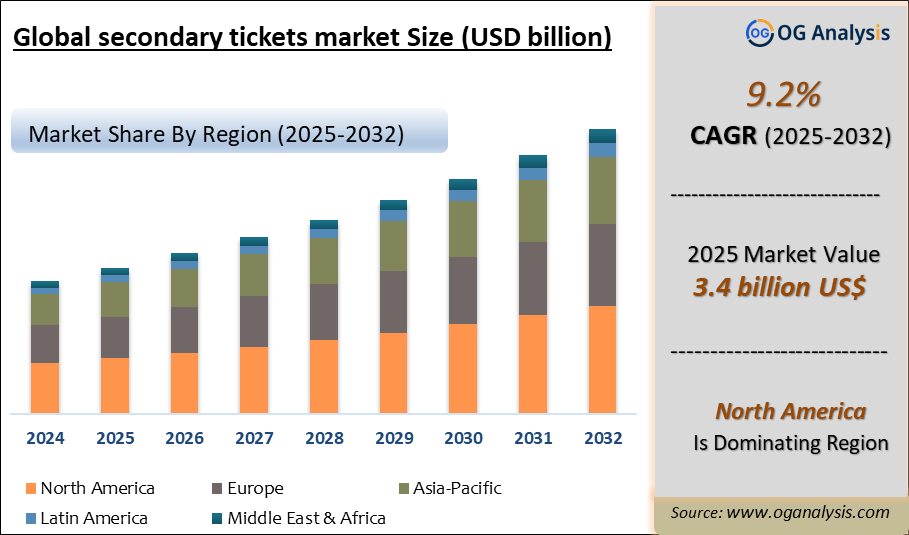
 

Global secondary tickets market Analysis 2025-2032: Industry Size, Share, Growth Trends, Competition and Forecast Report

Secondary Tickets Market Strategy, Price Trends, Drivers, Challenges and Opportunities to 2034

In terms of market strategy, price trends, drivers, challenges, and opportunities from2025 to 2034, Secondary Tickets market players are directing investments toward acquiring new technologies, securing raw materials through efficient procurement and inventory management, enhancing product portfolios, and leveraging capabilities to sustain growth amidst challenging conditions. Regional-specific strategies are being emphasized due to highly varying economic and social challenges across countries.

Factors such as global economic slowdown, the impact of geopolitical tensions, delayed growth in specific regions, and the risks of stagflation necessitate a vigilant and forward-looking approach among Secondary Tickets industry players. Adaptations in supply chain dynamics and the growing emphasis on cleaner and sustainable practices further drive strategic shifts within companies.

The market study delivers a comprehensive overview of current trends and developments in the Secondary Tickets industry, complemented by detailed descriptive and prescriptive analyses for insights into the market landscape until 2034.
 

North America Secondary Tickets Market Analysis

The North American Secondary Tickets market experienced significant advancements in 2024, driven by heightened consumer focus on sustainability, technological integration, and personalized offerings across various segments. Growth was propelled by the rise in demand for innovative packaging solutions, eco-friendly products, and digital transformation in retail and service sectors. Companies leveraged advanced technologies such as AI, IoT, and data analytics to enhance customer engagement, optimize supply chains, and develop targeted marketing strategies. From 2025, the market is anticipated to witness robust expansion, underpinned by increasing adoption of subscription-based services, heightened awareness of eco-conscious consumption, and innovations in packaging and delivery methods. A competitive landscape characterized by continuous product differentiation, strategic mergers and acquisitions, and the influx of startups is reshaping market dynamics, with key players investing in digitalization and sustainability to secure market share.
 

Europe Secondary Tickets Market Outlook

The European Secondary Tickets market in 2024 demonstrated strong momentum, underpinned by regulatory emphasis on sustainable practices and consumer preferences for high-quality, eco-friendly, and customizable products. Rising interest in cultural and experiential offerings, coupled with advancements in e-commerce and digital solutions, bolstered market growth. The region's focus on circular economy principles encouraged investments in recyclable and biodegradable packaging solutions. Moving into 2025, growth is expected to be driven by the increasing prevalence of innovative retail models, AI-driven personalization, and a surge in demand for wellness-related consumer products. The competitive landscape is marked by robust participation from regional leaders and multinational firms, adopting strategies such as partnerships and green initiatives to meet regulatory and consumer demands, positioning Europe as a hub of innovation and sustainable growth.
 

Asia-Pacific Secondary Tickets Market Forecast

The Asia-Pacific Secondary Tickets market witnessed dynamic growth in 2024, fueled by rapid urbanization, digital adoption, and evolving consumer preferences for convenience and premium products. Emerging markets played a pivotal role, with increasing disposable income and a young, tech-savvy population driving demand for connected home devices, innovative retail solutions, and functional packaging. Anticipated growth from 2025 stems from an expanding middle class, escalating e-commerce penetration, and strong demand for personalized and health-focused products. Companies are capitalizing on regional trends by localizing offerings and investing in digital infrastructure. The competitive landscape is intensifying, with global players entering the market and local firms leveraging cultural insights and price advantages to capture market share, ensuring a vibrant, fast-paced ecosystem.
 

Middle East, Africa, Latin America Secondary Tickets Market Overview

The Middle East, Africa, Latin America Secondary Tickets market showcased steady development in 2024, supported by advancements in retail automation, growing awareness of sustainable practices, and increasing preference for convenience-driven solutions. Markets in the Middle East, Africa, and South America demonstrated rising adoption of digital payment solutions, recyclable packaging, and smart home innovations, catering to evolving consumer demands. From 2025, the market is poised for substantial growth, fueled by infrastructure development, the rise of digital platforms, and increasing focus on affordable, quality products. The competitive landscape is characterized by regional players innovating in product design and packaging, while international companies expand through localized strategies and strategic partnerships, ensuring that the RoW remains a critical contributor to global market dynamics.
 

Secondary Tickets Market Dynamics and Future Analytics

The research analyses the Secondary Tickets parent market, derived market, intermediaries’ market, raw material market, and substitute market are all evaluated to better prospect the Secondary Tickets market outlook. Geopolitical analysis, demographic analysis, and Porter’s five forces analysis are prudently assessed to estimate the best Secondary Tickets market projections.

Recent deals and developments are considered for their potential impact on Secondary Tickets's future business. Other metrics analyzed include the Threat of New Entrants, Threat of New Substitutes, Product Differentiation, Degree of Competition, Number of Suppliers, Distribution Channel, Capital Needed, Entry Barriers, Govt. Regulations, Beneficial Alternative, and Cost of Substitute in Secondary Tickets market.

Secondary Tickets trade and price analysis helps comprehend Secondary Tickets's international market scenario with top exporters/suppliers and top importers/customer information. The data and analysis assist our clients in planning procurement, identifying potential vendors/clients to associate with, understanding Secondary Tickets price trends and patterns, and exploring new Secondary Tickets sales channels. The research will be updated to the latest month to include the impact of the latest developments such as the Russia-Ukraine war on the Secondary Tickets market.

Secondary Tickets Market Structure, Competitive Intelligence and Key Winning Strategies

The report presents detailed profiles of top companies operating in the Secondary Tickets market and players serving the Secondary Tickets value chain along with their strategies for the near, medium, and long term period.

OGAnalysis’ proprietary company revenue and product analysis model unveils the Secondary Tickets market structure and competitive landscape. Company profiles of key players with a business description, product portfolio, SWOT analysis, Financial Analysis, and key strategies are covered in the report. It identifies top-performing Secondary Tickets products in global and regional markets. New Product Launches, Investment & Funding updates, Mergers & Acquisitions, Collaboration & Partnership, Awards and Agreements, Expansion, and other developments give our clients the Secondary Tickets market update to stay ahead of the competition.
Company offerings in different segments across Asia-Pacific, Europe, the Middle East, Africa, and South and Central America are presented to better understand the company strategy for the Secondary Tickets market. The competition analysis enables users to assess competitor strategies and helps align their capabilities and resources for future growth prospects to improve their market share.

Secondary Tickets Market Research Scope
• Global Secondary Tickets market size and growth projections (CAGR), 2024- 2034
• Policies of USA New President Trump, Russia-Ukraine War, Israel-Palestine, Middle East Tensions Impact on the Secondary Tickets Trade and Supply-chain
• Secondary Tickets market size, share, and outlook across 5 regions and 27 countries, 2023- 2034
• Secondary Tickets market size, CAGR, and Market Share of key products, applications, and end-user verticals, 2023- 2034
• Short and long-term Secondary Tickets market trends, drivers, restraints, and opportunities
• Porter’s Five Forces analysis, Technological developments in the Secondary Tickets market, Secondary Tickets supply chain analysis
• Secondary Tickets trade analysis, Secondary Tickets market price analysis, Secondary Tickets supply/demand
• Profiles of 5 leading companies in the industry- overview, key strategies, financials, and products
• Latest Secondary Tickets market news and developments
The Secondary Tickets Market international scenario is well established in the report with separate chapters on North America Secondary Tickets Market, Europe Secondary Tickets Market, Asia-Pacific Secondary Tickets Market, Middle East and Africa Secondary Tickets Market, and South and Central America Secondary Tickets Markets. These sections further fragment the regional Secondary Tickets market by type, application, end-user, and country.

Regional Insights
North America Secondary Tickets market data and outlook to 2034
United States
Canada
Mexico

Europe Secondary Tickets market data and outlook to 2034
Germany
United Kingdom
France
Italy
Spain
BeNeLux
Russia

Asia-Pacific Secondary Tickets market data and outlook to 2034
China
Japan
India
South Korea
Australia
Indonesia
Malaysia
Vietnam

Middle East and Africa Secondary Tickets market data and outlook to 2034
Saudi Arabia
South Africa
Iran
UAE
Egypt

South and Central America Secondary Tickets market data and outlook to 2034
Brazil
Argentina
Chile
Peru

* We can include data and analysis of additional coutries on demand

Who can benefit from this research
The research would help top management/strategy formulators/business/product development/sales managers and investors in this market in the following ways
1. The report provides 2024 Secondary Tickets market sales data at the global, regional, and key country levels with a detailed outlook to 2034 allowing companies to calculate their market share and analyze prospects, uncover new markets, and plan market entry strategy.

2. The research includes the Secondary Tickets market split into different types and applications. This segmentation helps managers plan their products and budgets based on the future growth rates of each segment

3. The Secondary Tickets market study helps stakeholders understand the breadth and stance of the market giving them information on key drivers, restraints, challenges, and growth opportunities of the market and mitigating risks

4. This report would help top management understand competition better with a detailed SWOT analysis and key strategies of their competitors, and plan their position in the business

5. The study assists investors in analyzing Secondary Tickets business prospects by region, key countries, and top companies' information to channel their investments.

Available Customizations
The standard syndicate report is designed to serve the common interests of Secondary Tickets Market players across the value chain and include selective data and analysis from entire research findings as per the scope and price of the publication.
However, to precisely match the specific research requirements of individual clients, we offer several customization options to include the data and analysis of interest in the final deliverable.
Some of the customization requests are as mentioned below –
Segmentation of choice – Our clients can seek customization to modify/add a market division for types/applications/end-uses/processes of their choice.
Secondary Tickets Pricing and Margins Across the Supply Chain, Secondary Tickets Price Analysis / International Trade Data / Import-Export Analysis,
Supply Chain Analysis, Supply – Demand Gap Analysis, PESTLE Analysis, Macro-Economic Analysis, and other Secondary Tickets market analytics
Processing and manufacturing requirements, Patent Analysis, Technology Trends, and Product Innovations
Further, the client can seek customization to break down geographies as per their requirements for specific countries/country groups such as South East Asia, Central Asia, Emerging and Developing Asia, Western Europe, Eastern Europe, Benelux, Emerging and Developing Europe, Nordic countries, North Africa, Sub-Saharan Africa, Caribbean, The Middle East and North Africa (MENA), Gulf Cooperation Council (GCC) or any other.
Capital Requirements, Income Projections, Profit Forecasts, and other parameters to prepare a detailed project report to present to Banks/Investment Agencies.
Customization of up to 10% of the content can be done without any additional charges.

Note: Latest developments will be updated in the report and delivered within 2 to 3 working days

Market Segmentation
 

By Ticket Type

  • Sports Events

  • Concerts & Music Festivals

  • Theatre & Performing Arts

  • Other Live Events

By Platform Type

  • Online Platforms

  • Offline Brokers

By Revenue Model

  • Commission-based Sales

  • Subscription-based Models

  • Advertising & Listing Fees

By End User

  • Individuals

  • Corporate Clients

By Geography

North America (USA, Canada, Mexico)
Europe (Germany, UK, France, Spain, Italy, Rest of Europe)
Asia-Pacific (China, India, Japan, Australia, Rest of APAC)
The Middle East and Africa (Middle East, Africa)
South and Central America (Brazil, Argentina, Rest of SCA)


List Of Companies

  1. TickPick LLC

  2. Ace Ticket Worldwide Inc

  3. alliancetickets.com

  4. Coast to Coast Tickets LLC

  5. GO-tickets

  6. Tickets.com Inc.

  7. TicketCity Inc.

  8. TiqIQ LLC

  9. viagogo AG

  10. Vivid Seats LLC

  11. StubHub

  12. Ticketmaster


You can purchase individual sections of this report. Explore pricing options for specific sections.

FAQ's

The Global Secondary Tickets Market is estimated to generate USD 3.4 Billion in revenue in 2025

The Global Secondary Tickets Market is expected to grow at a Compound Annual Growth Rate (CAGR) of 9.2% during the forecast period from 2025 to 2034.

The Secondary Tickets Market is estimated to reach USD 7.8 Billion by 2034.

License

Didn’t find what you’re looking for? TALK TO OUR ANALYST TEAM

Need something within your budget? NO WORRIES! WE GOT YOU COVERED!

Related Products

Land Management Software Market Analysis and Outlook Report: Industry Size, Share, Growth Trends and Forecast (2026-2034)

Market Overview The Land Management Software Market encompasses a comprehensive suite of digital solutions—including software platforms, geospatial tools, mobile applications, and integrated data systems—that enable public authorities, enterprises, and landowners to plan, administer, monitor, and optimize land assets across residential, commercial, agricultural, and infrastructure domains. At its core, market growth is driven by rapid urbanization, rising land-use conflicts, fragmented land records, and increasing regulatory emphasis on transparency, compliance, and sustainable land governance. Governments and private stakeholders are shifting from paper-based, siloed processes to centralized, digital land management environments that support parcel mapping, ownership and title management, zoning and permitting, lease administration, and right-of-way (ROW) oversight. These solutions provide end-to-end visibility across land registries, cadastral systems, development authorities, and asset operators, helping reduce disputes, improve planning efficiency, and enhance revenue realization from land assets. At the same time, digital transformation is reshaping competitive dynamics within the Land Management Software Market, with cloud-based deployments, GIS-centric platforms, mobile field data capture, and AI-driven spatial analytics emerging as core differentiators rather than pilot technologies. Vendors are expanding beyond basic record-keeping toward advanced capabilities such as real-time land-use monitoring, encroachment detection, automated workflows, digital document management, and decision-support dashboards for urban planning and infrastructure development. Integration with satellite imagery, drones, IoT sensors, and enterprise systems (ERP, EAM, CRM) is becoming increasingly common, particularly for utilities, transportation agencies, energy companies, and large real estate operators managing geograph ically dispersed land portfolios. Strategic partnerships between geospatial technology providers, software vendors, system integrators, and government agencies are intensifying, often supported by long-term service contracts, data digitization programs, and cybersecurity frameworks. While challenges such as high initial digitization costs, legacy data migration, interoperability issues, and limited technical capacity—especially at local government levels—remain constraints, strong policy support for land reforms, smart city initiatives, infrastructure expansion, and ESG-driven land stewardship is expected to sustain steady adoption in developed markets and accelerate penetration across emerging economies over the medium term. Key Market Trends, Drivers, Challenges • Land governance digitalization & system integration: Strong shift from paper-based, fragmented land records to integrated digital land management platforms combining GIS, cadastral databases, document management, workflow automation, and analytics. Governments and enterprises seek real-time visibility into land ownership, zoning, leases, and ROW assets to reduce disputes, accelerate approvals, and improve land-use efficiency. • Urbanization, infrastructure expansion & land-use pressure: Rapid urban growth and large-scale infrastructure projects intensify demand for accurate parcel mapping, land acquisition, and ROW management software. Transport, utilities, and energy developers increasingly rely on digital platforms to manage corridor planning, compensation, and compliance across complex, multi-jurisdiction land environments. • Transparency, compliance & land reform initiatives: Regulatory emphasis on transparent land administration, title security, zoning enforcement, and environmental compliance drives adoption of standardized land information systems. Digital audit trails, automated permitting, and compliance dashboards support governance reforms and reduce fraud, encroachment, and litigation risks. • GIS, remote sensing & spatial analytics adoption: Expanding use of satellite imagery, drones, mobile surveying tools, and spatial analytics enhances boundary verification, land-use monitoring, and encroachment detection. Advanced analytics and AI-based change detection improve planning accuracy and support proactive land stewardship and conservation management. • Cloud, SaaS & mobile-first platforms: Migration from on-premise land record systems to cloud-based and SaaS models accelerates, enabling scalability, inter-agency data sharing, and mobile field operations. Secure access control, data sovereignty, and disaster recovery capabilities are key considerations for public-sector and enterprise buyers. • Interoperability & legacy data challenges: Integrating historical land records, heterogeneous GIS formats, and multiple departmental systems remains a major challenge. Data quality issues, inconsistent cadastral standards, and incomplete digitization drive demand for data harmonization tools, open standards, and long-term system integration services. • Cost, funding & procurement constraints: High upfront digitization costs, long public procurement cycles, and budget limitations—especially at local government levels—slow adoption. Buyers increasingly favor phased implementations, modular licensing, and public–private partnership (PPP) models to balance cost, risk, and ROI. • Skills gaps & change management: Limited availability of geospatial, data management, and IT skills, combined with resistance to workflow changes, constrains effective deployment. Vendors differentiate through training programs, managed services, and long-term support contracts to ensure user adoption and system sustainability. • ESG, sustainability & land stewardship focus: Growing emphasis on environmental protection, climate resilience, and responsible land use drives demand for software that integrates land management with ESG reporting, environmental impact assessment, and conservation monitoring across public and private land portfolios. Regional Insights North America Adoption is driven by large-scale infrastructure development, complex land ownership frameworks, and rising regulatory scrutiny on zoning, environmental compliance, and right-of-way (ROW) management. Federal, state, and municipal agencies increasingly deploy GIS-based land records, permitting platforms, and integrated asset–land management systems to improve planning transparency and reduce project delays. Utilities, transportation authorities, and energy operators invest in land acquisition, lease administration, and encroachment monitoring software to support pipeline, transmission, and corridor projects. Cloud-based deployments enable inter-agency data sharing and mobile field operations, while strong emphasis on cybersecurity, data governance, and interoperability standards shapes procurement decisions. Government digital land modernization programs and smart city initiatives continue to accelerate adoption across mid- to large-scale public and enterprise users. Europe Europe leads in digitized land governance and cadastral modernization, supported by mature regulatory frameworks, strict environmental safeguards, and cross-border data harmonization initiatives. High adoption of GIS-enabled parcel mapping, zoning management, and automated permitting platforms strengthens land-use planning efficiency and compliance reporting. Municipalities and infrastructure agencies increasingly leverage digital twins and spatial analytics to optimize urban density, transportation corridors, and renewable energy siting. Sustainability mandates and ESG reporting requirements drive integration of environmental impact tracking, biodiversity monitoring, and land stewardship modules. Vendor consolidation and public-sector procurement frameworks favor end-to-end, standards-compliant platforms with strong data security and long-term support capabilities. Asia-Pacific Asia-Pacific is the fastest-growing region, led by China, India, Southeast Asia, and Australia, where rapid urbanization, infrastructure expansion, and land record digitization reforms are reshaping land administration practices. Governments prioritize cloud-based land registry systems, mobile-enabled field surveying, and digital title management to reduce disputes and improve service delivery in high-growth metropolitan areas. Infrastructure developers and utilities deploy ROW and land acquisition software to accelerate transport, energy, and smart city projects. Scalable, cost-efficient platforms integrated with satellite imagery and geospatial analytics are preferred to manage large and diverse land portfolios. Public–private partnerships and national land reform programs significantly accelerate market penetration across emerging economies. Middle East & Africa Growth is supported by large-scale urban development projects, industrial corridors, and infrastructure-led economic diversification initiatives. Governments and state-owned enterprises invest in centralized land information systems, GIS-based planning tools, and lease management platforms to manage public land assets and mega-project developments. In arid regions, land management software increasingly integrates environmental compliance, conservation zoning, and impact assessment capabilities. Procurement decisions emphasize platform reliability, customization, multilingual support, and long-term vendor engagement. International funding agencies and national digital transformation agendas play a key role in expanding adoption across GCC countries and selected African markets. South & Central America Brazil, Mexico, and key Andean countries drive regional demand through land registry modernization, urban planning reforms, and infrastructure expansion programs. Public agencies and municipalities adopt parcel management, zoning, and permitting software to improve transparency, reduce land disputes, and accelerate development approvals. Utilities and transport operators deploy ROW and lease management solutions to support network expansion and maintenance activities. Budget constraints encourage modular implementations, hybrid deployment models, and phased digitization strategies. Vendors offering localized support, flexible pricing, and integration with legacy land records gain competitive advantage as governments advance gradual digital land transformation initiatives. Report Scope Parameter Land Management Software Market Detail Base Year 2024 Estimated Year 2025 Forecast Period 2026-2032 Market Size-Units USD billion Market Splits Covered By Product, By Application, By End User, By Technology, By Distribution Channel Countries Covered North America (USA, Canada, Mexico) Europe (Germany, UK, France, Spain, Italy, Rest of Europe) Asia-Pacific (China, India, Japan, Australia, Rest of APAC) The Middle East and Africa (Middle East, Africa) South and Central America (Brazil, Argentina, Rest of SCA) Analysis Covered Latest Trends, Driving Factors, Challenges, Trade Analysis, Price Analysis, Supply-Chain Analysis, Competitive Landscape, Company Strategies Customization 10% free customization (up to 10 analyst hours) to modify segments, geographies, and companies analyzed Post-Sale Support 4 analyst hours, available up to 4 weeks Delivery Format The Latest Updated PDF and Excel Data file

Published:Feb-2026

Business Process Outsourcing (BPO) Business Analytics Market Analysis and Outlook Report: Industry Size, Share, Growth Trends, and Forecast (2026-2034)

The Business Process Outsourcing Business Analytics market has evolved from a conventional reporting support function into a strategic, insight-led service domain that helps enterprises improve decisions, optimize operations, and enhance business performance across outsourced functions. It is widely used in finance and accounting, customer management, supply chain operations, procurement, marketing, human resources, compliance, and risk management. Organizations are increasingly outsourcing analytics capabilities to gain access to specialized talent, scalable delivery models, advanced tools, and domain expertise without building all capabilities internally. This market has gained importance as enterprises seek faster access to insights from growing volumes of operational and customer data, while also trying to align business processes more closely with measurable performance outcomes. As a result, analytics in BPO is now viewed as a value-creation lever rather than a supporting back-office service. Current market trends indicate a strong shift toward AI-enabled analytics, predictive modeling, cloud-based data environments, process intelligence, and industry-specific analytical solutions. Service providers are increasingly embedding analytics directly into outsourced workflows so that enterprises can move from static reporting to real-time decision support and continuous improvement. Growth is being driven by the need for operational efficiency, better forecasting, stronger customer understanding, fraud detection, and more resilient supply chains. The competitive landscape includes large global BPO providers, digital transformation firms, analytics specialists, and consulting-led outsourcing players competing through automation, domain expertise, platform capabilities, and outcome-based engagements. Going forward, the market is expected to favor providers that can integrate analytics, automation, and process management into unified solutions that deliver actionable intelligence, stronger governance, and long-term business impact. Report Scope Parameter Business Process Outsourcing Business Analytics Market Detail Base Year 2025 Estimated Year 2026 Forecast Period 2026-2034 Market Size-Units USD billion Market Splits Covered By Component ,By Deployment ,By Organization Size ,By Application ,By Vertical Countries Covered North America (USA, Canada, Mexico) Europe (Germany, UK, France, Spain, Italy, Rest of Europe) Asia-Pacific (China, India, Japan, Australia, Rest of APAC) The Middle East and Africa (Middle East, Africa) South and Central America (Brazil, Argentina, Rest of SCA) Analysis Covered Latest Trends, Driving Factors, Challenges, Trade Analysis, Price Analysis, Supply-Chain Analysis, Competitive Landscape, Company Strategies Customization 10% free customization (up to 10 analyst hours) to modify segments, geographies, and companies analyzed Post-Sale Support 4 analyst hours, available up to 4 weeks Delivery Format The Latest Updated PDF and Excel Data file Regional Insights North AmericaBusiness Process Outsourcing Business Analytics market North America remains the most mature region for BPO business analytics, supported by strong enterprise outsourcing penetration, advanced data environments, and faster adoption of AI-led operating models. Demand is especially strong in banking, healthcare, insurance, retail, and customer operations, where clients increasingly expect real-time analytics to be embedded directly into outsourced processes rather than delivered as standalone reporting. The region is also seeing stronger preference for outcome-based and platform-enabled engagements, reflecting a shift from labor-focused outsourcing toward intelligence-led transformation. Overall, North America continues to set the pace for analytics-rich BPO models built around automation, governance, and continuous decision support. EuropeBusiness Process Outsourcing Business Analytics market Europe’s market is being shaped by a stronger focus on compliance, regulatory reporting, operational controls, and data governance, which makes analytics a critical layer within outsourced finance, risk, and business operations. Enterprises in the region are increasingly looking for BPO partners that can combine process expertise with trusted analytics, auditability, and industry-specific knowledge, especially in highly regulated sectors. Demand is also supported by modernization of public services and enterprise cloud environments, where analytics is becoming more closely tied to control, transparency, and service quality. As a result, Europe favors providers that can align insight generation with regulatory discipline and transformation execution. Asia-PacificBusiness Process Outsourcing Business Analytics market Asia-Pacific is emerging as one of the most dynamic regions, driven by the expansion of global business services, digital transformation programs, and rising adoption of AI across enterprise operations. India remains a particularly important anchor for delivery and innovation, while broader regional demand is being supported by enterprises seeking scalable analytics, process intelligence, and faster business decision-making. Buyers in the region are increasingly interested in AI-powered human-machine collaboration models that improve efficiency across finance, procurement, supply chain, and customer-facing operations. This makes Asia-Pacific a high-growth region where analytics is becoming central to next-generation outsourced business services. Middle East & AfricaBusiness Process Outsourcing Business Analytics market Middle East & Africa is developing as a promising but uneven market, with the strongest traction concentrated in the Gulf economies where digital transformation, public-sector modernization, and enterprise cloud adoption are accelerating. The region’s BPO analytics opportunity is increasingly linked to telecom-led digital ecosystems, government transformation agendas, and growing interest in AI-enabled business services. Demand is strongest for partners that can combine analytics with managed operations, local market understanding, and secure digital infrastructure. In practical terms, the region is moving from basic outsourcing models toward more intelligence-led and platform-supported service delivery. South & Central AmericaBusiness Process Outsourcing Business Analytics market South & Central America remains an emerging opportunity area, with adoption advancing as enterprises in financial services, telecom, manufacturing, and customer operations seek more scalable analytics support within outsourced processes. The region is benefiting from stronger digital transformation activity and growing interest in AI-enabled operations, although adoption remains more selective than in North America or Europe. Analytics-led BPO demand is increasingly tied to customer insight, finance transformation, and operational resilience, especially in larger markets and nearby enterprise hubs. Over time, regional growth is likely to be supported by greater formalization of AI governance and stronger enterprise appetite for managed analytics services. Key Market Insights Artificial intelligence is reshaping the market by moving analytics services beyond descriptive dashboards toward predictive, prescriptive, and decision-support capabilities. Service providers are increasingly embedding AI into outsourced operations to improve visibility, speed, and accuracy. This is making analytics an active part of process execution rather than a separate reporting layer. Enterprises are showing stronger preference for integrated service models where analytics, automation, and process outsourcing are delivered together. This approach improves coordination between insight generation and operational action, making business outcomes more measurable. It also strengthens the role of analytics in long-term transformation engagements. Finance and accounting analytics remains one of the most important application areas in the market. Businesses increasingly rely on outsourced analytics for planning, forecasting, working capital visibility, compliance monitoring, and anomaly detection. This is helping BPO analytics providers move deeper into strategic finance support. Customer analytics is becoming a major growth segment as enterprises seek better understanding of customer behavior, service performance, retention, and journey optimization. BPO providers are increasingly combining analytics with customer service operations to support personalization and experience improvement. This expands analytics into more revenue-linked functions. Supply chain and procurement analytics are gaining importance as businesses focus on resilience, cost optimization, and demand visibility. Outsourced analytics support helps organizations identify bottlenecks, improve supplier decisions, and strengthen inventory planning. These use cases are becoming more relevant in volatile operating environments. Industry specialization is emerging as a strong competitive factor in the market. Clients increasingly prefer analytics partners with deep expertise in sectors such as banking, insurance, healthcare, retail, telecom, and manufacturing. Domain knowledge improves the quality of insights and makes analytics more actionable within outsourced processes. Data quality, governance, and trusted information foundations are becoming essential to market development. Since analytics outcomes depend heavily on the reliability of operational and customer data, enterprises are placing greater importance on providers that can strengthen data management discipline. This is especially important as AI-led analytics adoption increases. Cloud-native delivery models continue to support market expansion by enabling scalable, flexible, and globally coordinated analytics operations. These models help enterprises deploy solutions faster, integrate multiple data sources more easily, and reduce infrastructure burden. They also support ongoing innovation across geographies and business functions. Outcome-based engagement models are increasingly influencing how buyers evaluate BPO analytics providers. Enterprises are moving away from purely effort-based relationships and are placing greater emphasis on business impact, process improvement, and decision quality. This shift is encouraging providers to align analytics services more closely with enterprise objectives. Future market leadership is expected to depend on the ability to combine analytics, automation, process expertise, and consulting capabilities into a single transformation-oriented offering. Vendors that can move beyond reporting support and deliver continuous intelligence across outsourced operations are likely to strengthen their competitive position. This will keep analytics at the center of next-generation BPO value creation.

Published:Mar-2026

Smart Card Reader Market Analysis and Outlook Report: Industry Size, Share, Growth Trends, and Forecast (2026-2034)

The Smart Card Reader market represents a vital component of secure authentication, payments, and identity management systems across multiple industries. These devices enable communication between smart cards and host systems, facilitating applications such as financial transactions, government ID verification, healthcare record access, and enterprise security. The demand is driven by rising adoption of EMV standards, the expansion of contactless and mobile payments, and increasing use of e-governance solutions. Smart card readers are available in various forms, including contact, contactless, dual-interface, and integrated modules for ATMs, POS terminals, and mobile devices. Regulatory requirements for data protection and fraud prevention continue to accelerate market growth, as organizations adopt these solutions to safeguard sensitive information and comply with compliance mandates. With the digital economy expanding, smart card readers serve as essential tools for authentication, encryption, and secure access, positioning them at the heart of secure transactions and identity ecosystems. The market outlook highlights significant opportunities across financial services, transportation, healthcare, and enterprise IT environments where data security is a top priority. Trends include the integration of smart card readers with biometrics, cloud authentication, and mobile-based access systems, reflecting the convergence of physical and digital identity solutions. Contactless readers are gaining traction due to convenience, hygiene, and speed, especially in retail and transit sectors. Meanwhile, governments and enterprises are investing in large-scale digital ID programs that rely heavily on secure smart card reader infrastructure. The forecast suggests continued momentum as technological advances improve interoperability, miniaturization, and encryption protocols. Recent developments emphasize portable and wireless card readers, enabling secure mobile payments and remote authentication for distributed workforces. While challenges such as cybersecurity risks, system integration complexities, and high initial deployment costs persist, the shift toward digitized payments and e-identities ensures a resilient and growing market trajectory for smart card readers globally.Report Scope Parameter Detail Base Year 2024 Estimated Year 2025 Forecast Period 2026-2034 Market Size-Units USD billion/Million Market Splits Covered By Type ,By Technology ,By Applications ,By End-user Countries Covered North America (USA, Canada, Mexico) Europe (Germany, UK, France, Spain, Italy, Rest of Europe) Asia-Pacific (China, India, Japan, Australia, Rest of APAC) The Middle East and Africa (Middle East, Africa) South and Central America (Brazil, Argentina, Rest of SCA) Analysis Covered Latest Trends, Driving Factors, Challenges, Supply-Chain Analysis, Competitive Landscape, Company Strategies Customization 10% free customization(up to 10 analyst hours) to modify segments, geographies, and companies analyzed Post-Sale Support 4 analyst hours, available up to 4 weeks Delivery Format The Latest Updated PDF and Excel Datafile Regional Insights North America Smart Card Reader Market The North America smart card reader market is shaped by stringent security expectations in financial services, government, healthcare, and enterprise access control. Market dynamics favor dual-interface and contactless readers certified for EMV, PIV/FIPS, and increasingly FIDO2 for passwordless authentication within zero-trust programs. Lucrative opportunities exist in open-loop transit acceptance, campus and healthcare identity upgrades, and USB-C/mobile readers that extend secure access to remote workforces. Latest trends include convergence of readers with biometrics, managed credential lifecycle via cloud IAM, and reader firmware hardening for continuous compliance. The forecast indicates steady refresh cycles as organizations modernize legacy badge systems, expand multi-factor authentication, and roll out contactless-first customer journeys. Recent developments emphasize compact, tamper-evident designs, improved PKI interoperability, and SDKs that simplify integration with POS, kiosks, and self-service endpoints across retail, government services, and utilities. Asia Pacific Smart Card Reader Market Asia Pacific demand is propelled by large-scale eID programs, mass transit adoption, and rapid digitization of payments across retail and public services. Market dynamics prioritize cost-efficient contactless readers, robust offline performance for high-throughput transit gates, and localization for diverse schemes and languages. Companies see lucrative opportunities in municipal transport modernization, banking migration to dual-interface EMV, and secure reader modules for kiosks, ATMs, and fuel retail. Latest trends include mobile-first reader accessories for SMEs, integrated biometric-capable readers for border and citizen services, and remote management tools that cut field maintenance costs. The forecast points to continued expansion as cashless ecosystems deepen and governments standardize secure identity across agencies. Recent developments highlight reader miniaturization for unattended endpoints, improved anti-cloning defenses, and wider SDK support enabling super-app and wallet interoperability in retail and ticketing. Europe Smart Card Reader Market Europe’s smart card reader market is anchored by rigorous privacy and payments frameworks, with adoption spanning banking, public administration, healthcare, and mobility. Market dynamics reward readers that meet eIDAS, PSD2 SCA, and industry vertical standards while supporting multi-application cards for ID, access, and payments. Lucrative opportunities arise from national eID rollouts, hospital and pharmacy authentication, and open-loop transit acceptance across cities. Latest trends include contactless-first terminals with device attestation, FIDO2-enabled desktop readers for strong customer authentication, and modular readers designed for right-to-repair policies. The forecast anticipates stable growth through replacement of magnetic and legacy contact systems, broader deployment of unattended retail, and integration with digital wallets that still require high-assurance endpoints. Recent developments focus on post-quantum-ready firmware roadmaps, eco-designed enclosures, and enhanced key management that streamlines reader provisioning across multi-country operations. Key Market Insights The smart card reader market is strongly influenced by the global shift toward secure digital transactions and identity authentication. Increasing cases of fraud and regulatory mandates for data protection are encouraging adoption across financial institutions, government agencies, and enterprises. This positions smart card readers as essential tools for secure access, encryption, and fraud prevention in both physical and digital ecosystems. Contactless smart card readers are witnessing rapid growth, driven by consumer demand for speed, hygiene, and convenience in payments and transit systems. NFC and RFID-based readers are being widely deployed in retail, ticketing, and public transportation, replacing older contact-based models. This trend is accelerated by the rise of cashless economies and the popularity of mobile wallets and tap-to-pay transactions. Financial services remain the largest adopter of smart card readers due to EMV compliance, secure card-based payments, and ATM integration. Banks and fintech companies are investing in advanced readers with dual-interface support to accommodate both chip-based and contactless payments. This shift not only enhances customer trust but also reduces the risk of fraud in high-volume financial transactions. Government-led initiatives in e-identification, e-passports, and healthcare digitalization are providing strong opportunities for the smart card reader industry. Secure readers are deployed for citizen authentication, tax filing, healthcare access, and national security programs. This creates large-scale demand for highly reliable and tamper-resistant devices with extended lifespans and compliance certifications. Healthcare is emerging as a critical application area, where smart card readers are used to manage electronic health records, insurance verification, and patient identification. Hospitals and clinics rely on these systems to enhance patient safety, prevent fraud, and streamline billing. Integration with secure authentication protocols ensures confidentiality and compliance with healthcare regulations. Enterprise security is another major growth driver, as organizations use smart card readers for secure building access, workstation login, and digital signature verification. With the rise of remote and hybrid work environments, enterprises are adopting portable and USB-based smart card readers to ensure secure authentication for distributed workforces. Biometric integration with smart card readers is an emerging trend, combining fingerprint or facial recognition with chip-based authentication. This dual-layer security approach enhances identity verification and reduces the risk of unauthorized access. Such solutions are gaining attention in high-security sectors such as defense, aerospace, and critical infrastructure. Technological innovation is leading to miniaturized, wireless, and mobile smart card readers that can be easily paired with smartphones, tablets, and laptops. These portable solutions are enabling secure payments, field service verification, and identity checks outside traditional fixed environments. This enhances flexibility and expands the use cases for smart card readers globally. Cybersecurity remains a key concern for the market, as hackers increasingly target authentication systems and card data. Manufacturers are embedding stronger encryption protocols, tokenization, and secure firmware updates to combat these risks. Addressing such vulnerabilities is essential to maintain trust and ensure compliance with evolving security standards. Regional dynamics show strong adoption in Europe due to strict GDPR and PSD2 regulations, while Asia-Pacific leads in volume adoption due to mass transit systems and government identity programs. North America is witnessing steady growth driven by EMV migration and enterprise security deployments. This diverse demand profile ensures a broad and resilient market expansion path.

Published:Mar-2026