"The Soup Market is valued at $ 15.1 billion in 2025. Further, the market is expected to grow at a CAGR of 3.7% to reach $ 21 billion by 2034."
The soup market remains a dynamic and evolving segment within the global packaged food industry, driven by shifting consumer lifestyles, growing health consciousness, and demand for convenient meal solutions. Traditionally viewed as a comfort food, soup has broadened its appeal in recent years through a diverse range of flavors, formats, and functional benefits. From shelf-stable canned varieties and dehydrated soup mixes to fresh, frozen, and ready-to-drink (RTD) pouches, the category now caters to a wide spectrum of dietary preferences, including low-sodium, gluten-free, vegan, and protein-rich formulations. Consumers are gravitating toward soups as meal replacements or light, wholesome meals—especially in urban households, single-person homes, and aging populations. The market’s expansion is also being shaped by innovation in ingredients, packaging, and clean-label formulations. As convenience continues to influence food purchasing behavior, and the boundaries between snacking and meals blur, soup is increasingly positioned not just as a pantry staple, but as a versatile and nutritionally relevant food choice for time-strapped consumers.
In 2024, the soup market experienced notable growth driven by premiumization, sustainability, and regional flavor experimentation. Leading brands introduced global-inspired variants like Thai coconut curry, Moroccan lentil, and Korean kimchi broth to appeal to younger, multicultural consumers. Simultaneously, demand rose for soups with added health benefits, such as immune-boosting ingredients (turmeric, ginger, bone broth) and fortified blends with vitamins or plant-based proteins. Ready-to-heat pouches and microwavable bowls continued gaining popularity due to their convenience, with a growing number of brands moving away from cans toward eco-friendly, BPA-free packaging. Clean-label demand led to a reformulation wave, with many products eliminating artificial preservatives and excess sodium. The frozen soup segment also saw renewed attention, as consumers associated it with freshness and better nutrition retention. Meanwhile, private label brands gained momentum in supermarkets, offering affordable yet healthy alternatives. In e-commerce, soup kits and meal subscriptions saw rising traction, particularly among millennials and working professionals looking for fast but comforting meal solutions at home.
Looking ahead to 2025 and beyond, the soup market is expected to build on trends centered around personalization, nutrition, and sustainability. Brands will increasingly focus on developing soups tailored to specific health needs—such as keto-friendly, digestive health, or senior nutrition—blending traditional ingredients with superfoods, adaptogens, and gut-friendly fibers. Packaging innovation will continue to evolve, with compostable and refillable containers likely gaining popularity, especially in urban, environmentally conscious markets. As AI and data analytics reshape product development, companies will explore customized soup mixes and meal kits tailored to consumers’ dietary preferences or biometric data. Emerging markets, particularly in Southeast Asia and Africa, are forecasted to show strong growth due to rising middle-class incomes and expansion in retail infrastructure. At the same time, competition will intensify with the rise of artisanal soup makers, functional beverage crossovers, and DTC (direct-to-consumer) brands offering gourmet or nutrition-forward broths. However, managing ingredient sourcing sustainably and maintaining flavor authenticity while scaling will remain a key challenge for brands seeking long-term growth in this evolving category.
Key Trends in the Soup Market
- Long-term shift toward convenience and time-saving meal solutions continues to underpin demand for soups across retail and foodservice. Ready-to-eat canned, chilled, and frozen soups remain staples for quick lunches and dinners. Rapid urbanization, smaller households, and busy lifestyles are reinforcing this role. As consumers seek easy yet comforting options, soup maintains a central place in everyday menus.
- Premiumization and gourmet positioning are transforming the image of soup from basic comfort food to culinary experience. Brands are launching chef-inspired recipes, regional specialties, and fusion flavors that mirror restaurant menus. Higher-quality ingredients, visible inclusions, and richer textures support this upgrade. This trend enables producers to capture better margins and appeal to more affluent and adventurous consumers.
- Health and wellness trends are reshaping formulations toward cleaner labels, lower sodium, reduced fat, and free-from claims. Vegetable-forward, high-fiber, high-protein, and fortified soups are gaining traction among health-conscious buyers. Claims around natural ingredients, no artificial additives, and organic or plant-based content are becoming key differentiators. Soup is increasingly positioned as a functional meal or snack rather than just a comfort product.
- Plant-based and flexitarian eating habits are boosting demand for vegetable, lentil, bean, and meat-alternative soups. Consumers looking to cut back on meat view soup as an easy entry point for plant-rich meals. Brands are responding with dairy-free, vegan, and legume-rich recipes that still deliver indulgent taste and texture. This segment is particularly dynamic in developed markets and urban centers.
- Innovation in packaging formats is expanding usage occasions and channels for soup consumption. Microwavable cups, pouches, and single-serve bowls cater to on-the-go consumers, office workers, and students. Larger family packs and multipacks support meal-sharing at home and value-conscious buying. Improved packaging also enhances shelf life, portability, and sustainability perceptions.
- Instant and dehydrated soups continue to appeal in cost-sensitive and emerging markets where affordability and long shelf life are critical. These products are popular for quick snacks, hostel and workplace meals, and travel. Flavor variety and easy preparation support repeat purchases, especially among younger consumers. The category also benefits from distribution through modern retail, e-commerce, and small neighborhood stores.
- Foodservice and institutional channels remain major demand centers for soups, particularly in cafeterias, hospitals, schools, and corporate catering. Soups are used as starters, side dishes, or light meals that are relatively easy to prepare in bulk. Partnerships between manufacturers and foodservice operators support customized recipes, bases, and concentrates. As out-of-home dining rebounds and expands, these channels strengthen their influence on market growth.
- Regional and ethnic flavor exploration is a strong catalyst for product development, with consumers seeking authentic global cuisines. Asian, Latin American, Mediterranean, and Middle Eastern soup styles are increasingly featured in retail shelves and restaurant menus. Limited-time offerings and seasonal flavors help maintain excitement and trial. This diversification broadens the consumer base and reduces reliance on traditional recipes.
- Private labels are gaining ground, particularly in mature markets, by offering competitive quality at attractive price points. Retailers use soups to build their own-brand credentials in both value and premium tiers. This intensifies competition and pushes branded players to differentiate through innovation, storytelling, and targeted marketing. Collaborative development with retailers also opens opportunities for exclusive ranges.
- Sustainability and responsible sourcing are becoming important factors in how soup brands position themselves and choose suppliers. Focus areas include reducing food waste, increasing use of responsibly grown vegetables and proteins, and improving packaging recyclability. Transparent communication about supply chains and environmental initiatives strengthens brand trust. Companies that embed sustainability into product design and operations are better aligned with evolving consumer expectations and retailer requirements.
Global tomato production, 2018–2024e
Figure: Global tomato production increased from around 182 million tonnes in 2018 to roughly 191 million tonnes in 2023 and is estimated to reach about 194 million tonnes in 2024e, providing a large and expanding vegetable base for soup manufacturers. As more tomatoes are processed into paste, purées and concentrates, producers can support a wider range of tomato-based, vegetable and mixed soups across ready-to-serve, condensed and instant formats. OG Analysis estimates, derived from FAO tomato statistics and international tomato industry data, illustrate how sustained growth in tomato output underpins long-term capacity, product innovation and supply security in the global soup market.
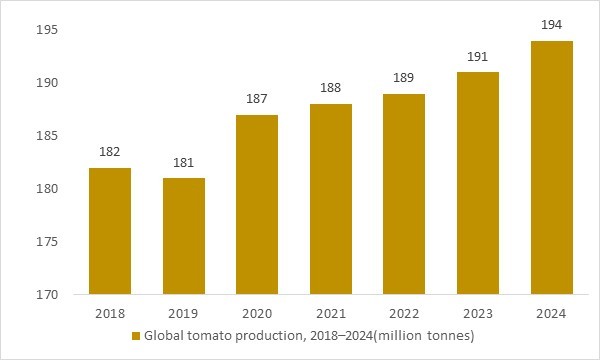
The soup market is supported by a large and steadily expanding tomato supply base, with global tomato production rising from about 182 million tonnes in 2018 to roughly 191 million tonnes in 2023 and an estimated 194 million tonnes in 2024e. This growing output strengthens availability of tomato paste, purées and concentrates used across ready-to-serve, condensed, instant and value-added soup varieties. As processed tomato ingredients remain central to flavor, color, viscosity and nutritional positioning, stable upstream production enables manufacturers to broaden product lines and reduce supply risk. Despite climate and cost fluctuations, continued tomato crop growth reinforces long-term innovation and capacity expansion in the global soup industry.
Market Scope
| Parameter | Soup Market scope Detail |
| Base Year | 2024 |
| Estimated Year | 2025 |
| Forecast Period | 2026-2032 |
| Market Size-Units | USD billion |
| Market Splits Covered | By Product, By Application, By End User and By Technology |
| Countries Covered | North America (USA, Canada, Mexico) |
| Analysis Covered | Latest Trends, Driving Factors, Challenges, Trade Analysis, Price Analysis, Supply-Chain Analysis, Competitive Landscape, Company Strategies |
| Customization | 10% free customization (up to 10 analyst hours) to modify segments, geographies, and companies analyzed |
| Post-Sale Support | 4 analyst hours, available up to 4 weeks |
| Delivery Format | The Latest Updated PDF and Excel Data file |
Market Segmentation
By Type
- Canned/Preserved Soup
- Chilled Soup
- Dehydrated Soup
- Frozen Soup
- Ultra-High Temperature Processing
- UHT
Soup
By Category
- Vegetarian Soup
- Non-Vegetarian Soup
By Packaging
- Canned
- Pouched
- Other Packagings
By Distribution Channel
- Supermarkets and Hypermarkets
- Convenience Stores
- Online Stores
- Other Distribution Channels
By Geography
- North America (USA, Canada, Mexico)
- Europe (Germany, UK, France, Spain, Italy, Rest of Europe)
- Asia-Pacific (China, India, Japan, Australia, Vietnam, Rest of APAC)
- The Middle East and Africa (Middle East, Africa)
- South and Central America (Brazil, Argentina, Rest of SCA)
Key Market Players
- Nantong Acetic Acid Chemical Co.Ltd.
- Sydney Essential Oil Company Pty Ltd.
- Tengzhou Aolong Fine Chemical Co.Ltd.
- APAC Chemical Corporation
- Zhejiang Bossen Technology Co.Ltd.
- Celanese Corporation
- Sorbic International plc
- FBC Industries Inc
- Lubon Industry Co.Ltd.
- Wanglong Group Co.Ltd.
- Shandong Hongda Biotechnology Co.Ltd.
- Jinneng Science and Technology Company Ltd.
- Advanced Inorganics Inc.
- RuGao ChangJiang Food Co.Ltd.
- Daicel Corporation
- A.M. Food Chemical Co. Limited
- Farchemia Srl
- Triveni Interchem Pvt. Ltd.
- Fine Organics Industries Pvt. Ltd.
- Bartek Ingredients Inc.
- Qiancheng Chemical Co.Ltd.
- Tharakan and Company
- Tate & Lyle plc
- Hangzhou Kalong Trade Co.Ltd.
- Ningbo Kodobio Chemical Co.Ltd.
- Auro Chemicals
- Lianyungang Dongtai Food Ingredients Co.Ltd.
- Spectrum Chemical Mfg. Corp.
- I. G. Petrochemicals Ltd.
FAQ's
The Global Soup Market is estimated to generate USD 15.1 billion in revenue in 2025.
The Global Soup Market is expected to grow at a Compound Annual Growth Rate (CAGR) of 3.7% during the forecast period from 2025 to 2034.
The Soup Market is estimated to reach USD 21 billion by 2034.
Didn’t find what you’re looking for? TALK TO OUR ANALYST TEAM
Need something within your budget? NO WORRIES! WE GOT YOU COVERED!


