Kvass Market Outlook 2026–2034: Fermented Beverage Demand, Low-Sugar Drink Innovation, Leading Companies, and Future Opportunities
The Kvass Market is valued at $ 4.7 billion in 2026. Further, the market is expected to grow at a CAGR of 11.4% to reach $ 11.2 billion by 2034.
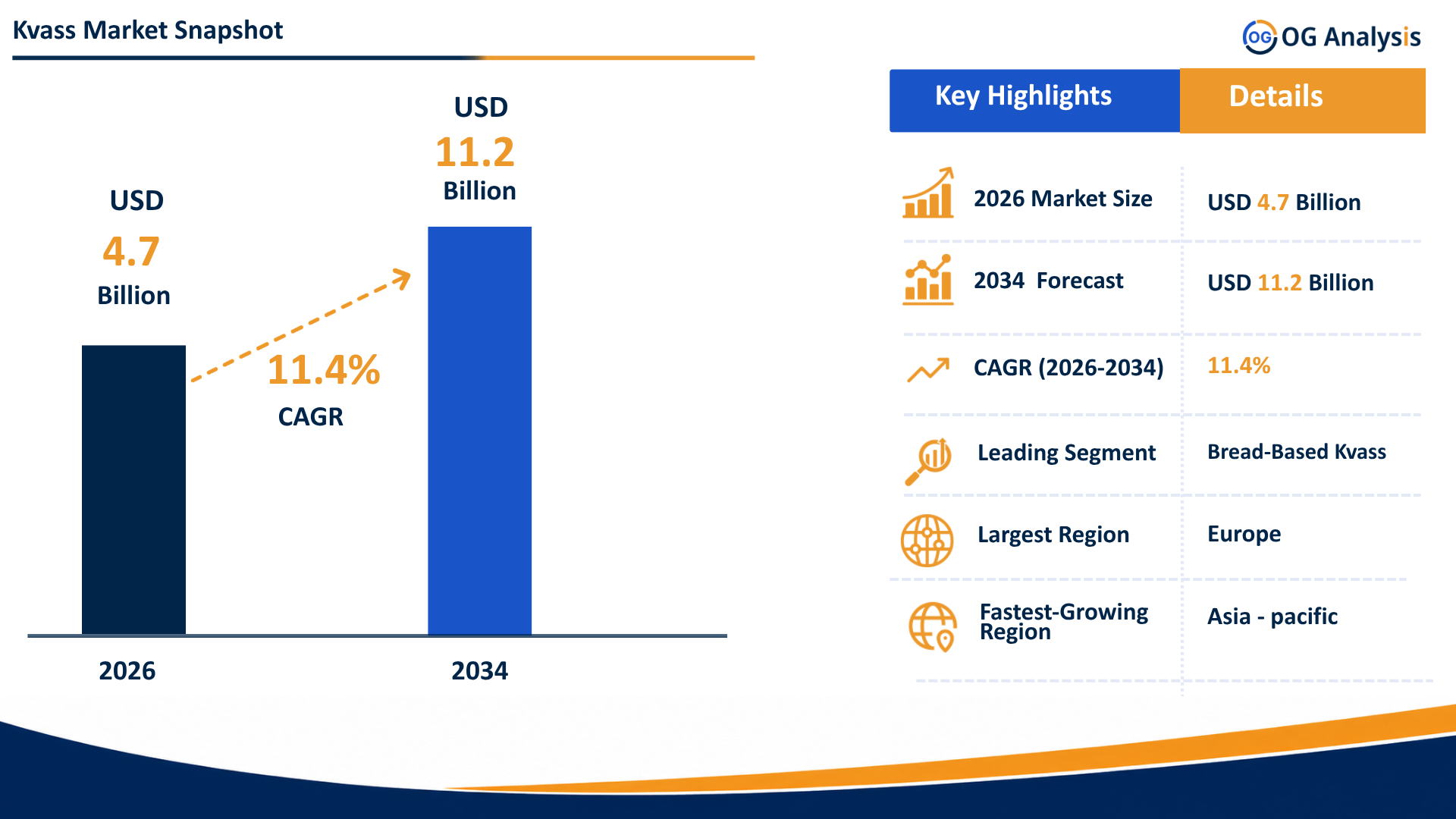
Kvass is a traditional fermented beverage commonly made from rye bread, malt, grains, beetroot, fruits, berries, herbs, and natural sweeteners. The market is expanding as consumers shift toward functional beverages, low-alcohol and non-alcoholic drinks, natural fermentation, probiotic-positioned products, and alternatives to carbonated soft drinks. Growth is supported by strong Eastern European consumption, increasing global interest in heritage beverages, clean-label formulations, flavored kvass, packaged bottled formats, and wider distribution through supermarkets, convenience stores, foodservice, and e-commerce channels.
Get the Complete Analysis :
https://www.oganalysis.com/industry-reports/kvass-market
Get Your Free Sample Report for In-Depth Market Insights :
https://www.oganalysis.com/industry-reports/kvass-market/free-sample
1. What is the latest trend in the Kvass Market?
The latest trend is the rise of premium, craft, flavored, and health-positioned kvass products.
Manufacturers are launching low-sugar, naturally fermented, fruit-flavored, malt-based, and probiotic-style kvass variants.
Consumers are showing growing interest in fermented beverages that support digestive wellness and offer a natural alternative to sodas.
Artisanal and small-batch kvass production is also gaining visibility among health-conscious and traditional beverage consumers.
2. What are the key challenges in the Kvass Market?
Key challenges include limited awareness outside Eastern Europe, short shelf-life for authentic fermented kvass, taste unfamiliarity, and cold-chain requirements.
Manufacturers must balance traditional fermentation with commercial scalability, product consistency, packaging stability, and regulatory compliance.
Low-alcohol classification, sugar content, labeling, and food safety requirements can vary across regions.
Competition from kombucha, kefir drinks, fermented teas, craft sodas, and functional beverages also affects market positioning.
3. What is the major driving factor for the Kvass Market?
The major driving factor is increasing demand for natural, fermented, low-alcohol, and functional beverages.
Consumers are reducing intake of sugary carbonated drinks and seeking beverages with authenticity, digestive appeal, and traditional ingredients.
Kvass benefits from its heritage positioning, refreshing taste, and compatibility with fruit, berry, malt, and herbal flavor innovation.
Expansion through modern retail and online grocery is also improving product availability beyond traditional markets.
4. What is the major segment in the Kvass Market and why?
Bread-based kvass is the major category because it represents the traditional and most recognized form of kvass.
It is widely consumed in Russia, Ukraine, Belarus, the Baltics, and other Eastern European markets.
Fruit-flavored kvass is gaining momentum as brands target younger consumers and international markets with more accessible taste profiles.
Bottled kvass remains important because it supports longer distribution reach, retail visibility, and convenient consumption.
5. Which application or end-user is driving more demand?
Household consumers, supermarkets, convenience stores, restaurants, cafes, and online grocery platforms are driving demand.
Retail buyers are increasing consumption of packaged kvass for daily refreshment, health-focused beverages, and seasonal consumption.
Foodservice demand is supported by restaurants offering traditional Eastern European menus and fermented beverage options.
E-commerce and specialty food stores are helping kvass reach consumers in Western markets and diaspora communities.
6. Which region offers the highest growth potential and why?
Europe remains the leading region due to the strong cultural base of kvass consumption in Eastern Europe, Russia, Belarus, Ukraine, Lithuania, Latvia, and neighboring markets.
Asia Pacific and North America offer emerging growth potential as consumers explore fermented beverages, probiotic drinks, craft beverages, and non-alcoholic alternatives.
Western Europe is also showing rising interest in traditional fermented drinks as part of the broader wellness beverage trend.
Growth in export markets will depend on branding, taste adaptation, regulatory positioning, and wider retail availability.
7. What strategies are major companies adopting in the market?
Major companies are focusing on flavored kvass, low-sugar formulations, clean-label claims, modern packaging, and broader retail distribution.
Producers are investing in bottled and canned formats to improve shelf stability and reach supermarkets, convenience stores, and online channels.
Traditional players are emphasizing authenticity, malt fermentation, natural ingredients, and heritage brewing techniques.
Newer brands are positioning kvass as a functional, craft, and better-for-you beverage for international consumers.
8. What are the leading companies in the Kvass Market?
Leading companies include Ochakovo, Deka Company, Baltika Brewery, Carlsberg Group, Kvass Beverages LLC, Bryanskpivo, Lidski Kvass, Krinitsa Brewery, Piebalgas Alus, Gubernija, Biotic Ferments, Borjomi Brewery, The Kvas Company, All Stars Beverages, PepsiCo, and Coca-Cola.
These companies compete through brand recognition, fermentation expertise, flavor portfolio, packaging formats, retail distribution, and regional market presence.
Ochakovo is one of the well-known large kvass producers and emphasizes traditional production technology.
Market reports also identify Ochakovo, Deka, Baltika, Kvass Beverages, Bryanskpivo, and other regional beverage companies among key industry participants.
9. Why is kvass strategically important?
Kvass is strategically important because it sits at the intersection of fermented beverages, soft drinks, functional wellness, and heritage food culture.
It allows beverage companies to diversify beyond carbonated soft drinks and alcohol-based products.
The category supports premiumization, clean-label innovation, natural fermentation claims, and regional brand storytelling.
As consumers seek authentic and healthier refreshment options, kvass can become a differentiated product in the global functional beverage space.
10. What is the future outlook for the Kvass Market?
The market outlook remains positive as fermented beverages gain popularity and consumers continue shifting toward natural, low-sugar, and non-alcoholic refreshment options.
Future growth will be supported by flavored kvass, craft production, probiotic positioning, retail expansion, and wider international availability.
Eastern Europe will remain the core consumption base, while North America, Western Europe, and Asia Pacific will create new opportunities.
Companies that combine authentic fermentation, modern flavors, attractive packaging, and strong retail distribution are expected to gain market share.
Browse Related Reports
https://www.oganalysis.com/industry-reports/organic-soft-drinks-market
https://www.oganalysis.com/industry-reports/juice-market
https://www.oganalysis.com/industry-reports/beer-market
https://www.oganalysis.com/industry-reports/recyclable-packaging-market
https://www.oganalysis.com/industry-reports/customized-premixes-market
Stay Connected With Us
