Post-Traumatic Stress Disorder Market Outlook 2026–2034: Emerging Therapies, Growth Drivers, Leading Companies, and Future Opportunities
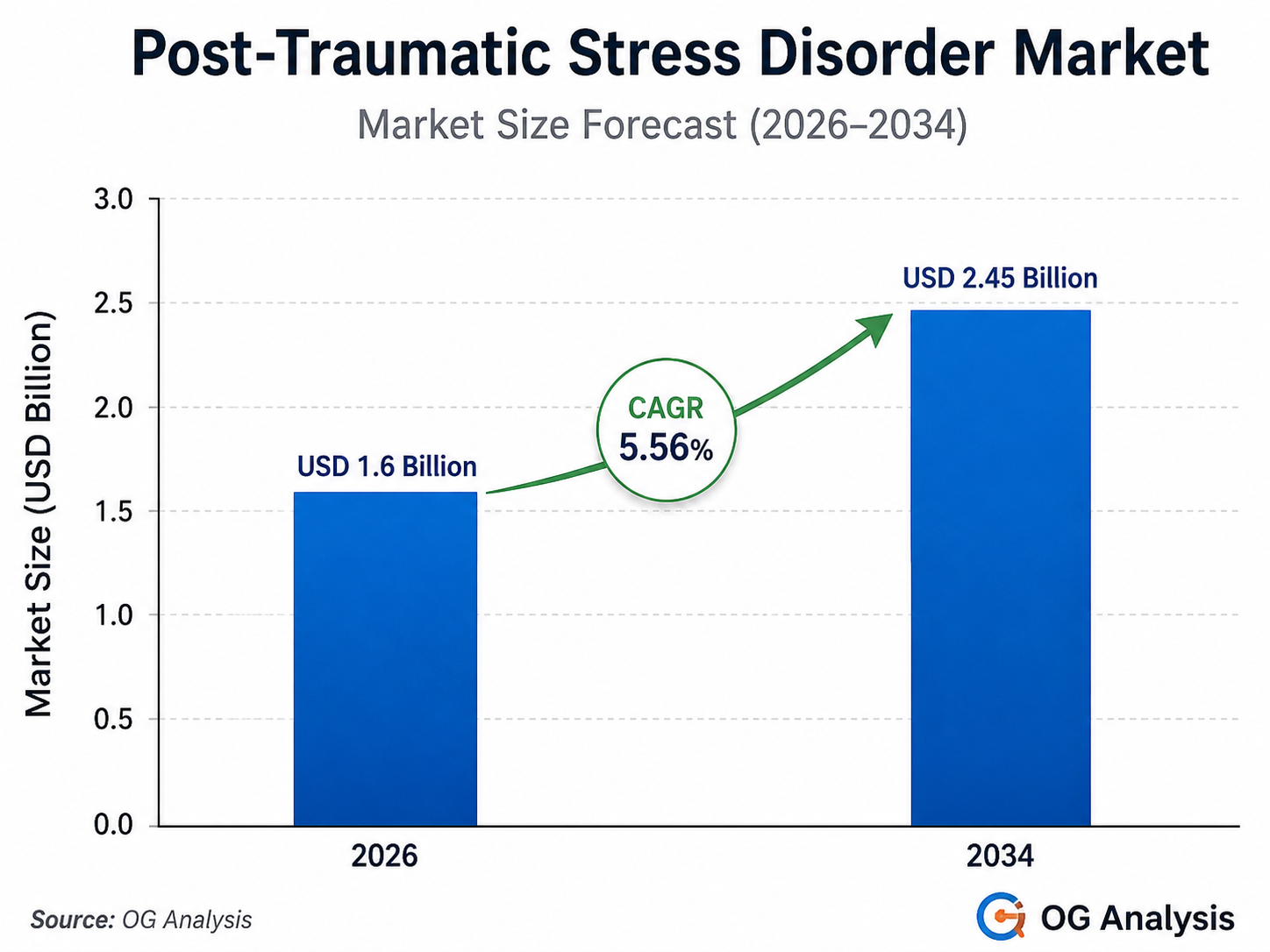
The Post-Traumatic Stress Disorder (PTSD) Market is expected to grow from $ 1.6 billion in 2026 to $ 2.45 billion by 2034, registering a CAGR of 5.56%
During the forecast period. The market encompasses a range of treatment options, including antidepressant medications, psychotherapy services, digital therapeutics, virtual reality-based therapies, neuromodulation technologies, and supportive care aimed at helping individuals manage trauma-related symptoms. PTSD can develop following exposure to traumatic events such as combat, violence, accidents, natural disasters, or abuse, significantly affecting emotional well-being, sleep, cognitive function, relationships, and daily activities. Market growth is being driven by increasing awareness of mental health, higher diagnosis rates, expanded support programs for veterans and emergency responders, improved access to telepsychiatry services, and greater investment in behavioral healthcare by employers and healthcare providers. In addition, ongoing advancements in personalized treatment approaches, trauma-focused digital solutions, remote patient monitoring, immersive exposure therapy, and emerging therapies for patients with limited response to conventional treatments are expected to create new growth opportunities across the market.
1. What is the latest trend in the Post-Traumatic Stress Disorder Market?
The latest trend is the integration of digital therapeutics, virtual reality exposure, telepsychiatry, and AI-supported behavioral health platforms.
Developers are also evaluating neuromodulation, biomarker-guided care, and medication-assisted psychotherapy approaches.
These technologies aim to improve treatment access, personalization, engagement, and symptom monitoring.
However, many emerging interventions still require broader clinical validation and regulatory approval.
2. What are the key challenges in the Post-Traumatic Stress Disorder Market?
Key challenges include underdiagnosis, social stigma, treatment discontinuation, limited specialist availability, and inconsistent reimbursement.
PTSD symptoms vary considerably across patients, making standardized treatment pathways difficult to implement.
Long therapy duration and delayed treatment response may also reduce adherence.
Developers face strict clinical, ethical, safety, and regulatory requirements for novel treatments.
3. What is the major driving factor for the Post-Traumatic Stress Disorder Market?
The major driver is rising recognition of trauma-related mental health needs among veterans, first responders, abuse survivors, accident victims, and civilians.
Greater public awareness is encouraging earlier diagnosis and wider use of behavioral health services.
Telehealth and employer-sponsored mental healthcare are improving treatment accessibility.
Government programs and healthcare-system investment are further supporting market expansion.
4. What is the major segment in the Post-Traumatic Stress Disorder Market and why?
Antidepressants represent a major pharmaceutical segment because they are widely available, relatively affordable, and commonly incorporated into PTSD treatment plans.
Sertraline, paroxetine, and venlafaxine are among the medications most frequently recommended in clinical practice.
Generic availability supports broad patient access and recurring prescription demand.
However, trauma-focused psychotherapy remains central to clinical management and may be preferred over medication alone.
5. Which application or end-user is driving more demand?
Hospitals, psychiatric clinics, behavioral health centers, veterans’ healthcare systems, and telehealth providers generate substantial demand.
Military personnel, veterans, emergency responders, and patients with complex trauma represent important treatment populations.
Outpatient mental health services account for significant utilization because PTSD often requires long-term follow-up.
Digital platforms are also expanding access for rural, underserved, and mobility-constrained patients.
6. Which region offers the highest growth potential and why?
Asia Pacific offers strong growth potential due to improving mental health awareness, expanding healthcare access, and growing investment in behavioral health services.
China, India, Japan, South Korea, and Australia are strengthening digital and community-based mental healthcare systems.
North America remains the largest established market because of strong veteran programs, higher diagnosis rates, and advanced treatment infrastructure.
Europe also benefits from public healthcare coverage and growing trauma-care initiatives.
7. What strategies are major companies adopting in the market?
Major companies are investing in novel drug combinations, digital therapeutics, virtual reality treatment, remote monitoring, and precision psychiatry.
Partnerships with hospitals, veterans’ organizations, research institutions, and telehealth providers support clinical validation and patient access.
Companies are also conducting late-stage trials and seeking expanded indications for established neuroscience products.
Acquisitions and licensing agreements are being used to strengthen behavioral health portfolios.
8. What are the leading companies in the Post-Traumatic Stress Disorder Market?
Leading companies and ecosystem participants include Pfizer, GSK, Viatris, Teva Pharmaceutical, Otsuka Pharmaceutical, Lundbeck, Lykos Therapeutics, GrayMatters Health, Big Health, and XRHealth.
Pharmaceutical companies compete through established antidepressants, generics, and investigational combination treatments.
Digital health companies focus on remote therapy, immersive exposure, neurofeedback, and patient-engagement platforms.
Clinical evidence, regulatory status, provider adoption, and reimbursement access remain key competitive factors.
9. Why is PTSD treatment strategically important for healthcare organizations?
Effective PTSD management can improve patient functioning, employment stability, relationships, sleep quality, and overall healthcare outcomes.
Untreated symptoms may increase emergency care use, substance misuse, disability, and long-term behavioral health costs.
Integrated care pathways help organizations coordinate psychotherapy, medication, primary care, and social support.
For employers and public agencies, treatment access can also improve workforce resilience and productivity.
10. What is the future outlook for the Post-Traumatic Stress Disorder Market?
The market outlook remains positive as mental health investment, diagnosis, telepsychiatry, and trauma-informed care continue to expand.
Future growth will be supported by personalized therapy, digital biomarkers, virtual reality, neuromodulation, and new pharmacological approaches.
Clinical evidence and regulatory scrutiny will determine the commercial success of emerging treatments.
Companies offering accessible, evidence-based, integrated, and outcome-focused solutions are expected to gain market share.
Browse Related Reports:
https://www.oganalysis.com/industry-reports/medical-xray-generator-market
https://www.oganalysis.com/industry-reports/scar-treatment-market
https://www.oganalysis.com/industry-reports/ascorbic-acid-market
https://www.oganalysis.com/industry-reports/biopreservation-market
