Spicate Clerodendranthus Extract Market Outlook 2026–2034: Botanical Wellness Trends, Nutraceutical Demand, and Growth Opportunities
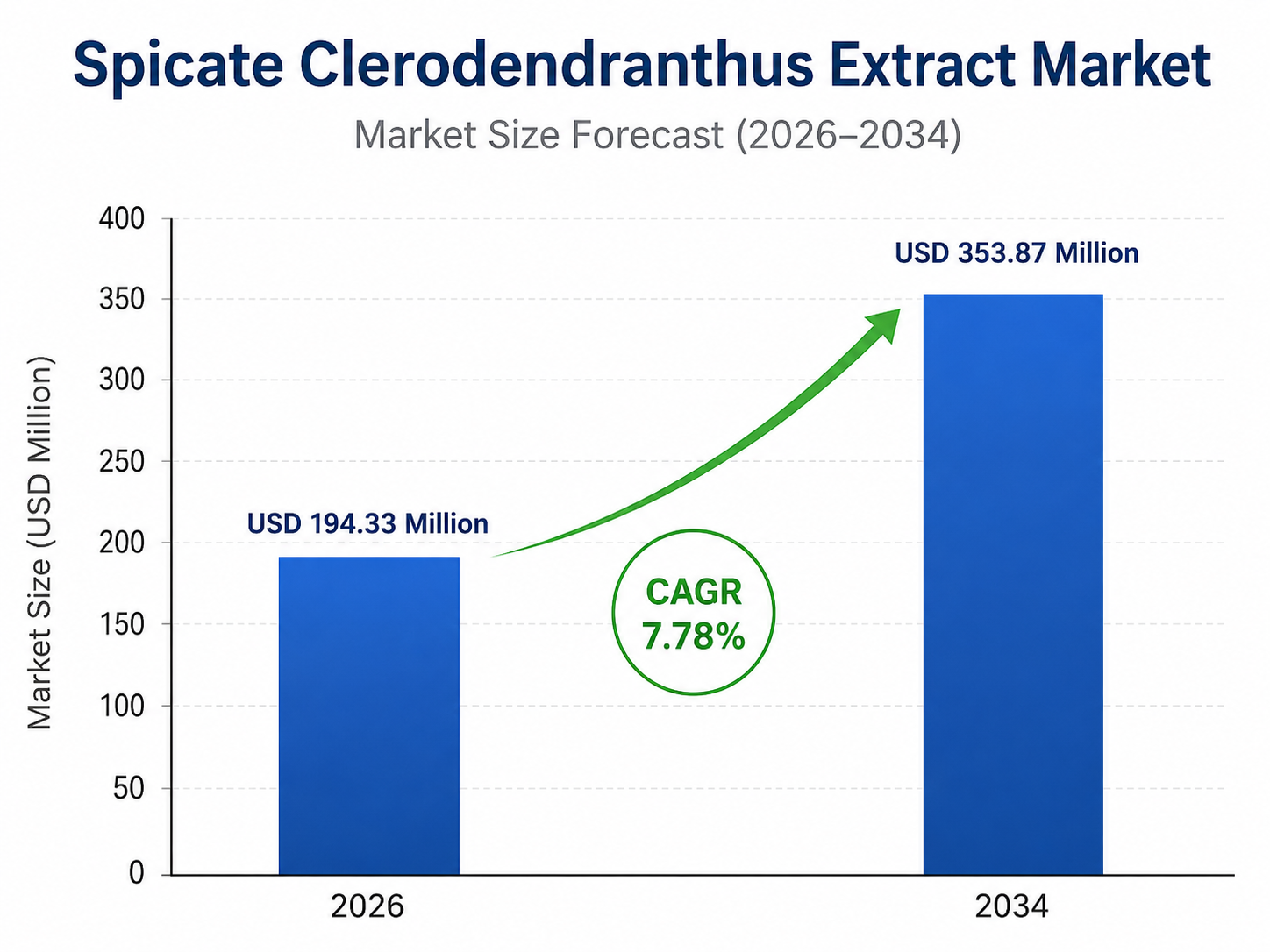
The Spicate Clerodendranthus Extract Market is estimated to be valued at $ 194.33 million in 2026 and is projected to reach $ 353.87 million by 2034, expanding at a CAGR of 7.78% from 2026 to 2034.
Spicate Clerodendranthus extract is obtained primarily from the leaves and aerial parts of Clerodendranthus spicatus, a medicinal plant also marketed as Orthosiphon stamineus, Java tea, or kidney tea. The extract is supplied in powdered, liquid, standardized, and water-soluble forms for use in dietary supplements, herbal beverages, traditional medicines, functional foods, and cosmetic formulations. Market growth is supported by rising demand for plant-based wellness products, greater interest in traditional Asian botanicals, expanding nutraceutical consumption, and increasing research into the plant’s phytochemical composition. Manufacturers are focusing on standardized active compounds, traceable sourcing, cleaner extraction technologies, quality certification, and application-specific formulations.
1. What is the latest trend in the Spicate Clerodendranthus Extract Market?
The latest trend is the development of standardized extracts with defined levels of rosmarinic acid, flavonoids, phenolic compounds, and other botanical markers.
Manufacturers are adopting water-based extraction, low-temperature processing, and improved purification to preserve active constituents.
Demand is also rising for organic, traceable, and clean-label ingredients.
Functional teas, capsules, powders, and blended wellness formulations are attracting product-development interest.
2. What are the key challenges in the Spicate Clerodendranthus Extract Market?
Key challenges include inconsistent raw-material quality, seasonal supply variation, limited clinical validation, and differences in botanical naming and identification.
Extract potency can vary according to plant origin, harvesting conditions, processing methods, and active-compound concentration.
Regulatory requirements for herbal claims differ significantly across countries.
Suppliers must also address contamination, adulteration, pesticide residues, and stability concerns.
3. What is the major driving factor for the market?
The major driving factor is increasing consumer preference for natural, plant-based, and traditional herbal wellness ingredients.
Spicate Clerodendranthus has an established history of use in Asian herbal preparations and functional beverages.
Growth in dietary supplements, botanical teas, and preventive-wellness products is expanding commercial demand.
Greater scientific interest in its phytochemicals is also improving ingredient visibility.
4. What is the major segment in the market and why?
Powdered standardized extract represents a major product segment because it offers convenient formulation, transportation, storage, and dosage control.
Powders can be incorporated into capsules, tablets, sachets, drink mixes, and functional-food formulations.
Standardized products provide greater consistency than unprocessed botanical materials.
Their longer shelf life and compatibility with contract manufacturing support broader commercial adoption.
5. Which application or end-user is driving more demand?
Dietary supplements and nutraceutical products are driving significant demand for Spicate Clerodendranthus extract.
The ingredient is used in botanical capsules, herbal blends, functional beverages, and wellness formulations.
Traditional medicine manufacturers and herbal-tea brands also represent important users.
Cosmetic and personal-care applications are emerging through interest in plant-derived antioxidant and skin-conditioning ingredients.
6. Which region offers the highest growth potential and why?
Asia Pacific offers the highest growth potential due to the plant’s traditional use, regional cultivation, and established herbal-medicine industry.
China, Malaysia, Indonesia, Thailand, India, and other Southeast Asian countries provide sourcing and consumption opportunities.
The region also benefits from expanding botanical-extract manufacturing and nutraceutical demand.
North America and Europe offer additional potential through imported herbal supplements and clean-label wellness products.
7. What strategies are major companies adopting in the market?
Companies are focusing on standardized active compounds, organic certification, traceable sourcing, and customized extract ratios.
They are expanding water-soluble powders, concentrated extracts, private-label formulations, and application-specific grades.
Testing for identity, heavy metals, microbial contamination, pesticides, and active markers is becoming increasingly important.
Suppliers are also strengthening export distribution and partnerships with supplement and herbal-product manufacturers.
8. What are the leading companies in the Spicate Clerodendranthus Extract Market?
The market is fragmented, with notable suppliers including Chemcopia Ingredients, Kshipra Biotech, Shree Sai Biotech, Ataman Kimya, Pharmanager Ingredients, Keli Biotechnology, and regional botanical-extract manufacturers.
These companies compete through extract concentration, botanical authentication, certifications, customization, and pricing.
Asian suppliers benefit from proximity to raw materials and established herbal-processing capabilities.
International distributors compete through documentation, formulation support, and access to regulated markets.
9. Why is Spicate Clerodendranthus extract strategically important for wellness brands?
The extract enables brands to introduce differentiated botanical products linked to traditional Asian herbal practices.
It can be positioned across herbal tea, urinary-wellness, antioxidant, metabolic-wellness, and general botanical categories, subject to local regulations.
Its compatibility with capsules, powders, beverages, and blends supports portfolio expansion.
For ingredient companies, it offers a specialized alternative to more commoditized herbal extracts.
10. What is the future outlook for the market?
The market outlook remains positive as botanical supplements, functional beverages, and traditional herbal ingredients gain wider consumer acceptance.
Future growth will depend on stronger clinical evidence, standardized quality specifications, sustainable cultivation, and regulatory compliance.
Advanced extraction and authentication technologies are expected to improve consistency and buyer confidence.
Companies offering traceable, scientifically supported, and application-ready extracts are likely to gain market share.
Browse Related Reports
https://www.oganalysis.com/industry-reports/dried-fruit-snacks-market
https://www.oganalysis.com/industry-reports/dried-banana-market
https://www.oganalysis.com/industry-reports/microgreens-market
https://www.oganalysis.com/industry-reports/food-safe-epoxy-market
https://www.oganalysis.com/industry-reports/rapadura-sugar-market
LinkedIn | Twitter
