Tortilla and Flatbread Market Outlook 2026–2034: Convenience Food Trends, Growth Drivers, Leading Companies, and Future Opportunities
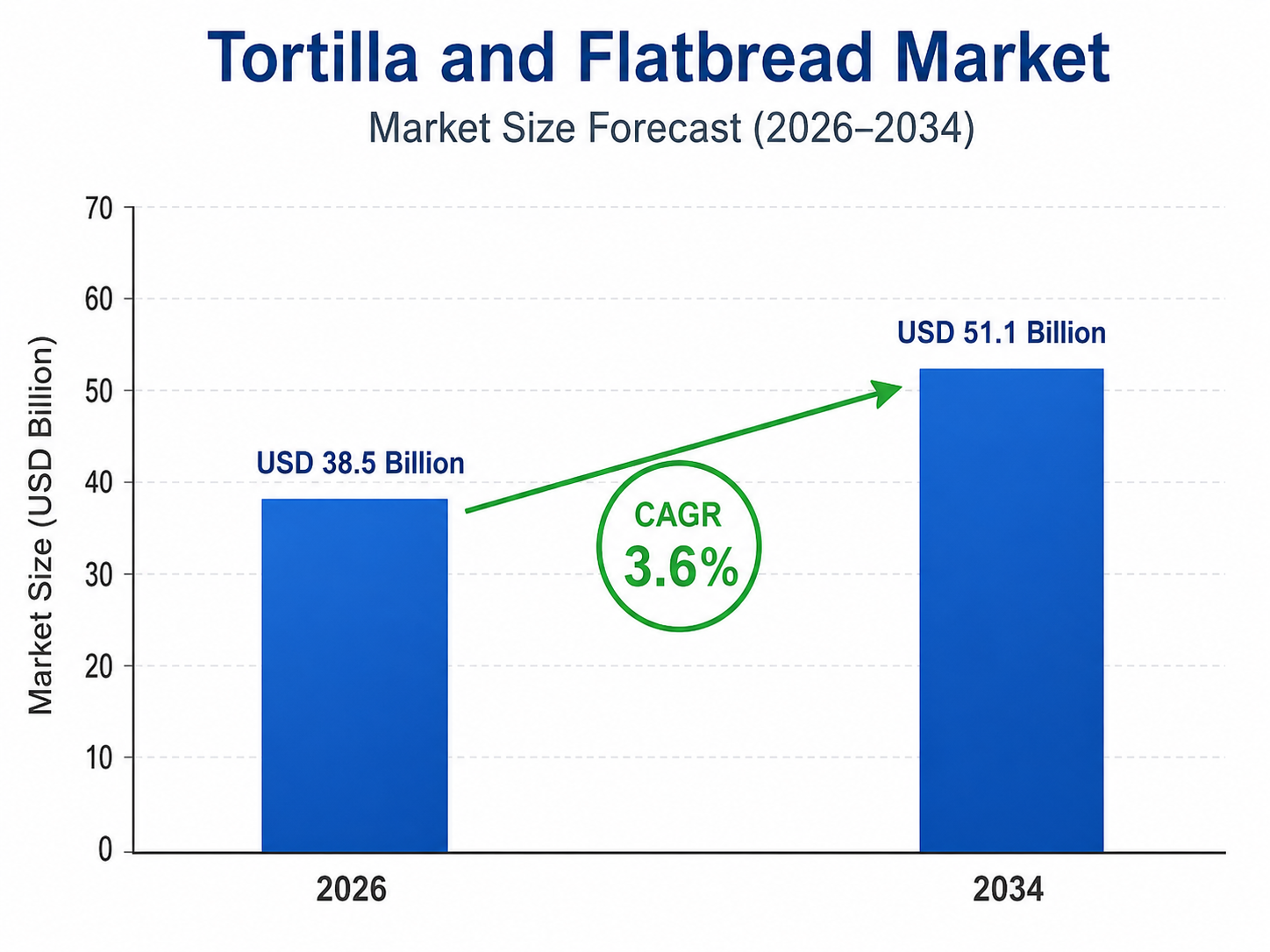
The Tortilla and Flatbread Market is estimated to be valued at $ 38.5 billion in 2026 and is projected to reach $ 51.1 billion by 2034, expanding at a CAGR of 3.6% from 2026 to 2034.
Tortillas and flatbreads include wheat tortillas, corn tortillas, pita, naan, roti, lavash, wraps, paratha, and other thin bread formats used across retail, foodservice, quick-service restaurants, institutional catering, and home consumption. The market is benefiting from rising demand for convenient meal solutions, ethnic and fusion cuisines, handheld foods, ready-to-eat bakery products, and premium wraps. Growth is also supported by innovation in whole grain, gluten-free, high-protein, low-carb, clean-label, and preservative-free formats. As consumers seek versatile products for breakfast, snacking, lunch wraps, meal kits, and restaurant menus, tortillas and flatbreads are becoming important bakery categories for food manufacturers, retailers, QSR chains, and private-label brands.
1. What is the latest trend in the Tortilla and Flatbread Market?
The latest trend is the growing demand for healthier, premium, and specialty flatbread formats.
Brands are launching whole wheat, multigrain, gluten-free, high-fiber, low-carb, protein-enriched, and clean-label tortillas and wraps.
Ethnic-inspired products such as naan, pita, lavash, paratha, and street-food-style wraps are also gaining traction.
Convenience-focused formats for meal kits, frozen foods, QSR menus, and ready-to-fill wraps are expanding rapidly.
2. What are the key challenges in the Tortilla and Flatbread Market?
Key challenges include raw material price volatility, short shelf life, quality consistency, and competition from conventional bread and bakery products.
Manufacturers must balance softness, flexibility, taste, freshness, and clean-label requirements without increasing costs excessively.
Cold-chain needs for refrigerated or frozen products can add logistics complexity.
Private-label competition and price sensitivity also create pressure on branded players.
3. What is the major driving factor for the Tortilla and Flatbread Market?
The major driving factor is increasing consumer preference for convenient, versatile, and easy-to-prepare meal formats.
Tortillas and flatbreads can be used for wraps, tacos, burritos, sandwiches, pizzas, rolls, snacks, and breakfast products.
Growth in quick-service restaurants, food delivery, meal kits, and home cooking is strengthening demand.
Rising interest in Mexican, Mediterranean, Middle Eastern, Indian, and fusion cuisines is also supporting market expansion.
4. What is the major segment in the Tortilla and Flatbread Market and why?
Tortillas represent a major segment because they are widely used in tacos, burritos, wraps, quesadillas, breakfast items, and foodservice menus.
Wheat tortillas are popular for wraps and soft-texture applications, while corn tortillas remain important in traditional Mexican food.
Their strong retail presence, long-standing foodservice demand, and versatility support high consumption.
Flatbreads such as naan, pita, and roti are also growing as consumers explore ethnic and premium bakery products.
5. Which application or end-user is driving more demand?
Retail consumers and foodservice operators are the strongest demand contributors.
Supermarkets, convenience stores, club stores, and online grocery platforms sell packaged tortillas and flatbreads for home meals and snacks.
QSR chains, restaurants, cafés, catering companies, and institutional kitchens use them for wraps, sandwiches, ethnic meals, and frozen prepared foods.
Demand is strongest where products offer convenience, consistent quality, and menu flexibility.
6. Which region offers the highest growth potential and why?
North America remains a major established market due to strong tortilla consumption, Mexican cuisine popularity, and broad retail and foodservice penetration.
Asia Pacific offers strong growth potential as urban consumers adopt packaged bakery products, fast food, wraps, and international cuisines.
Europe is expanding through demand for premium flatbreads, Mediterranean foods, clean-label products, and private-label bakery formats.
Latin America continues to be important due to traditional tortilla consumption and expanding packaged-food retail.
7. What strategies are major companies adopting in the market?
Major companies are focusing on product innovation, clean-label recipes, private-label partnerships, frozen and refrigerated formats, and foodservice expansion.
They are launching healthier variants such as gluten-free, low-carb, high-protein, whole grain, and plant-based ingredient options.
Manufacturers are also improving shelf life, packaging convenience, and production automation to support scale.
Partnerships with retailers, QSR chains, meal-kit companies, and distributors are central to growth.
8. What are the leading companies in the Tortilla and Flatbread Market?
Leading companies include Gruma/Mission Foods, Grupo Bimbo, General Mills, PepsiCo, Tyson Foods, Ole Mexican Foods, La Tortilla Factory, Toufayan Bakeries, Kontos Foods, FGF Brands/Stonefire, Signature Flatbreads, Aryzta, Rich Products, and Atoria’s Family Bakery.
These companies compete through product range, brand recognition, retail distribution, foodservice relationships, freshness, and pricing.
Large players benefit from scale, manufacturing networks, and broad channel access.
Specialist and regional brands compete through authenticity, premium positioning, clean-label recipes, and ethnic product expertise.
9. Why are tortillas and flatbreads strategically important for food companies?
Tortillas and flatbreads are strategically important because they serve multiple eating occasions, from breakfast and snacking to full meals.
They help food companies participate in convenience, ethnic cuisine, frozen food, meal-kit, and foodservice growth trends.
The category supports premiumization through healthier ingredients, artisanal formats, and global flavor positioning.
For retailers and manufacturers, it also creates strong private-label and cross-category opportunities.
10. What is the future outlook for the Tortilla and Flatbread Market?
The market outlook remains positive as consumers continue shifting toward convenient, flexible, and globally inspired meal solutions.
Future growth will be supported by healthier recipes, premium ethnic formats, frozen flatbreads, foodservice demand, and retail private-label expansion.
Innovation in gluten-free, high-protein, low-carb, and clean-label products will shape brand differentiation.
Companies offering fresh-tasting, versatile, affordable, and health-oriented products are expected to gain market share.
Browse Related Reports:
https://www.oganalysis.com/industry-reports/rose-hydrosol-market
https://www.oganalysis.com/industry-reports/gluten-free-food-market
https://www.oganalysis.com/industry-reports/gluten-feed-market
https://www.oganalysis.com/industry-reports/fish-sauce-market
https://www.oganalysis.com/industry-reports/fermented-ingredients-market
