Acute Ischemic Stroke Drugs Market Outlook 2026–2034: Thrombolytic Therapy Demand, Stroke Care Expansion, Growth Drivers, Leading Companies, and Future Opportunities
The Acute Ischemic Stroke Drugs Market is estimated to be valued at $ 13.13 billion in 2026 and is projected to reach $ 19.69 billion by 2034, expanding at a CAGR of 5.2% from 2026 to 2034.
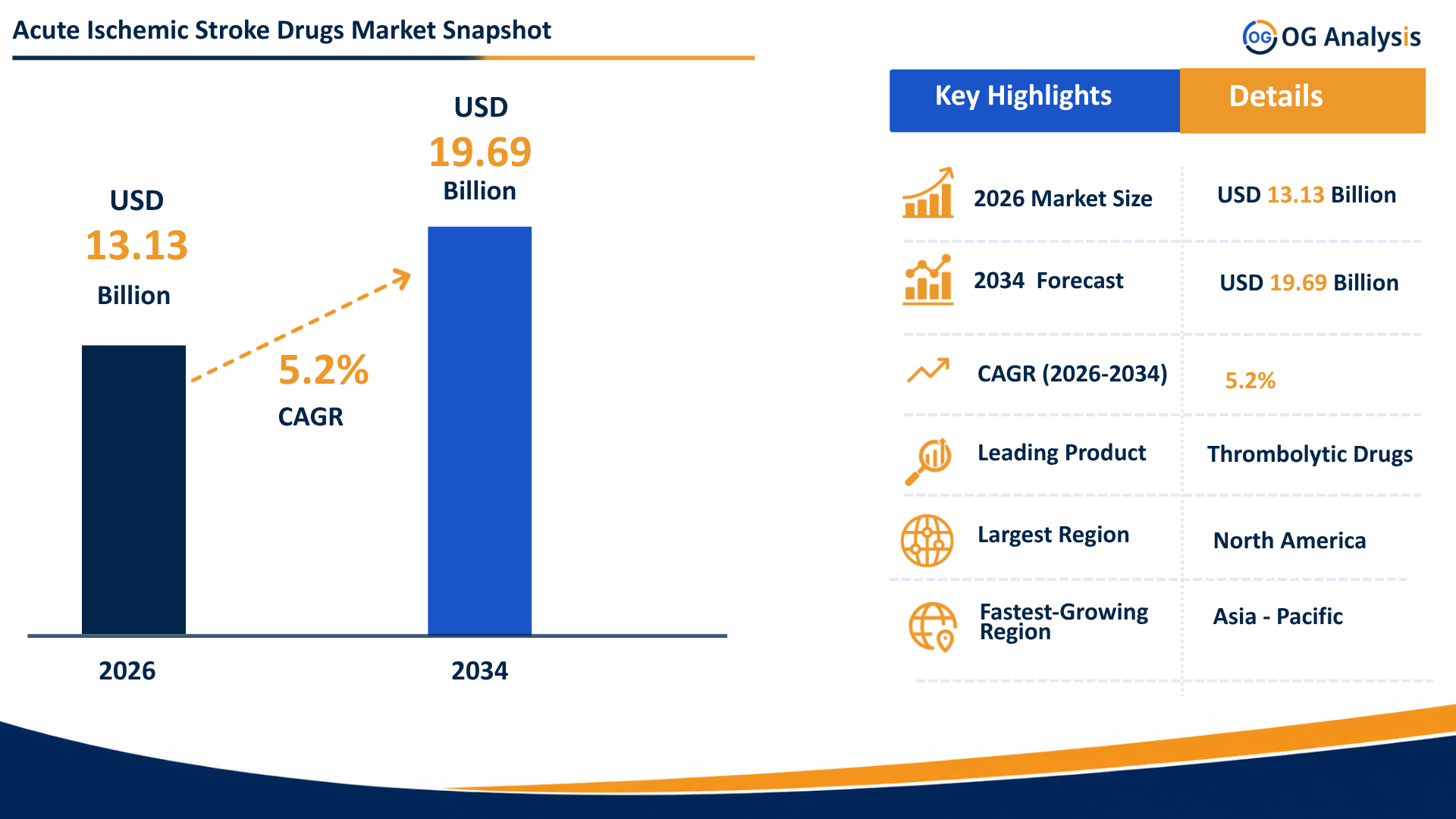
Acute ischemic stroke drugs are used to restore cerebral blood flow, reduce clot progression, prevent recurrent stroke, manage cardiovascular risk, and support post-stroke treatment protocols. Key drug classes include thrombolytics, antiplatelet agents, anticoagulants, antihypertensive drugs, statins, neuroprotective agents, and investigational therapies. Market growth is supported by rising stroke incidence, aging populations, hypertension, diabetes, atrial fibrillation, obesity, smoking-related risks, and improving emergency stroke-care infrastructure. Hospitals remain the core treatment setting because acute ischemic stroke requires rapid diagnosis, imaging, eligibility assessment, specialist intervention, and time-sensitive drug administration. Demand is also shaped by stroke-center expansion, tele-stroke networks, improved ambulance triage, greater use of advanced imaging, and ongoing development of next-generation thrombolytic and neuroprotective therapies.
Get the Complete Analysis :
https://www.oganalysis.com/industry-reports/acute-ischemic-stroke-drugs-market
Get Your Free Sample Report for In-Depth Market Insights :
https://www.oganalysis.com/industry-reports/acute-ischemic-stroke-drugs-market/free-sample
1. What is the latest trend in the Acute Ischemic Stroke Drugs Market?
The latest trend is the growing focus on faster reperfusion therapy, broader thrombolytic access, and development of safer next-generation stroke drugs.
Tenecteplase is gaining stronger clinical attention alongside alteplase due to easier administration and evolving guideline support in selected patients.
Drug development is also moving toward neuroprotective agents, exosome-based therapies, and adjunct drugs that may improve outcomes when combined with reperfusion care.
Hospitals are also strengthening stroke pathways to reduce door-to-needle time and improve treatment eligibility.
2. What are the key challenges in the Acute Ischemic Stroke Drugs Market?
Key challenges include narrow treatment windows, bleeding risk, delayed hospital arrival, limited stroke-center access, and strict patient eligibility requirements.
Thrombolytic drugs require rapid imaging and clinical assessment before administration, which can limit usage in low-resource or rural settings.
Drug developers also face high clinical-trial failure risk because stroke outcomes are influenced by timing, clot location, collateral circulation, and patient comorbidities.
Pricing pressure, reimbursement limitations, and competition from mechanical thrombectomy in large-vessel occlusion cases also affect market dynamics.
3. What is the major driving factor for the Acute Ischemic Stroke Drugs Market?
The major driving factor is the rising burden of ischemic stroke and the urgent need for effective time-sensitive treatment.
Hypertension, diabetes, atrial fibrillation, sedentary lifestyles, smoking, and aging populations are increasing the number of patients at risk.
Acute ischemic stroke drugs help restore blood flow, reduce clot-related damage, and prevent early recurrence when used appropriately.
Growing awareness of stroke symptoms and emergency response systems is also supporting higher treatment rates.
4. What is the major segment in the Acute Ischemic Stroke Drugs Market and why?
Thrombolytics represent a major treatment segment because they directly target clot dissolution in eligible acute ischemic stroke patients.
Alteplase has long been a key thrombolytic therapy, while tenecteplase is gaining interest due to simplified bolus administration and clinical adoption trends.
Antiplatelet agents are also important because they are widely used in secondary prevention and selected acute management pathways.
Anticoagulants remain important for preventing cardioembolic stroke recurrence, especially in patients with atrial fibrillation.
5. Which application or end-user is driving more demand?
Hospitals and emergency stroke centers are the leading end users because acute ischemic stroke treatment requires rapid diagnosis, imaging, monitoring, and specialist care.
Hospital pharmacies account for strong demand due to use of thrombolytics, antiplatelets, anticoagulants, antihypertensives, and statins in acute and post-acute protocols.
Ambulatory care and specialty clinics contribute through follow-up treatment, secondary prevention, and long-term risk management.
Tele-stroke networks and regional stroke-care systems are also increasing treatment access in underserved locations.
6. Which region offers the highest growth potential and why?
North America remains a leading market due to advanced stroke-care infrastructure, high diagnosis rates, established emergency protocols, and access to advanced therapeutics.
Europe is supported by mature healthcare systems, stroke-unit networks, public awareness campaigns, and structured reimbursement systems.
Asia Pacific offers strong growth potential due to large patient populations, rising cardiovascular risk factors, improving hospital infrastructure, and growing access to acute stroke treatment.
China, India, Japan, South Korea, and Southeast Asia are important markets due to increasing stroke burden and healthcare investment.
7. What strategies are major companies adopting in the market?
Major companies are focusing on new thrombolytic formulations, safer anticoagulants, neuroprotective candidates, combination treatment approaches, and clinical-trial expansion.
They are investing in therapies that can improve outcomes, reduce bleeding risk, extend treatment eligibility, or support post-stroke recovery.
Partnerships with hospitals, stroke networks, research institutes, and clinical trial organizations are becoming important for therapy development.
Companies are also targeting faster drug delivery, easier administration, improved emergency-use protocols, and regional regulatory approvals.
8. What are the leading companies in the Acute Ischemic Stroke Drugs Market?
Leading companies include Boehringer Ingelheim, Genentech/Roche, Bayer, Pfizer, Bristol Myers Squibb, Johnson & Johnson, Sanofi, AstraZeneca, Daiichi Sankyo, Chiesi Farmaceutici, Acticor Biotech, DiaMedica Therapeutics, NoNO Inc., Simcere Pharmaceutical, and Athersys.
These companies compete through thrombolytic products, antiplatelet and anticoagulant portfolios, clinical pipelines, hospital relationships, regulatory approvals, and evidence generation.
Market coverage commonly identifies companies such as Bristol Myers Squibb, Daiichi Sankyo, AstraZeneca, Bayer, Sanofi, Pfizer, DiaMedica, Johnson & Johnson, Acticor Biotech, and Simcere among active participants.
Pipeline success, clinical differentiation, and safety profile remain critical competitive factors.
9. Why are acute ischemic stroke drugs strategically important for healthcare systems?
Acute ischemic stroke drugs are strategically important because early treatment can reduce brain injury, disability, long-term care burden, and healthcare costs.
They are central to emergency stroke pathways, secondary prevention programs, and hospital stroke-readiness planning.
For healthcare systems, improving drug access and stroke-response speed can reduce avoidable complications and improve patient outcomes.
For pharmaceutical companies, stroke therapeutics represent a high-need category with opportunities in reperfusion, prevention, and recovery-support therapies.
10. What is the future outlook for the Acute Ischemic Stroke Drugs Market?
The market outlook remains positive as stroke burden increases and healthcare systems invest in faster diagnosis, emergency treatment, and secondary prevention.
Future growth will be supported by thrombolytic optimization, tenecteplase adoption, neuroprotective pipelines, safer anticoagulants, and improved stroke-care infrastructure.
Demand will continue across hospitals, stroke centers, emergency departments, specialty clinics, and long-term care settings.
Companies offering clinically differentiated, fast-acting, safe, and guideline-aligned therapies are expected to gain market share.
Browse Related Reports
https://www.oganalysis.com/industry-reports/healthcare-education-market
https://www.oganalysis.com/industry-reports/healthcare-education-market
https://www.oganalysis.com/industry-reports/healthcare-information-systems-market
https://www.oganalysis.com/industry-reports/neurostimulation-devices-market
https://www.oganalysis.com/industry-reports/brain-computer-interface-market
