Frozen and Freeze-Dried Pet Food Market Outlook 2026–2034: Premium Nutrition Trends, Leading Brands, and Growth Opportunities
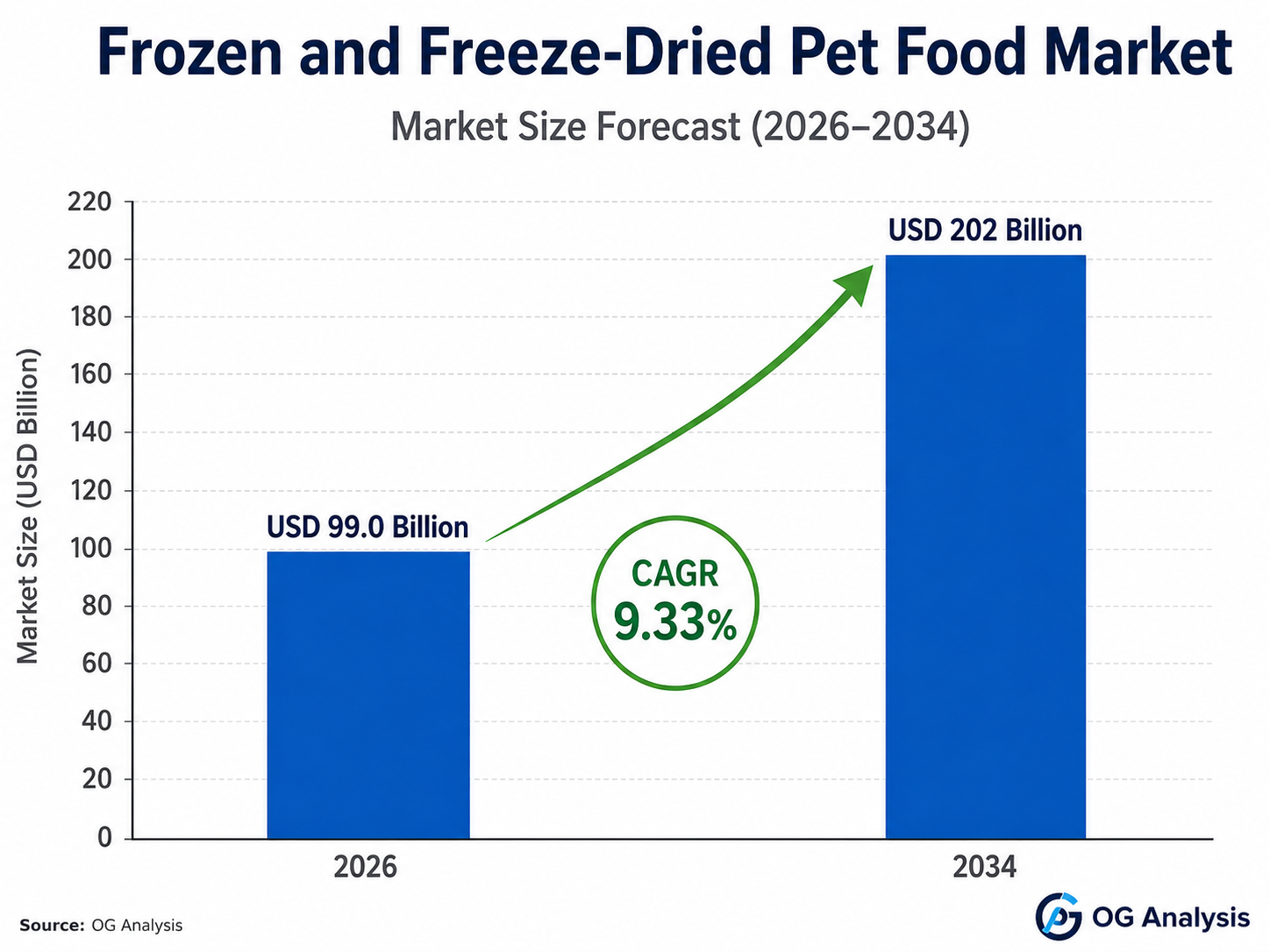
The Frozen and Freeze-Dried Pet Food Market is estimated to be valued at $ 99.0 billion in 2026 and is projected to reach $ 202 billion by 2034, expanding at a CAGR of 9.33% from 2026 to 2034.
Frozen and freeze-dried pet foods contain meat, organs, vegetables, fruits, and other ingredients preserved through low-temperature freezing or moisture-removal processes. Products include complete meals, raw nuggets, patties, morsels, mixers, toppers, treats, and limited-ingredient recipes for dogs and cats. Market growth is supported by pet humanization, premiumization, increasing interest in minimally processed diets, and demand for convenient alternatives to conventional dry and wet foods. Freeze-dried products offer storage and transportation advantages, while frozen formats appeal to consumers seeking fresh and raw feeding options. Manufacturers are focusing on food safety, nutritional balance, sustainable sourcing, functional ingredients, and convenient packaging.
1. What is the latest trend in the Frozen and Freeze-Dried Pet Food Market?
The latest trend is the expansion of complete-and-balanced freeze-dried meals, raw-coated products, meal toppers, and hybrid feeding formats.
Brands are introducing single-protein, functional, age-specific, and limited-ingredient recipes for pets with different dietary needs.
High-pressure processing, batch testing, traceable sourcing, and improved pathogen controls are gaining greater attention.
Subscription delivery, personalized feeding plans, and shelf-stable raw products are also supporting adoption.
2. What are the key challenges in the Frozen and Freeze-Dried Pet Food Market?
Key challenges include premium pricing, food-safety risks, nutritional-balance concerns, raw-material volatility, and consumer handling requirements.
Frozen products require reliable cold-chain storage, transportation, retail freezers, and careful management after opening.
Freeze-drying is energy- and capital-intensive, which can increase production costs and constrain manufacturing capacity.
Regulatory scrutiny, recalls, and veterinary concerns regarding raw diets may also influence consumer confidence.
3. What is the major driving factor for the market?
The major driving factor is the increasing humanization of pets and consumer willingness to spend more on perceived premium nutrition.
Pet owners are seeking recognizable ingredients, high meat content, minimal processing, and products associated with wellness benefits.
Growing awareness of digestive health, allergies, weight management, and life-stage nutrition is encouraging product experimentation.
Premium pet retail, e-commerce, and direct-to-consumer channels are making specialized diets more accessible.
4. What is the major segment in the market and why?
Freeze-dried pet food represents a major product segment because it combines raw-positioned nutrition with shelf stability and convenient handling.
Unlike frozen products, it generally does not require refrigerated transportation or freezer storage before opening.
Consumers can serve products directly, use them as toppers, or rehydrate them according to feeding instructions.
These advantages support wider distribution through pet stores, supermarkets, specialty retailers, and online channels.
5. Which pet type or distribution channel is driving more demand?
Dog food is driving significant demand because dogs account for substantial premium-food spending and support a broad range of meal and treat formats.
Freeze-dried nuggets, patties, mixers, toppers, and training treats are widely marketed to dog owners.
Specialty pet stores remain important for product education, while e-commerce is expanding through assortment and subscription convenience.
Cat food presents additional growth potential through high-protein, moisture-focused, and single-protein recipes.
6. Which region offers the highest growth potential and why?
Asia Pacific offers strong growth potential due to rising pet ownership, increasing disposable income, urbanization, and expanding premium pet-care spending.
China, Japan, South Korea, Australia, and Southeast Asia are developing stronger specialty retail and online pet-food ecosystems.
North America remains the most established market because of high pet expenditure and extensive raw-food brand availability.
Europe also offers opportunities through natural, premium, traceable, and sustainably sourced pet nutrition.
7. What strategies are major companies adopting in the market?
Major companies are expanding freeze-drying capacity, cold-chain networks, food-safety systems, and complete-and-balanced product portfolios.
They are introducing novel proteins, functional ingredients, puppy and kitten formulas, and convenient single-serve packaging.
Retail expansion, veterinarian education, subscriptions, sampling, and digital marketing are helping brands acquire new consumers.
Partnerships, acquisitions, and international distribution are also being used to increase scale and geographic reach.
8. What are the leading companies in the Frozen and Freeze-Dried Pet Food Market?
Leading companies and brands include Stella & Chewy’s, Instinct, Primal Pet Foods, Vital Essentials, K9 Natural, Open Farm, Steve’s Real Food, Northwest Naturals, Grandma Lucy’s, and Wellness Pet Company.
These participants compete through ingredient quality, protein variety, nutritional claims, safety processes, and distribution reach.
Specialized raw-food brands benefit from strong consumer recognition and product-development expertise.
Larger pet-food groups compete through marketing scale, retail relationships, manufacturing investment, and portfolio expansion.
9. Why are frozen and freeze-dried foods strategically important for pet-food companies?
These formats allow manufacturers to participate in the premium, natural, raw-inspired, and functional pet-nutrition categories.
They can increase revenue per kilogram and support differentiated products beyond conventional kibble and canned food.
Toppers and mixers also provide an accessible entry point for consumers who do not want to adopt a complete raw diet.
For brands, the category supports premium positioning, consumer engagement, and recurring subscription opportunities.
10. What is the future outlook for the market?
The market outlook remains positive as consumers continue to seek premium, convenient, and minimally processed pet-food options.
Future growth will be supported by shelf-stable technologies, personalized nutrition, functional formulations, and wider retail availability.
Food safety, nutritional completeness, affordability, and transparent sourcing will strongly influence competitive success.
Companies offering convenient formats, trusted quality controls, and clear product benefits are expected to gain market share.
Browse Related Reports
https://www.oganalysis.com/industry-reports/foraging-for-feed-market
https://www.oganalysis.com/industry-reports/sunflowerseed-meal-market
https://www.oganalysis.com/industry-reports/pet-supplement-market
https://www.oganalysis.com/industry-reports/fishmeal-market
https://www.oganalysis.com/industry-reports/aquafeed-additives-market
