Gin Market Outlook 2026–2034: Premium Spirits Demand, London Dry Gin Leadership, Craft Gin Innovation, and Future Growth Opportunities
The Gin Market is estimated to be valued at $ 12.9 billion in 2026 and is projected to reach $ 18.5 billion by 2034, expanding at a CAGR of 4.7% from 2026 to 2034.
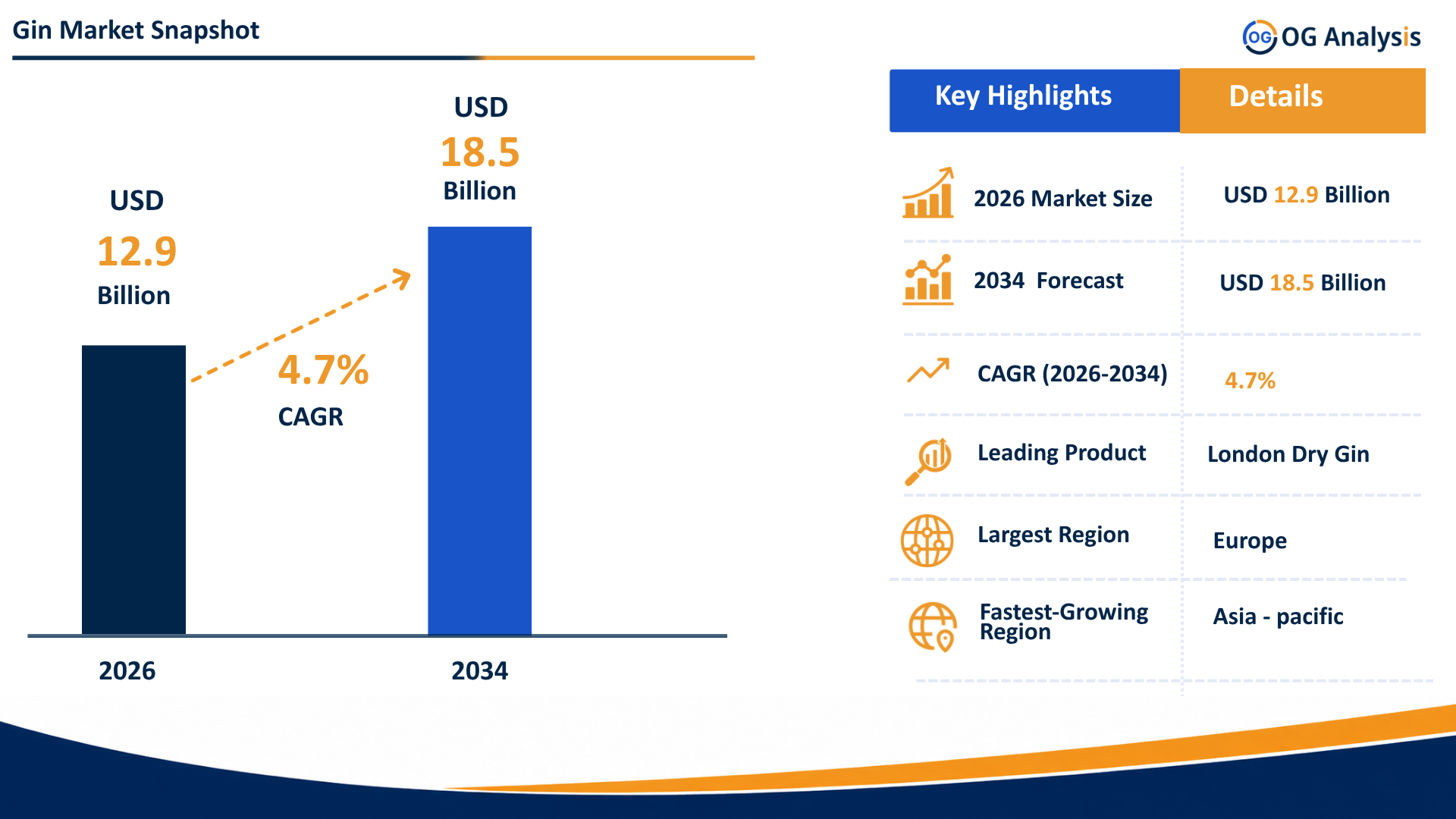
Gin is a distilled alcoholic beverage primarily flavored with juniper berries and other botanicals such as citrus peel, coriander, angelica root, herbs, spices, florals, fruits, and regional botanicals. The market includes London dry gin, distilled gin, flavored gin, old tom gin, Plymouth gin, craft gin, premium gin, super-premium gin, and gin-based ready-to-drink products. Market growth is supported by premiumization, rising cocktail consumption, craft distillery expansion, botanical flavor innovation, and increasing demand for premium spirits in both mature and emerging markets. Gin is gaining popularity through bars, restaurants, duty-free retail, supermarkets, liquor stores, online alcohol platforms, and home mixology occasions. Product innovation is focused on flavored gin, low- and no-alcohol gin alternatives, sustainable packaging, limited editions, regional botanicals, and gin-based canned cocktails.
Get the Complete Analysis :
https://www.oganalysis.com/industry-reports/gin-market
Get Your Free Sample Report for In-Depth Market Insights :
https://www.oganalysis.com/industry-reports/gin-market/free-sample
1. What is the latest trend in the Gin Market?
The latest trend is the rising demand for premium, craft, flavored, and botanical-infused gin products.
Consumers are showing interest in unique flavor profiles such as citrus, berry, floral, herbal, spiced, and locally sourced botanicals.
Ready-to-drink gin cocktails and low- or no-alcohol gin alternatives are also gaining attention among health-conscious and convenience-focused consumers.
Home mixology, cocktail bars, and social media-driven drinking occasions are further supporting product experimentation.
2. What are the key challenges in the Gin Market?
Key challenges include high taxation, alcohol regulation, responsible drinking concerns, raw material cost pressure, and intense competition from other spirits.
Premium gin brands must differentiate through flavor, quality, packaging, provenance, and bartender or consumer engagement.
Health-conscious consumers and moderation trends can pressure overall alcohol consumption in selected markets.
Craft distilleries may also face challenges related to distribution access, brand visibility, scaling production, and maintaining consistent product quality.
3. What is the major driving factor for the Gin Market?
The major driving factor is the growing demand for premium spirits and cocktail-led consumption.
Gin is widely used in classic and modern cocktails such as gin and tonic, martini, negroni, gimlet, and flavored mixed drinks.
Premium and craft gin brands benefit from consumers willing to pay more for quality, authenticity, distinctive botanicals, and brand experience.
Expansion of bars, restaurants, home cocktail culture, and retail premiumization is strengthening market demand.
4. What is the major segment in the Gin Market and why?
London dry gin remains a major segment because it has strong global recognition, classic taste positioning, and broad use in cocktails.
It is widely preferred by bars, restaurants, retailers, and consumers due to its juniper-forward profile and versatility in mixed drinks.
Flavored gin is growing strongly because it attracts younger consumers and supports experimentation with fruit, botanical, and seasonal variants.
Premium gin is also important as consumers trade up toward higher-quality spirits and craft distillery offerings.
5. Which application or end-user is driving more demand?
Bars, restaurants, hotels, clubs, liquor retailers, supermarkets, e-commerce platforms, and home consumers are driving demand.
On-trade channels support premium gin through cocktails, mixology menus, bartender recommendations, and experiential consumption.
Off-trade channels are important for bottle sales, gifting, home consumption, and premium retail displays.
Younger legal-age consumers, cocktail enthusiasts, premium spirits buyers, and craft beverage consumers are key target groups.
6. Which region offers the highest growth potential and why?
Europe remains a leading region due to established gin culture, strong premium spirits consumption, and mature cocktail markets.
The U.K., Spain, Germany, France, and Italy are important European markets for both traditional and craft gin products.
Asia Pacific offers strong growth potential due to rising disposable income, premium alcohol adoption, urban nightlife, and expanding modern retail.
North America also remains attractive due to premium cocktails, craft spirits, and growing demand for flavored and small-batch gin.
7. What strategies are major companies adopting in the market?
Major companies are focusing on premiumization, flavored variants, botanical storytelling, limited editions, and premium packaging.
They are expanding portfolios across London dry gin, craft gin, flavored gin, low-alcohol gin, and ready-to-drink gin cocktails.
Brand owners are investing in bartender engagement, digital marketing, cocktail campaigns, tasting events, and retail visibility.
Mergers, acquisitions, craft brand partnerships, and regional launches are also helping companies strengthen market presence.
8. What are the leading companies in the Gin Market?
Leading companies include Diageo, Pernod Ricard, Bacardi, Suntory Holdings, Davide Campari-Milano, William Grant & Sons, Sazerac, Ginebra San Miguel, Radico Khaitan, Lucas Bols, New Amsterdam Spirits, Tanqueray, Beefeater, Bombay Sapphire, Hendrick’s, Gordon’s, Roku Gin, and Boodles.
These companies compete through brand strength, flavor innovation, premium positioning, distribution reach, bartender influence, packaging, and cocktail relevance.
Large spirits companies benefit from global distribution networks and strong marketing capabilities.
Craft and regional gin producers compete through authenticity, local botanicals, small-batch positioning, and distinctive flavor identities.
9. Why is gin strategically important for spirits companies?
Gin is strategically important because it provides strong participation in premium spirits, cocktail culture, and flavor-led innovation.
It allows spirits companies to launch multiple variants through botanicals, fruits, herbs, spices, and limited-edition formulations.
Gin also supports both on-trade consumption in bars and off-trade growth through retail, gifting, and home mixology.
For premium beverage portfolios, gin offers strong brand-building opportunities around heritage, craftsmanship, and lifestyle positioning.
10. What is the future outlook for the Gin Market?
The market outlook remains positive as premium spirits, craft gin, flavored gin, cocktail culture, and ready-to-drink formats continue to expand.
Future growth will be supported by botanical innovation, premiumization, low- and no-alcohol alternatives, sustainable packaging, and stronger e-commerce distribution.
Mature markets will focus on premium and differentiated products, while emerging markets will offer growth through rising income and expanding nightlife culture.
Companies offering strong brand identity, consistent quality, innovative flavors, and effective distribution are expected to gain market share
Browse Related Reports
https://www.oganalysis.com/industry-reports/food-grade-alcohol-market
https://www.oganalysis.com/industry-reports/dutyfree-liquor-market
https://www.oganalysis.com/industry-reports/sake-market
https://www.oganalysis.com/industry-reports/hard-seltzer-market
