Textured Vegetable Protein Market Outlook 2026–2034: Plant-Based Meat Demand, Textured Soy Protein Leadership, Growth Drivers, and Future Opportunities
The Textured Vegetable Protein Market is estimated to be valued at $ 2.70 billion in 2026 and is projected to reach $ 4.88 billion by 2034, expanding at a CAGR of 7.67% from 2026 to 2034.
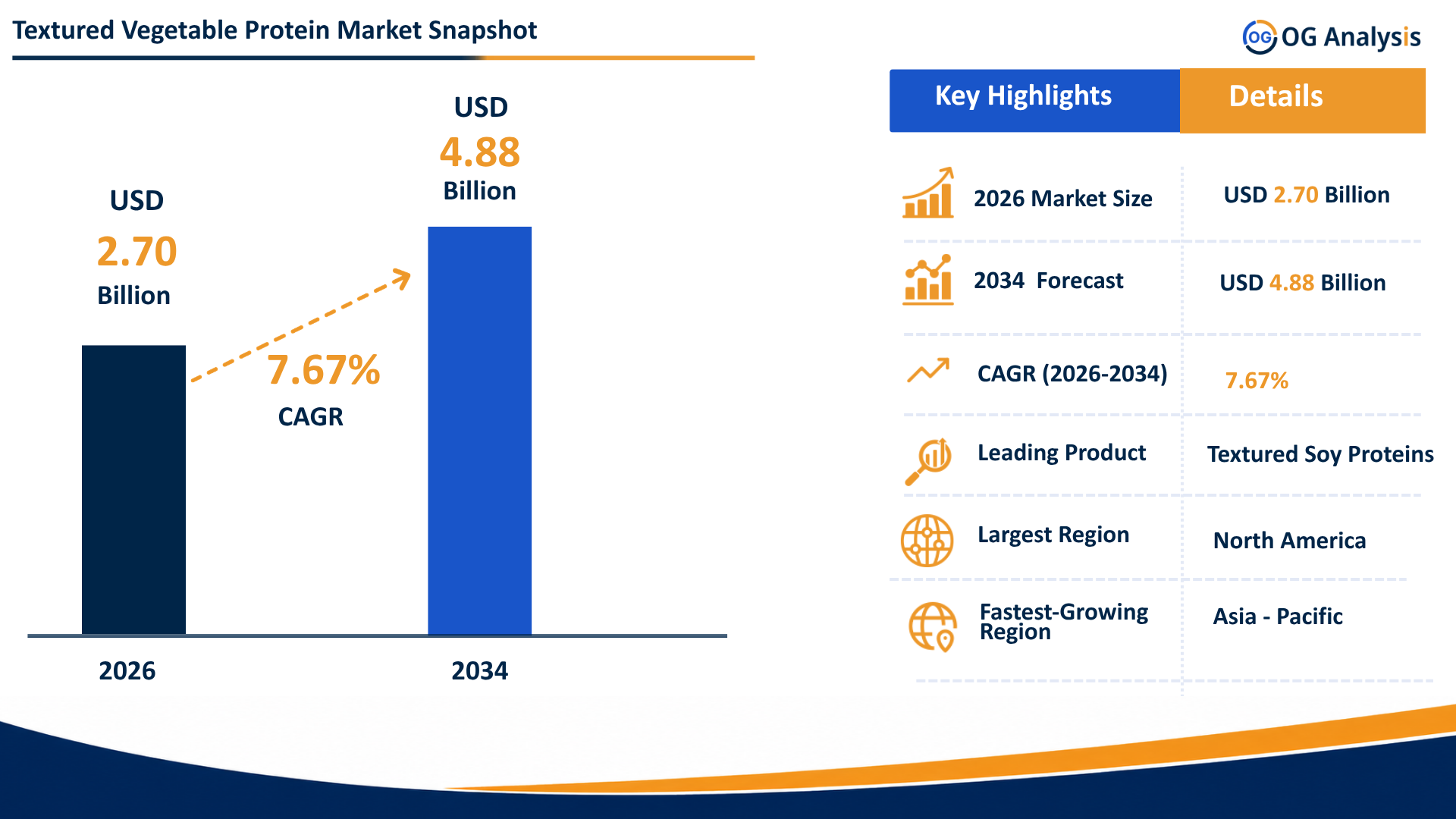
Textured vegetable protein is a plant-based protein ingredient produced mainly from soy, pea, wheat, and other vegetable protein sources through extrusion and texturization processes. It is widely used to create meat-like texture, chewiness, water absorption, and protein enrichment in plant-based meat, hybrid meat, processed foods, ready meals, snacks, and animal nutrition products. Market growth is supported by rising demand for affordable protein alternatives, flexitarian diets, plant-based foods, clean-label reformulation, and sustainable food ingredients. Textured soy protein remains a major segment due to its cost-effectiveness, high protein content, broad availability, and strong functionality in meat alternatives and processed food systems. Food manufacturers are increasingly using TVP in burgers, nuggets, sausages, meatballs, mince, fillings, soups, sauces, frozen meals, and protein-rich convenience foods.
Get the Complete Analysis :
https://www.oganalysis.com/industry-reports/textured-vegetable-protein-market
Get Your Free Sample Report for In-Depth Market Insights :
https://www.oganalysis.com/industry-reports/textured-vegetable-protein-market/free-sample
1. What is the latest trend in the Textured Vegetable Protein Market?
The latest trend is the rising use of textured vegetable protein in plant-based meat, hybrid meat, and high-protein convenience food products.
Food companies are focusing on improved texture, juiciness, flavor absorption, and cleaner ingredient labels to increase consumer acceptance.
Soy, pea, and wheat-based TVP are being used in burgers, nuggets, crumbles, sausages, meat extenders, and ready-to-cook meals.
Innovation is also shifting toward allergen-conscious, non-GMO, organic, and minimally processed protein formats.
2. What are the key challenges in the Textured Vegetable Protein Market?
Key challenges include taste masking, beany flavor, texture optimization, allergen concerns, price volatility, and competition from other plant proteins.
Soy-based TVP can face concerns related to soy allergens, GMO sourcing, and consumer perception in some markets.
Wheat-based TVP may face gluten-related limitations, while pea protein can require flavor and texture improvement.
Manufacturers must balance protein content, mouthfeel, hydration, extrusion quality, clean-label expectations, and cost efficiency.
3. What is the major driving factor for the Textured Vegetable Protein Market?
The major driving factor is rising demand for affordable, sustainable, and protein-rich alternatives to animal-based meat.
TVP helps food manufacturers create meat-like products with lower ingredient cost and longer shelf stability compared with several fresh protein formats.
Growing flexitarian, vegetarian, vegan, and health-conscious consumer groups are increasing demand for plant-based protein foods.
Foodservice, retail, frozen foods, and private-label brands are also expanding the use of TVP in mainstream product lines.
4. What is the major segment in the Textured Vegetable Protein Market and why?
Textured soy protein is a major segment because it offers strong protein content, established processing technology, broad availability, and competitive pricing.
It has strong water absorption, fibrous texture, and flavor-carrying ability, making it suitable for meat analogues and extenders.
Pea-based TVP is growing due to non-soy, non-GMO, and allergen-conscious positioning.
Wheat-based TVP remains important in applications where firm chewiness and meat-like bite are required.
5. Which application or end-user is driving more demand?
Food and beverage manufacturers are driving the strongest demand for textured vegetable protein.
Plant-based meat producers use TVP in burgers, sausages, nuggets, mince, crumbles, patties, and meatballs.
Processed food companies use TVP in ready meals, soups, sauces, fillings, snacks, and protein-enriched products.
Pet food, animal feed, institutional catering, and foodservice operators also contribute to demand through cost-efficient protein formulations.
6. Which region offers the highest growth potential and why?
Asia Pacific offers strong growth potential due to rising processed food consumption, large vegetarian populations, expanding food manufacturing, and growing interest in affordable plant proteins.
China, India, Japan, South Korea, Thailand, and Southeast Asia are important markets for soy-based ingredients, meat extenders, and plant-based food innovation.
North America remains important due to strong plant-based meat development, clean-label protein demand, and established food ingredient companies.
Europe is supported by sustainability-focused diets, meat reduction trends, and growing demand for vegetarian and vegan food products.
7. What strategies are major companies adopting in the market?
Major companies are focusing on improved extrusion technology, better texture, cleaner taste, higher protein concentration, and application-specific TVP formats.
They are expanding portfolios across soy, pea, wheat, fava, and blended plant protein ingredients.
Suppliers are also offering customized granules, chunks, flakes, mince, strips, and fibers for meat alternatives and processed foods.
Partnerships with food brands, meat analogue companies, foodservice chains, and private-label manufacturers are becoming important for market expansion.
8. What are the leading companies in the Textured Vegetable Protein Market?
Leading companies include ADM, Cargill, International Flavors & Fragrances, Roquette Frères, MGP Ingredients, Südzucker, The Scoular Company, Axiom Foods, AGT Food and Ingredients, PURIS, BENEO, Vestkorn, Wilmar International, Foodchem International, and Shandong Yuxin Biotechnology.
These companies compete through protein source variety, texture quality, extrusion expertise, price competitiveness, sustainability credentials, and food-application support.
Large ingredient suppliers benefit from global sourcing, manufacturing scale, technical formulation support, and relationships with processed food companies.
Specialty plant-protein companies compete through pea protein, non-GMO positioning, organic ingredients, and customized meat-alternative solutions.
9. Why is textured vegetable protein strategically important for food manufacturers?
Textured vegetable protein is strategically important because it helps manufacturers deliver protein-rich, meat-like foods at scalable cost.
It improves texture, structure, moisture retention, and bite in plant-based and hybrid meat products.
TVP also supports sustainability claims, shelf-stable ingredient systems, and product reformulation for flexitarian consumers.
For food brands, it provides a practical route to expand plant-based offerings without fully relying on expensive novel protein technologies.
10. What is the future outlook for the Textured Vegetable Protein Market?
The market outlook remains positive as demand grows for affordable plant proteins, meat alternatives, hybrid meat products, and protein-enriched convenience foods.
Future growth will be supported by textured soy protein, pea-based TVP, clean-label formulations, improved extrusion, better flavor masking, and customized food applications.
Demand will continue across retail, foodservice, frozen meals, snacks, pet food, and institutional food systems.
Companies offering strong texture performance, clean taste, reliable sourcing, competitive pricing, and application-specific solutions are expected to gain market share.
Browse Related Reports
https://www.oganalysis.com/industry-reports/specialty-foods-market
https://www.oganalysis.com/industry-reports/starch-derivatives-market
https://www.oganalysis.com/industry-reports/frozen-processed-meat-market
https://www.oganalysis.com/industry-reports/energy-bar-market
https://www.oganalysis.com/industry-reports/faba-beans-market
